
How to define round eyes: which eyeliner visually elongates them?
It is 7:45 in the morning. One eye is lined, the other is not. The eyeliner is neat, yet the made-up eye looks rounder rather than longer. A wing that is too short is rarely the problem. More often, the line follows the entire curve at one even thickness, placing a dark arch around the iris.
Round eyes are expressive, open and certainly not a flaw to correct. If you sometimes want a more elongated impression, the useful change is in visual direction: almost invisible inside, gradually more present after the pupil, then quietly finished outside. A delicate lash-line enhancement may already be enough.
The rhythm before the wing creates length
An eye does not look longer simply because a large line is attached at the end. What matters is where the contour guides attention. If the line is thickest above the pupil, it emphasises the highest point of the lid and therefore its roundness. If the centre remains light and the line gains subtle weight only in the outer third, the movement becomes more horizontal.
The inner section does not have to be pigmented all the way into the corner. Often a barely visible beginning between the lash roots is enough, preserving brightness there. The transition should not jump suddenly. It develops over several lashes so that no dark triangular wedge appears.
The outer finish is closer to a precise endpoint than a decorative wing of its own. It extends the imagined lash direction by a few millimetres without climbing steeply. This direction must be judged with the eye open. On a closed lid, even an unsuitable shape can look impressively geometric.
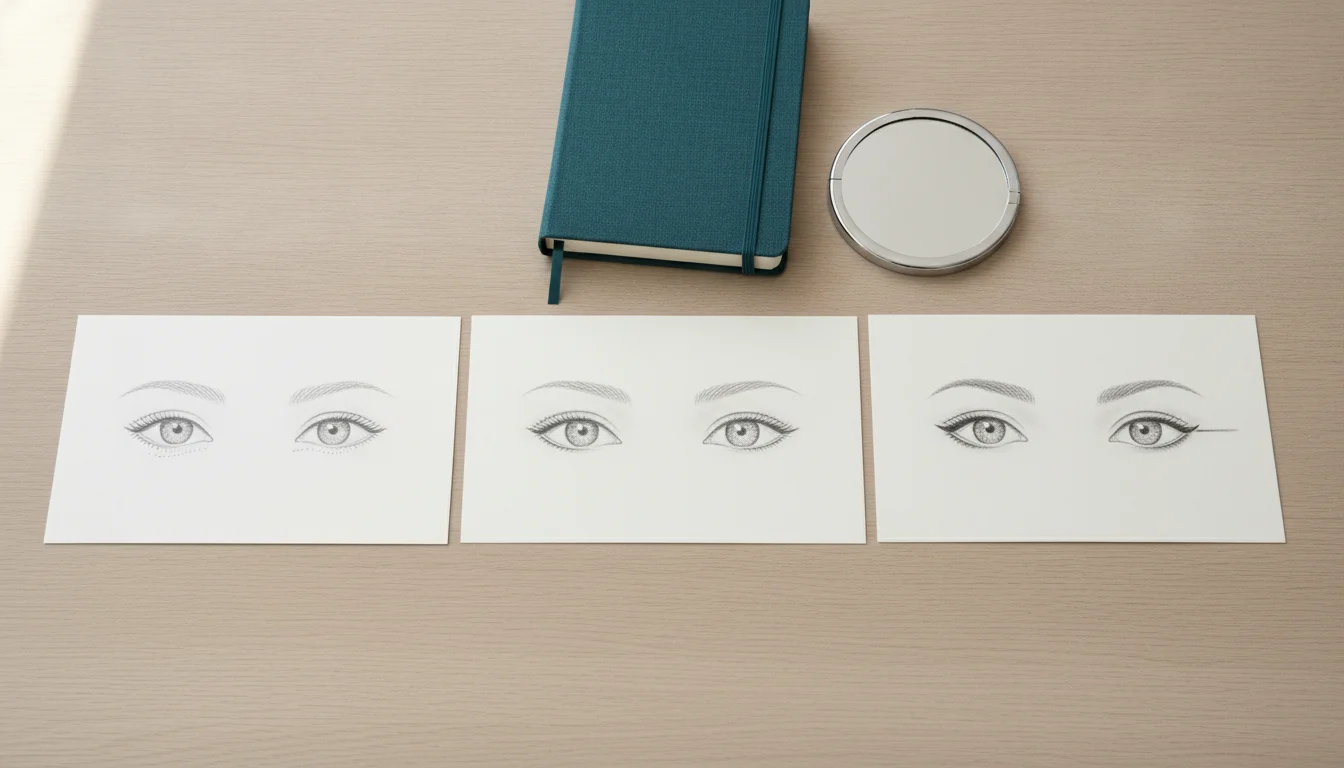
Three lines, three very different impressions
The quietest option adds density only between the roots. It gives the lash line clarity while leaving the natural eye shape completely visible. This suits clients who want to appear fresher in the morning without wearing an obvious line.
The second option is an exceptionally fine permanent eyeliner. It starts softly, remains narrow over the iris and becomes only marginally stronger between the pupil and outer corner. The distribution, rather than a harsh colour, produces the elongating effect. A soft charcoal can be more harmonious than a flat block of deep black.
The third option adds a very short outer extension. It only works when the lid fold, skin movement and lash direction can carry it while the eye is open. A long cat-eye wing is not an automatic upgrade. On moving skin it may break visually and separate the iris from the endpoint.
In all three versions, permanent make-up remains a calm foundation. You can draw a longer wing over it for an evening. What is permanently implanted should look self-evident on a Monday morning, without eye shadow and from normal conversational distance.
The most common trap sits directly above the pupil
Many make-up guides recommend following the natural lid edge. On round eyes, that often creates an evenly curved line. If it is also widened in the middle, it forms a dark dome. The eye looks more outlined, but it does not look more elongated.
Another trap is a completely closed contour: dark upper eyeliner combined with a strong lower lash line. This can place the iris inside a visual circle. When length is the goal, the lower contour generally remains lighter, especially towards the inner corner. That is a styling choice rather than a rigid prohibition.
The outer half should not simply become thicker and thicker either. Too much pigment takes away visible lid space and can feel heavy over time. During an eyeliner refresh, Olga first assesses how much of the old shape remains. A faded arch is not automatically widened with another layer.
The two-point test reveals the useful length
For the preliminary drawing, Olga places two orientation points: one where the visible line may begin and one at its possible endpoint. She does not immediately fill the space between them with black. First, there is only a hair-fine connection. This shows whether the eye genuinely looks longer or merely more heavily made up.
Then comes the important part. You open your eyes, look straight ahead, blink, smile and view the result in a mirror from a normal distance. The line must not disappear, buckle or sit like a separate comma. Only when it works both at rest and in movement is pigment strength discussed.
Bring a picture of your favourite everyday make-up if you have one. Even more useful is a photograph of the eyeliner you can never make work on yourself. It helps Olga identify whether the difficulty comes from length, curvature, the lid fold or a natural difference between the two sides.
Roundness, hooding and asymmetry must be viewed together
No eye consists of one basic shape alone. Round eyes may also have a deep fold, little visible lid space or slightly different outer corners. The label “round” is therefore not enough for a design. The contour is planned within the whole face, with the eyes open and in natural light.
A sudden new change does not belong in a cosmetic consultation. An unexpectedly drooping lid, pronounced swelling on one side, pain, double vision or altered sight requires medical assessment. Permanent make-up does not change anatomy and cannot treat a functional symptom.
Eyes and lid skin must be healthy on treatment day. Inflammation, a stye, broken skin or unexplained irritation means postponing. Medication, eye drops, previous surgery and known reactions are discussed beforehand, and medical prescriptions should never be changed without the treating clinician.
Olga Keller designs expression, not templates
Olga Keller is a state-trained cosmetician with a medical foundation and has been a permanent make-up pioneer in Berlin since 2013. Almost 13 years of experience and thousands of treatments have refined her understanding of how fractions of a millimetre change an eye. Clients travel from across Germany and abroad; known personalities and politicians trust her precision and discretion.
She uses certified German-made pigments that are free from heavy metals and iron oxides. Her philosophy is that the result should look as though nothing has been done. Olga does not sell round eyes somebody else’s “ideal”. She preserves their open vitality and introduces direction only where it genuinely supports the face.
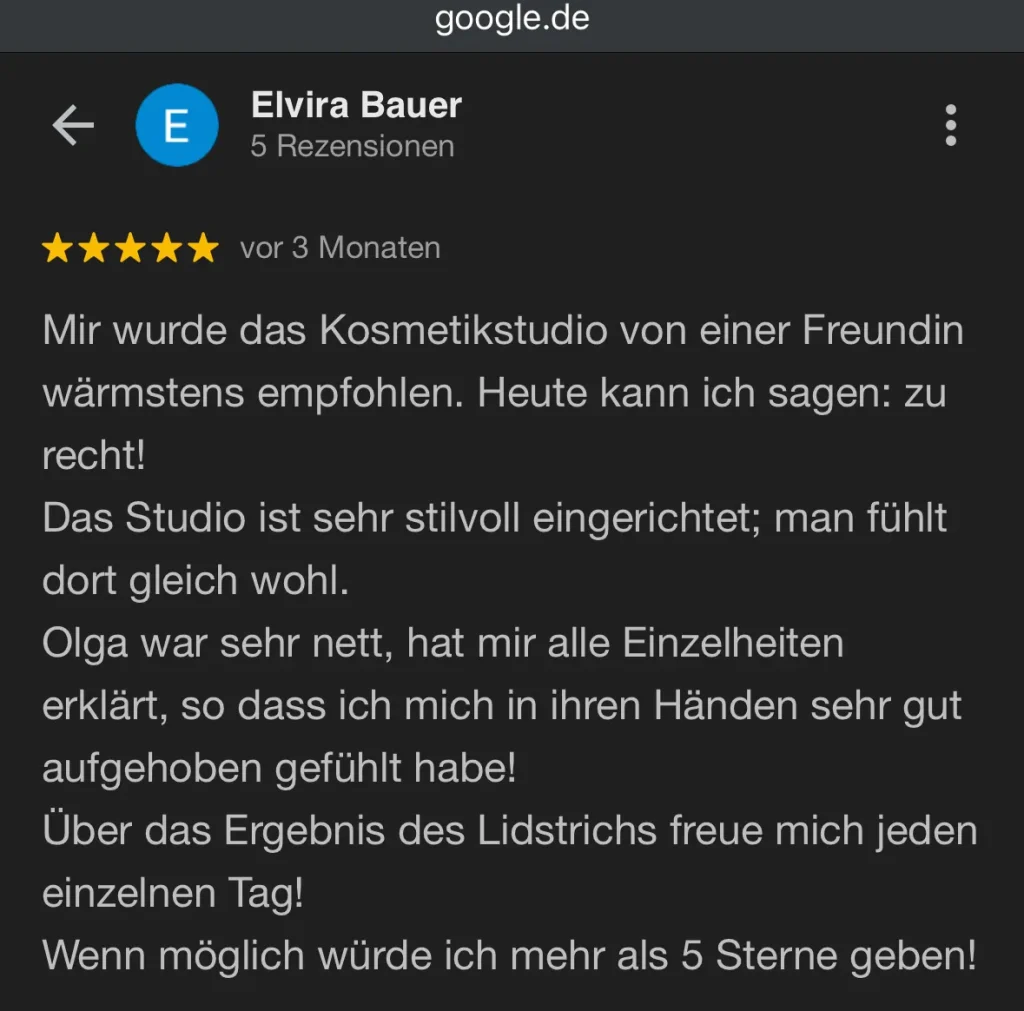
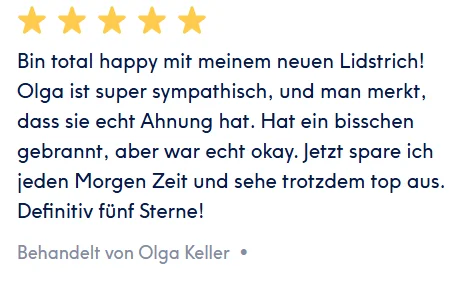
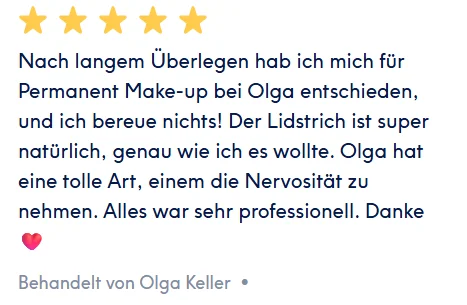
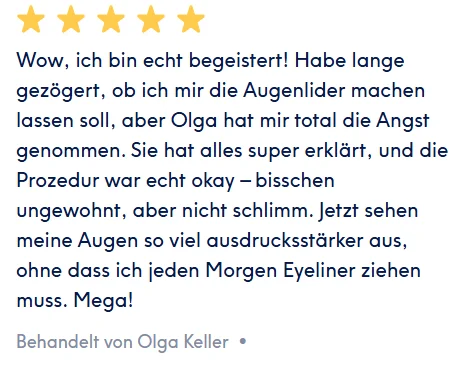
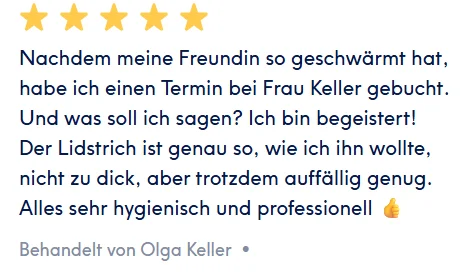
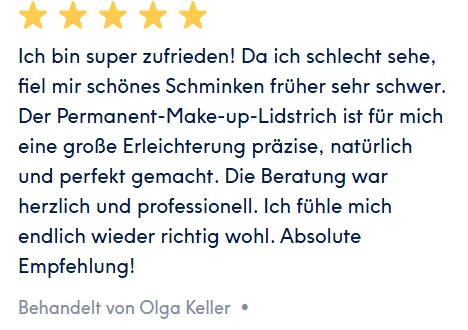
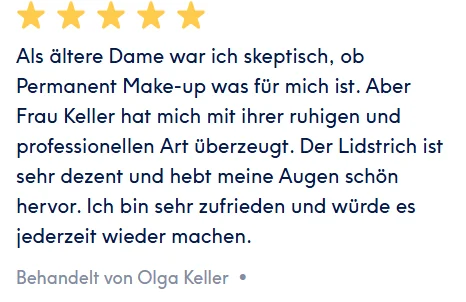
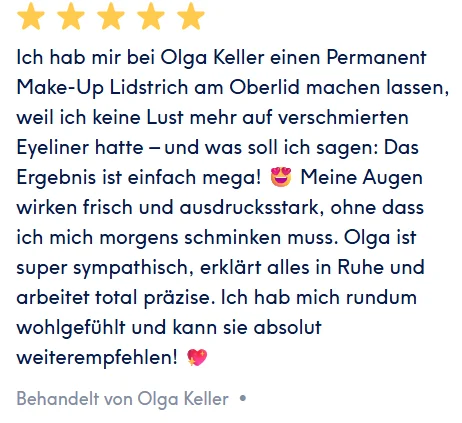
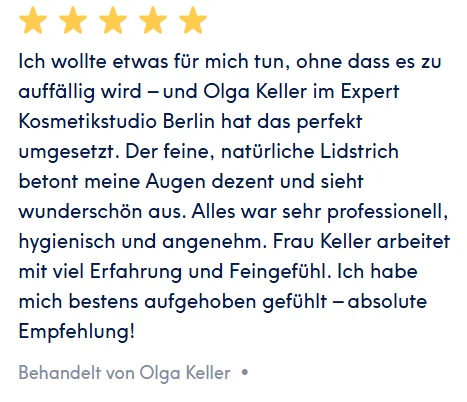
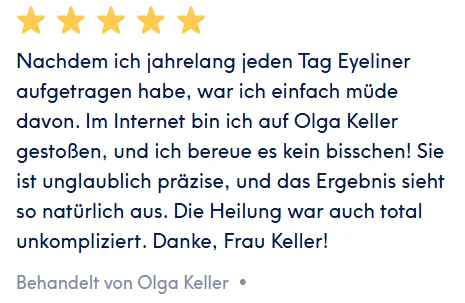
If a requested shape does not sit harmoniously on the open lid or would not age sensibly, she declines it and explains a quieter alternative. Hundreds of five-star reviews value that honesty. The best eyeliner does not make every eye identical; it makes this particular eye look effortless.
Olga personally looks after many returning clients in Berlin, and numerous new clients come through recommendations. A suitable appointment may therefore require a little notice. It is worth enquiring early: a line you will wear for years deserves more calm planning than a spontaneous standard solution.