Downturned eye corners: which eyeliner shape opens the gaze?
The line begins finely and follows the lashes perfectly – then the final few millimetres change the entire effect. Following the natural edge all the way down can make the gaze feel heavier. Drawing a steep upward wing may leave it floating above the eye. The skill is not creating the longest wing, but knowing exactly where to stop.
Subtle lash line enhancement can define the roots without strongly repeating the downward direction. Carefully planned eyeliner may guide the gaze more lightly. It cannot anatomically lift the outer corner or change the structure of the lid.
The final three millimetres determine direction
We read contours as movement. A line that points down at the end creates a descending visual arrow. Even when the rest is perfect, that short section may make the expression look more tired. The design therefore does not automatically follow every lash to the last hair.
On some eyes, the harmonious contour ends before the lowest point. On others, it becomes flatter near the edge without visibly jumping upwards. A short micro-accent may soften the direction. The right choice depends on the fold, lash direction, skin and open gaze.
A closed-eye photograph does not reveal this reliably. What matters is how the finish is read with a relaxed gaze from normal distance. The shape must belong to the face, not merely look geometric in a close-up.
Three strategies instead of one universal wing
The most understated strategy is pigment only between the lash roots. It gives the eyes presence without drawing a new direction at the corner. For a nearly unmade-up appearance, this is often the most timeless answer.
The second option is very fine permanent eyeliner that ends before the strongest descent or becomes softer there. The third is a short outer accent with a slightly open-looking upper edge. It must not sit like an isolated hook above the skin.
A long dramatic wing is a strong style decision. It requires enough visible lid space and a fold that will not break it when the eye opens. For a natural, lasting effect, less is often more: clear roots and a finish that does not pull down.
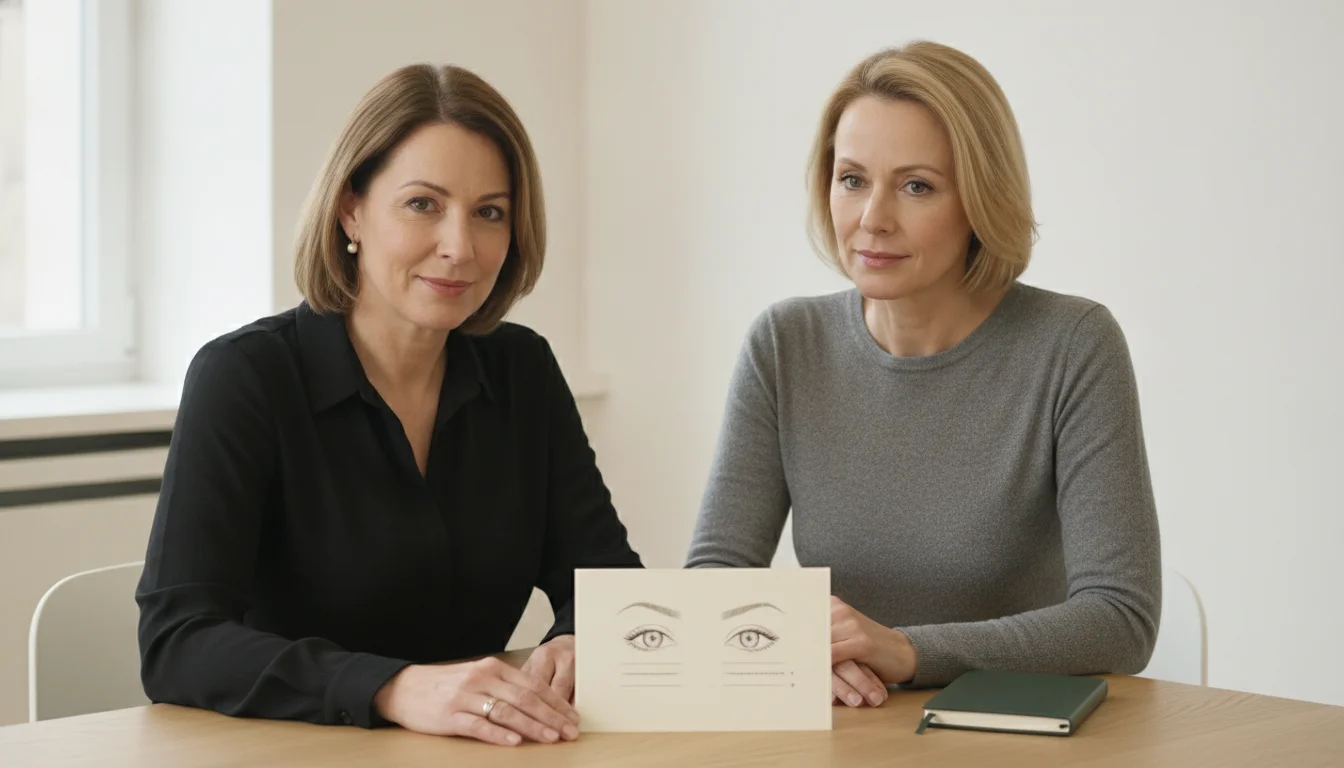
Why a steep wing does not automatically open the eye
Someone trying to lift the outer corner optically may draw a very steep wing. With the eye open, a gap can appear between the lash edge and the wing. On closed skin, the shape looks folded, and during movement the hook appears to change position.
Harmonious opening comes from a calm connection: the line becomes lighter in the right place, the outer finish stays short and visible lid space is not filled with black. The side that turns down a little more does not necessarily require thicker pigment.
If pigment is already present, a permanent eyeliner refresh is not simply extended. Olga reassesses old colour, remaining shape and skin movement. Covering an awkward angle with more pigment would increase the heaviness.
Naturally downturned or suddenly changed?
Outer corners that have pointed down for years are a normal facial shape. A newly drooping lid, marked one-sided change, swelling, pain, double vision or visual disturbance need medical assessment. Permanent makeup may complement a natural shape but cannot treat functional change.
Eyes and lids must be healthy and calm on treatment day. Inflammation, a stye, broken skin or unexplained symptoms mean postponement. Medication, eye drops, previous operations and known reactions are discussed beforehand. Never alter prescribed treatment independently.
This boundary protects both health and design. A stable familiar expression can be planned responsibly; a new change should not be cosmetically concealed.
Olga Keller does not draw someone else’s eye corner
Olga Keller is a state-trained cosmetician with a medical foundation and has pioneered permanent makeup in Berlin since 2013. Almost 13 years of experience and thousands of treatments have refined her eye for lash direction, lid movement and natural visual guidance. Clients travel from Germany and abroad, while well-known figures and politicians trust her precision and discretion.
She uses certified German-made pigments free from heavy metals and iron oxides. Her philosophy is that the result should look as though nothing was done. Olga does not place one fashionable standard wing on every face. She preserves the character of the eye and removes only unnecessary heaviness from the finish.
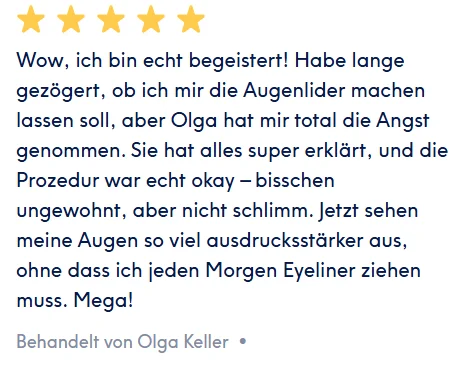
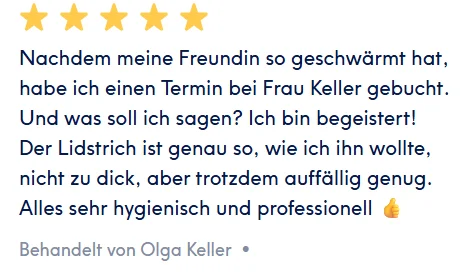
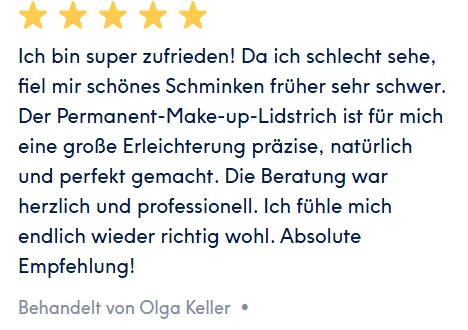
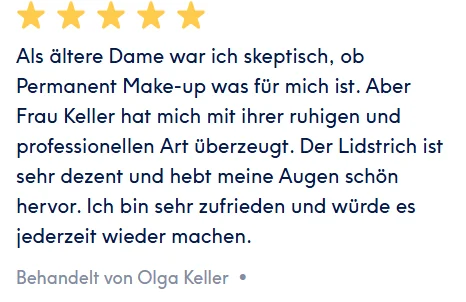
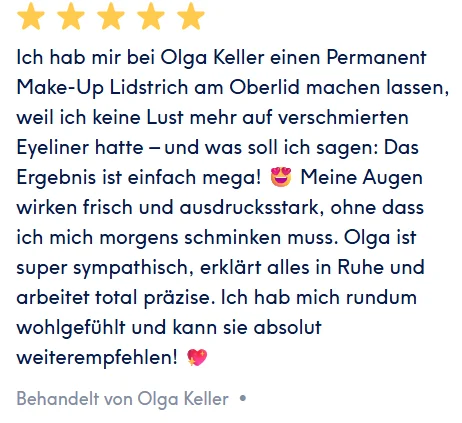
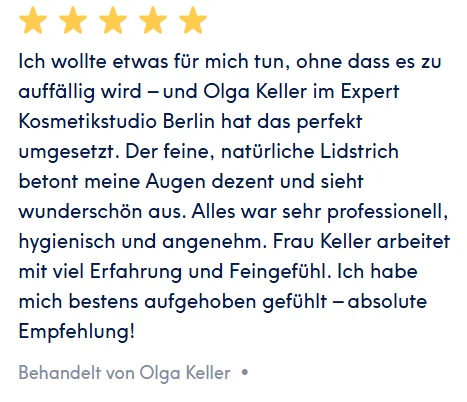
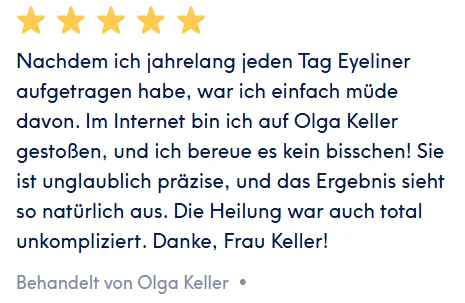
If a desired wing cannot remain harmonious or sensible over time, she refuses or proposes a calmer shape. Hundreds of five-star reviews appreciate that honesty. An open-looking gaze does not come from a promise; it comes from a few precise decisions.
The three-photo test before your consultation
Photograph your eyes without make-up, with your usual eyeliner and with a version that stops before the downward corner. Use similar light and relaxed expression. You may discover that a wing is not missing at all, and that less line already looks lighter.
Bring the pictures to the consultation. Olga sketches a possible finish and views it with you from the front, side and in movement. You are not choosing a stencil, but a direction that naturally supports your face.
Olga personally cares for many returning clients in Berlin, and numerous new clients come through recommendations. A suitable appointment may therefore need a little notice. Enquire early: with those decisive final millimetres, careful planning matters more than a quick standard line.