

Eyeliner transfers to my upper lid: what can I do about it?
In the morning, the line sits precisely at the lashes. An hour later a second pale arc appears above it, as though the eye copied the eyeliner by itself. You wipe away the transfer, disturb the lower edge and repeat the process in the afternoon. The product is not necessarily “bad.” Most often, formula, skin and lid movement simply meet in an unfortunate way.
Natural lash line enhancement can define the roots without a cosmetic film sitting on the skin. Pigment within the skin cannot stamp like a creamy layer onto the upper lid. It is still useful to understand when and why transfer happens, because PMU changes neither oil production nor the shape of the lid.
The timing of the second line reveals a lot
If the arc appears immediately after application, the formula may not have set before the fold touched it. If it develops around midday, warmth, skin oil, cream or repeated contact may have softened a layer that initially felt dry. After exercise or a long day, moisture and more frequent blinking can contribute.
Observe three ordinary days and photograph the line after five minutes, two hours and in the evening. Do not use a different product each day. Keeping the routine similar makes it possible to see whether transfer happens at once or gradually.
Location is revealing too. A mark directly above the pupil indicates a different contact zone from a patch only at the outer corner. That small map is more useful than searching endlessly for the one supposedly universal smudge-proof eyeliner.
Four layers do not automatically improve wear
Primer, powder, pencil and shadow can work together. Too many layers can also create a thick moving surface. Rich eye cream placed at the lash roots, or skincare that has not settled, may mix with the product. Even a waterproof formula can then move under oil and friction.
Change one thing at a time: less skincare at the contact zone, a thinner line, adequate setting time or another texture. Never alter prescribed eye care or medication for a make-up experiment. Powder must not enter the eye either; additional mattifying has practical limits.
A broad line has a larger area available to touch the skin above it. Trying to hide transfer with more black can therefore enlarge the exact contact zone. Finer definition at the roots may be more wearable than thickness above them.
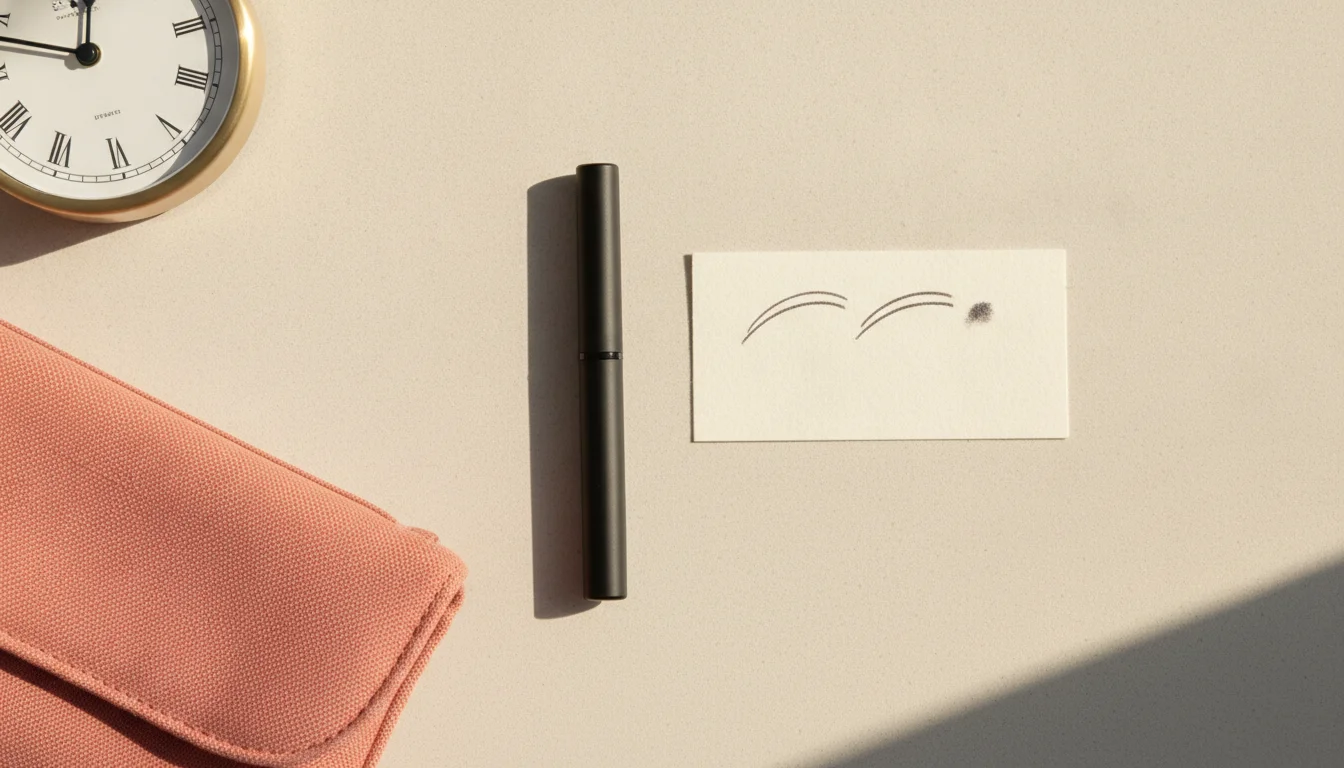
Why permanent makeup cannot stamp
With PMU, the visible colour is held within the skin rather than sitting on top as a product layer. Blinking cannot transfer it onto another skin surface. Fine pigment between the lash roots creates a darker frame without a wet morning line that needs time to dry.
Visible permanent eyeliner may also be suitable, but must be planned for the open gaze. Where the mobile lid and fold have close contact, a restrained shape often looks better than a wide line. PMU does not make the lid less oily or prevent additional eyeshadow and mascara from smudging.
You gain a dependable foundation, not an invisible protective coating for every cosmetic. Make-up can still be added for an evening. On an ordinary day, however, the product film that created the second arc is no longer required.
A new transfer mark may reflect a new routine
If an eyeliner that used to last suddenly transfers, look first at ordinary changes: a new cream, different texture, warmer weather, more exercise or an older product. The lid fold may also change over time and make contact with the line more frequently.
Sudden one-sided swelling, redness, pain, marked skin change or new visual symptoms are not eyeliner questions and need medical assessment. A beauty consultation does not diagnose. Eyes and lids must be healthy and calm on treatment day.
Inflammation, a stye, broken skin or unexplained symptoms mean postponement. Eye drops, medication, previous surgery and known reactions are discussed in advance. Health comes before the wish to finish the morning routine faster.
Olga Keller includes the contact zone in her plan
Olga Keller is a state-trained cosmetician with a medical foundation and has pioneered permanent makeup in Berlin since 2013. Almost 13 years of experience and thousands of treatments have refined her eye for lid movement, skin contact and natural proportion. Clients travel from Germany and abroad, while well-known figures and politicians trust her precision and discretion.
She uses certified German-made pigments free from heavy metals and iron oxides. Her philosophy is that the result should look as though nothing was done. Olga does not permanently copy the cosmetic transfer mark. She finds the smallest shape that remains visible, calm and harmonious with the eyes open.
If the requested line is not sensible or the eye area is not ready, she refuses or postpones. Hundreds of five-star reviews also appreciate that honesty. Natural design may mean skipping a visible line and defining only the lash roots.








Bring the second arc to the consultation
You do not need to arrive wearing the transfer mark. Photographs from different times of day are enough. Also show the line immediately after application and the width you actually prefer. If pigment is already present, a permanent eyeliner refresh is assessed separately.
The position of contact helps Olga decide whether lash enhancement or a narrow visible contour is more useful for your routine. The annoying second arc becomes valuable information for the design.
Olga personally cares for many returning clients in Berlin, and numerous new clients come through recommendations. A suitable appointment may therefore need a little notice. Enquire early: a short wait is worthwhile when a carefully planned line can make the daily second mark unnecessary.