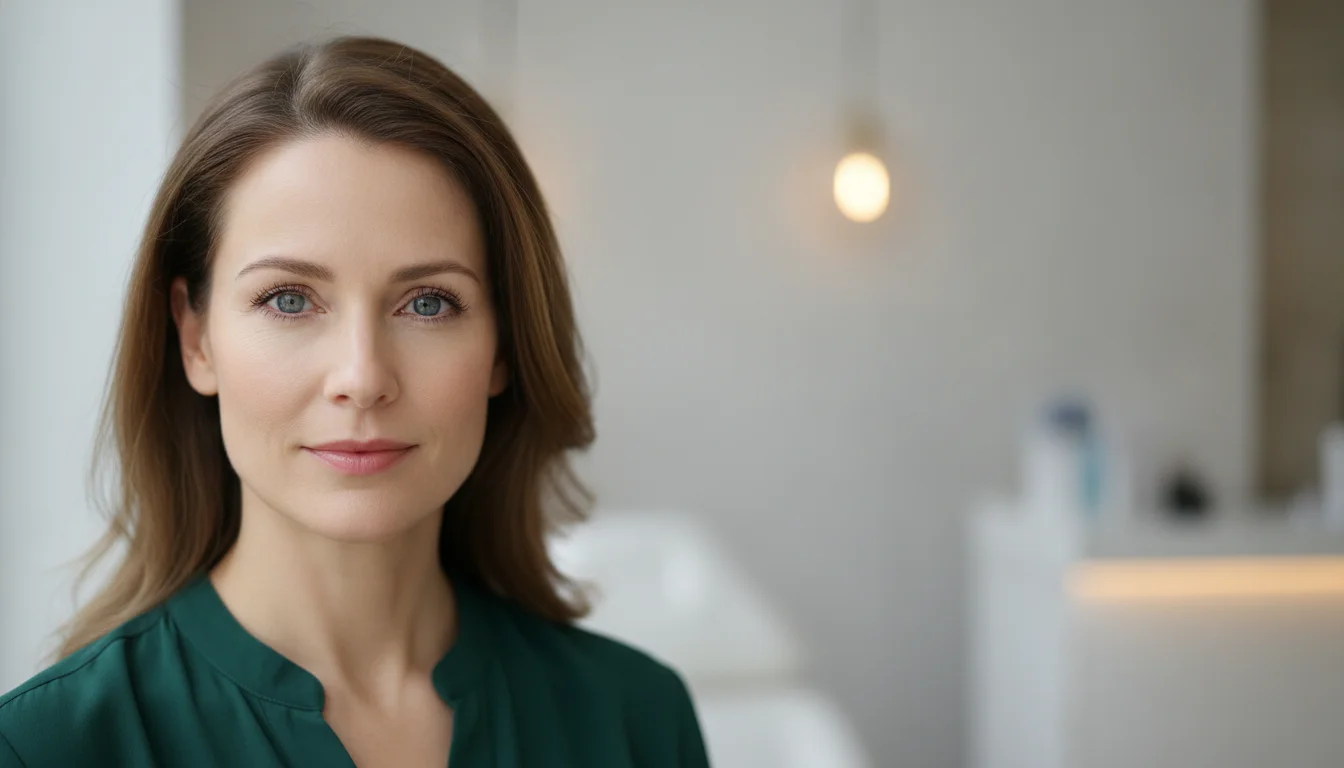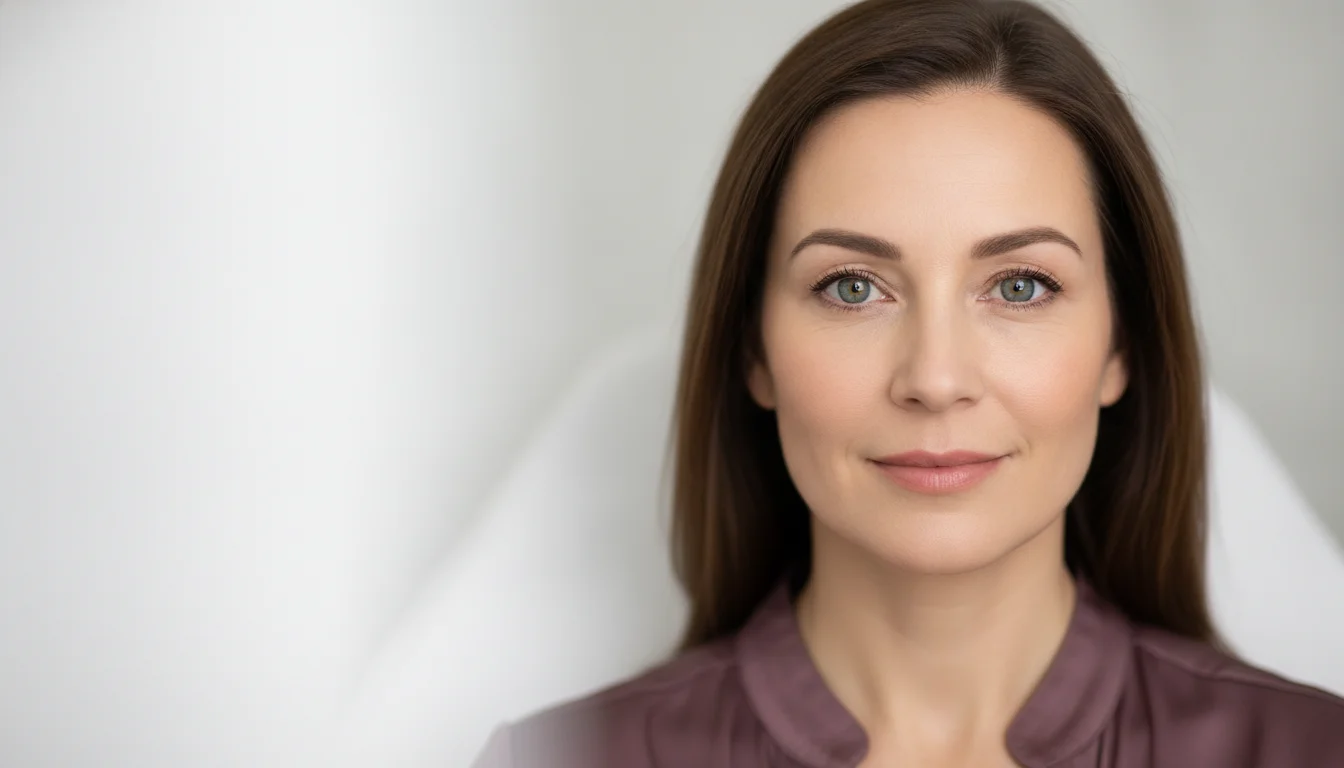
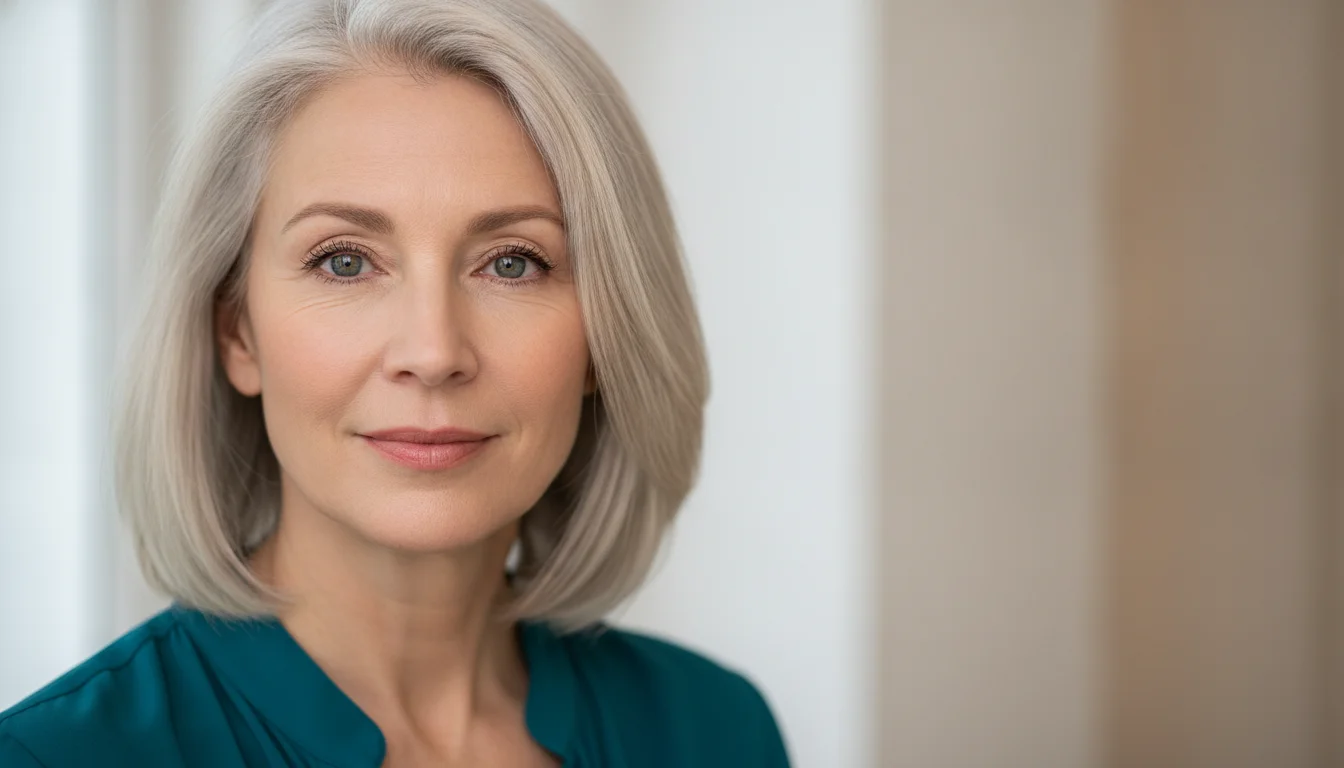
Thinner lashes during menopause: how can the gaze look clearer again?
The change rarely arrives with a definite date. At some point mascara takes longer, the roots look paler in photographs and the eye seems less clearly framed without make-up. Many women notice changes to skin and hair during menopause, but not every thinner lash should automatically be dismissed as “just hormonal”.
Fine lash-line enhancement can calm the optical background between existing roots. It makes the base appear more connected, but it cannot create new hairs or treat a cause. Keeping that distinction clear is what makes responsible planning possible.
Observe first, then design cosmetically
Individual lashes shed as part of a normal growth cycle and return at different times. Hair may become finer or paler with age, and changes can also occur during menopause. A gradually softer lash line without discomfort is different from sudden or patchy loss.
If noticeably more lashes disappear within a short time, bald areas develop, or there is itching, scaling, redness, pain or altered sight, the cause needs medical assessment. Skin conditions, inflammation, thyroid issues, medication and other factors can play a role. A cosmetic contour must not hide that question.
A short observation period can be useful: take photographs without mascara in similar daylight, note new products and record irritation or dryness. This is not self-diagnosis, but it can make a conversation with a doctor, eye specialist or dermatologist more specific.
Permanent make-up replaces shadow, not a lash
Dense lash roots naturally create a soft dark zone along the lid. When hairs become finer or paler, visible skin breaks that shadow. The eye then feels less defined even if the remaining lashes are healthy.
During enhancement, pigment is placed precisely between stable roots. From a normal distance, there are no visible individual points and no classic eyeliner. The base simply reads more calmly. Especially without mascara, a small amount of pigment can return surprising clarity.
Where hairs are genuinely absent, long painted strokes are not used to invent a false lash row. On moving lid skin they would look artificial. Olga only connects the existing base optically and leaves skin untouched where a cause still requires medical clarification.
Mature lid skin needs less area, not more black
The lash line is not the only thing that changes with age. Lid skin may become drier, finer or more mobile, visible space shifts, and lines fold differently when the eye opens. A broad dark contour that once felt suitable can occupy more room and make the gaze look heavier now.
Pure enhancement uses the naturally dark space between roots. If a visible permanent eyeliner is wanted too, it is designed on the open eye. It often remains very narrow above the iris and ends compactly rather than pushing a long wing against moving skin.
The goal is not “younger at any cost”. A clear gaze appears when contrast and proportion fit again. Expression lines, natural differences between sides and the personality of the eye remain. Pigment adds structure; it does not erase age.

The three-distance mirror prevents excess intensity
A preliminary drawing is often examined automatically at very close range. From there, every space looks large and every line looks too fine. Olga therefore checks three distances: cosmetic close-up, an ordinary bathroom mirror and conversational distance. Each answers a different question.
Placement must be precise close up. In the mirror, the base should feel even. From one or two metres away, the eye should be noticed before the pigment edge. A line that looks impressive only in a macro view but heavy within the face is poorly proportioned.
Glasses and usual daytime make-up belong in the comparison. A bold frame raises contrast while rimless lenses barely change it. Someone who rarely wears mascara usually needs a quieter foundation than a client who darkens the base every day.
Dryness and sensitive eyes are not brushed aside
Skin comfort and eye comfort may also change during and after menopause. Dryness alone does not decide whether treatment is possible, but it belongs in the conversation. Eye drops, contact lenses, known allergies, previous lid surgery and cosmetic reactions are discussed beforehand.
Active inflammation, a stye, broken skin, marked irritation or unexplained lash loss means no pigmentation. Never alter prescribed medication or eye drops yourself for a PMU appointment. Health and a stable starting point take priority over the diary.
If pigment already exists, Olga plans an eyeliner refresh around remaining colour, shape and current lid movement. An old broad contour is not automatically widened again. Sometimes a restrained root treatment is the best correction.
Olga Keller creates clarity without age promises
Olga Keller is a state-trained cosmetician with a medical foundation and has been a permanent make-up pioneer in Berlin since 2013. Almost 13 years of experience and thousands of treatments have refined her understanding of sensitive lid skin, changing proportions and natural contrast. Clients travel from Germany and abroad; known personalities and politicians trust her precision and discretion.
She uses certified German-made pigments free from heavy metals and iron oxides. Her philosophy is that the result should look as though nothing has been done. Olga promises neither new lashes nor rejuvenation. She gives the existing lash line only enough optical foundation for the gaze to feel clear again.
If loss first needs medical investigation, or a requested line would not sit harmoniously on the current skin, she declines and explains the more sensible order. Hundreds of five-star reviews value this honesty. Good work does not make you younger; it helps you look recognisably like yourself.










Olga personally cares for many returning clients in Berlin, and numerous new clients come through recommendations. A suitable appointment may therefore require a little notice. Enquire early: responsible, individually planned treatment is worth a little patience.