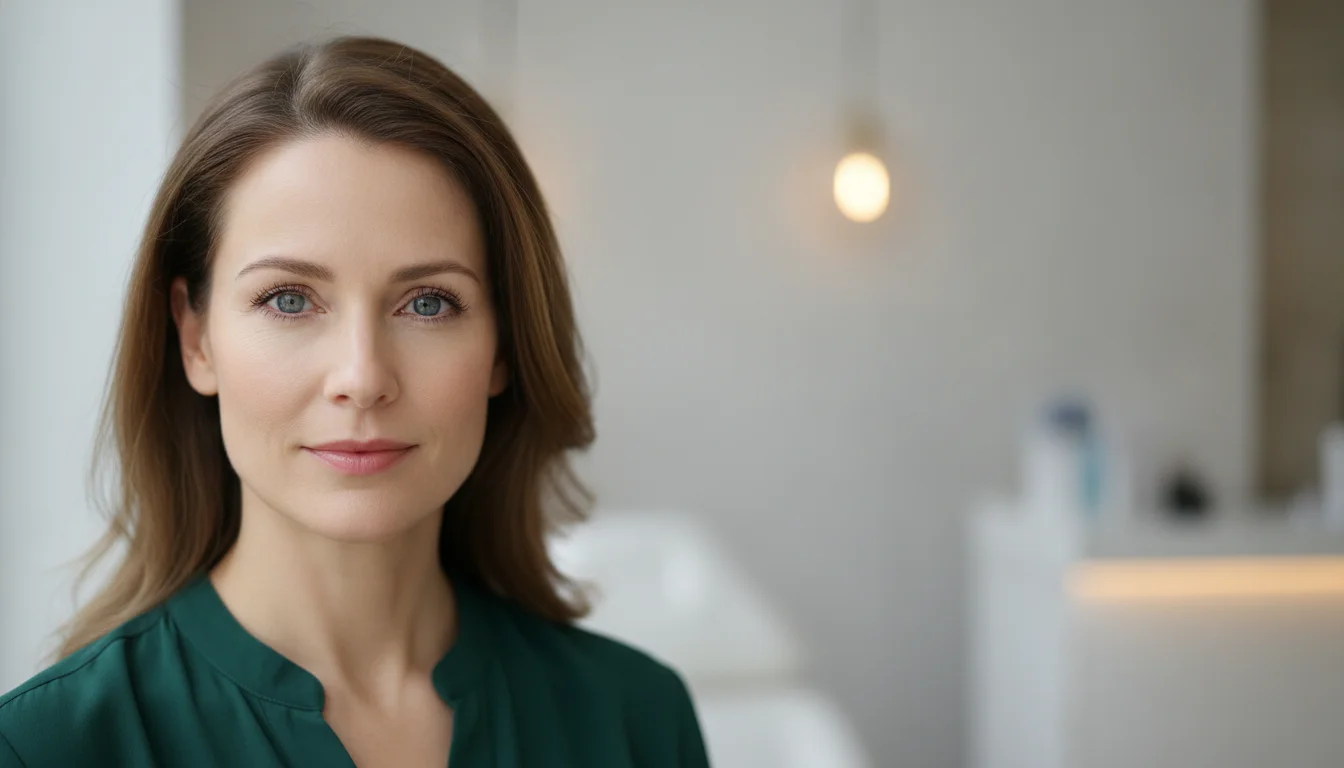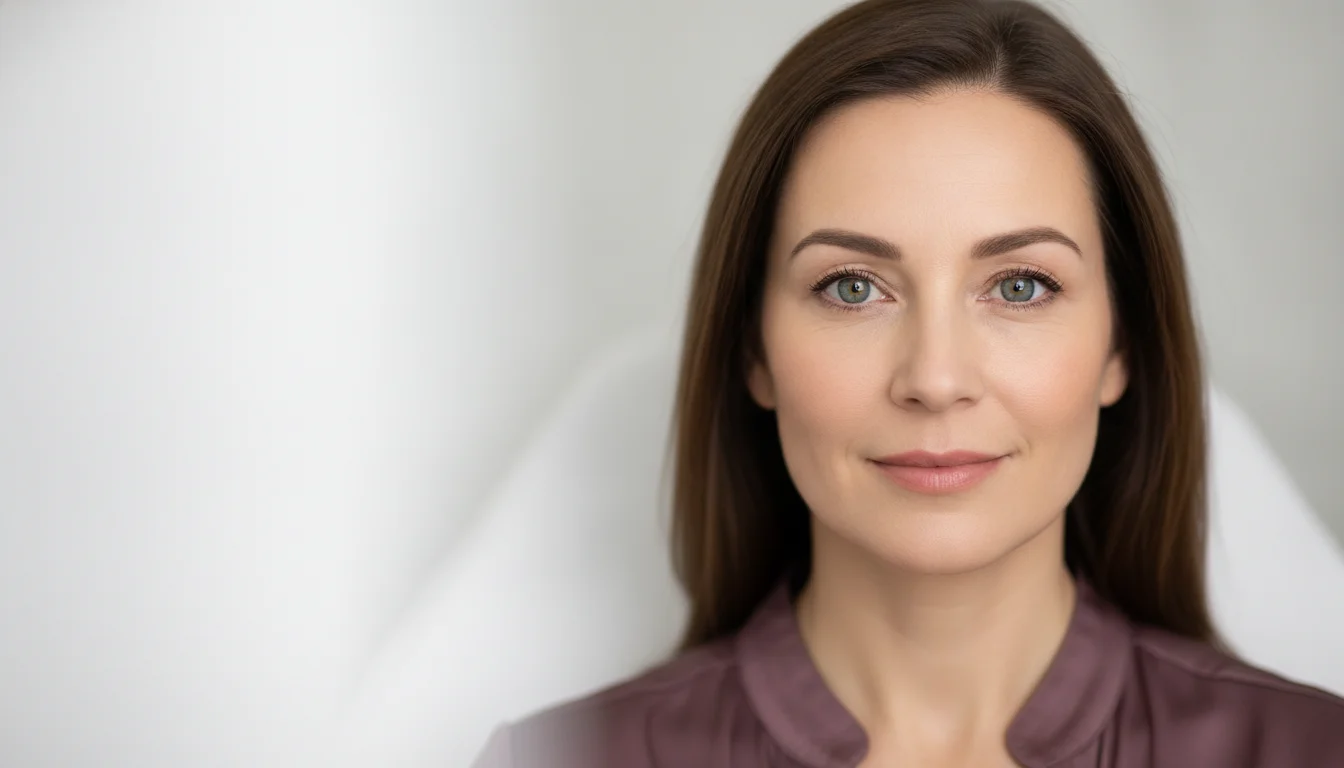

Very pale lash roots: why can eyes look tired without make-up?
You slept well, your skin looks fresh and there are no dark circles, yet someone asks, “Are you tired?” After a little mascara, the question disappears. With very pale lashes, the impression often comes from a missing dark reference directly around the eye rather than fatigue. Skin, roots and eye white are close in tone.
Fine lash-line enhancement can place a soft optical anchor there. It does not darken the lash hairs or replace them. Pigment between the existing roots simply reduces the pale interruption, allowing the gaze to read more clearly even without mascara.
“Tired” can sometimes mean missing contrast
Faces are read through contrast in fractions of a second. Dark brows, lashes and lip borders give orientation while pale areas recede. If the lash tips are visible but the base is almost skin-coloured, the upper lid contour appears to disappear in places. The eye feels less defined despite being healthy and open.
This effect is especially common with blonde, strawberry-blonde or greying lashes. Hairs that are paler at the root than the tip can create it too. In backlight, the base almost vanishes while the iris remains clear. The face has not lost expression; it has lost some of its familiar framing.
Of course, not all tiredness is optical. Persistent exhaustion, new swelling, redness, pain or altered vision requires medical assessment. Permanent make-up does not treat lack of sleep or a health condition. It only changes visible contour.
Why deep black is rarely the most elegant answer
When something seems too pale, black initially sounds logical. Against very light lashes, however, a deep black bar can sit independently on the lid. The base then looks made up rather than denser. Without mascara, the contrast between a dark skin line and pale tips becomes particularly obvious.
Olga therefore looks for a transition, not maximum darkness. Soft charcoal, muted brown or a custom mixed shade can visually connect the roots without overpowering them. Skin undertone, natural hair, iris, brows and whether you normally wear mascara all influence the choice.
Pigment quantity matters too. Between the roots, less is often needed than a brightly lit mirror suggests. Once healed, a continuous black edge should not dominate. You perceive a calm base while individual pale lashes are still allowed to look believable.
Tint, mascara and pigment solve different problems
A lash tint darkens hairs but does not permanently colour the skin between their roots. It is useful when pale tips are the main concern. New light hairs return with every natural growth cycle, so the effect needs regular repetition.
Mascara provides colour, length and volume for one day. Applied very close, it may darken the base, but doing so requires precision and may irritate sensitive eyes. It is removed at night, and the pale optical interruption becomes visible again.
A permanent lid contour works on skin. For a make-up-free effect, it need not resemble classic eyeliner. It often stays entirely between the roots. A hair-fine outer contour can be added when shape is also wanted, but that is a separate and more deliberate styling decision.

The greyscale test shows whether the gaze lacks a base
A simple photograph can help prepare for a consultation. Photograph your face in soft daylight once without mascara and once with only a little colour at the roots. Convert both pictures to greyscale. You are not judging beauty or symmetry, only asking: where does the eye begin visually?
If the eye white nearly merges into the skin without mascara and a small amount of root colour immediately adds clarity, missing contrast is probably part of the impression. If both versions feel similar, the desired change may relate more to brows, glasses or general make-up than to the lash line.
The test does not determine pigment colour. Cameras, filters and displays distort tones. It merely helps phrase the goal as “clearer at the base” rather than “blacker”. The actual shade is assessed on the skin and under several types of light.
Healing should not be judged by its dramatic first moment
Immediately after treatment, the base appears darker than the eventual result. Slight swelling may increase contrast. With very pale lashes, this transition is more noticeable because the hairs themselves remain light. It is not a preview of the final intensity.
As healing progresses, the tone becomes softer. Small differences in colour perception are possible before the result settles. The treated area is protected according to individual aftercare instructions and is not covered with extra eye make-up merely to balance the first few days.
If older pigment is present, Olga plans an eyeliner refresh around its actual remaining colour. A cool or overly dark old tone is not simply buried beneath more pigment. Sometimes restraint is the safer and more natural decision.
Olga Keller looks for the quietest effective shade
Olga Keller is a state-trained cosmetician with a medical foundation and has been a permanent make-up pioneer in Berlin since 2013. Almost 13 years of experience and thousands of treatments have refined her understanding of undertones, skin responses and minute contrasts. Clients travel from Germany and abroad; known personalities and politicians trust her precision and discretion.
She works with certified German-made pigments free from heavy metals and iron oxides. Her philosophy is that the result should look as though nothing has been done. With pale lashes, this means preserving their delicacy. Olga adds only the shadow missing at the base and declines an intensity that would look artificial without mascara.
Hundreds of five-star reviews value this honest restraint. The goal is not an eye that looks permanently made up, but a gaze that no longer invites automatic questions about tiredness in the morning.










Olga personally cares for many returning clients in Berlin, and numerous new clients come through recommendations. A suitable appointment may therefore require a little notice. Enquire early: finding the right quiet shade is worth a little patience.