
Uneven natural lip colour: how can it become more harmonious?
The lower lip looks rosy, the cupid's bow is paler and colour disappears in places near the edge. Clear balm makes the difference more visible, while opaque lipstick hides it. Many women therefore ask for “one even lip colour”. Yet that is where a misunderstanding begins: harmonious does not mean perfectly monochrome.
Natural permanent lip pigmentation behaves more like watercolour than wall paint. It connects lighter and stronger areas through fine transitions instead of hiding every natural nuance beneath an opaque field. The goal is a lip that appears lively and balanced, not a flat block of colour.
A lip is not a single-colour surface
Even without obvious irregularity, upper and lower lips receive light differently. The cupid's bow casts shadow, the centre reflects light and the moist inner area looks stronger. Vessels, skin thickness and the individual lip structure also influence what we perceive.
Trying to bring every detail to precisely the same tone can remove natural depth. A fully opaque result may resemble applied lipstick and may not suit an otherwise make-up-free face. Olga therefore asks not only which places are lighter, but which differences genuinely bother the client.
Photographs in indirect daylight, without filters or recently applied balm, are useful. Bathroom bulbs, cold office light and smartphone automation alter colour. Several ordinary pictures tell a more reliable story than one heavily enlarged image.
The colour map: centre, edge, upper lip and lower lip
During consultation, Olga views the lips as a small colour map. Where does the natural red zone begin? Which sections stay pale? Is there existing pigment, a scar or merely reflected light? A sensible plan can begin only once this map is understood.
A paler upper lip does not automatically need the same pigment application as the lower one. A light edge may need gentle definition while the centre is barely touched. Different zones may receive different treatment so that, after healing, they appear to belong together.
It sounds paradoxical: a more even result is not created by doing exactly the same everywhere. That is where technical control matters. Pigment quantity follows existing colour and the intended transition rather than a rigid colouring-in method.
Harmonising is not simply neutralising
Some lips contain cooler, warmer, darker or grey-looking areas. Not every difference can reliably be covered by one desired shade. Colour in skin behaves differently from lipstick on the surface; starting tone, healing and individual skin response all affect the outcome.
Olga therefore does not promise an identical result after one session or any arbitrary colour from a cosmetics shelf. More pronounced differences may need a staged approach. Sometimes restraint is better if a strong corrective attempt would become artificial.
New, changing or clearly defined dark or light patches are not simply pigmented over. The same applies to a wound that does not heal, active inflammation or unusual discomfort. Medical or dermatological assessment comes before a PMU appointment in these cases.
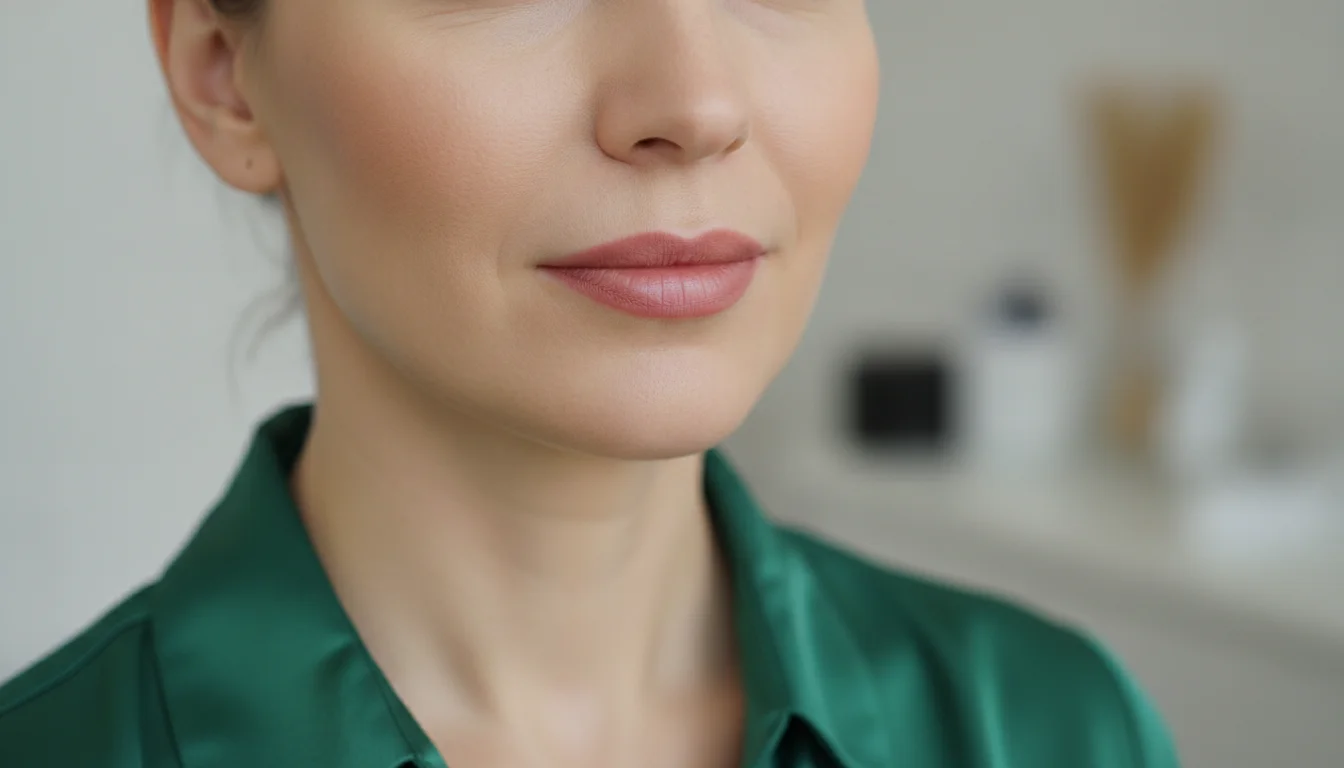
The right shade rarely lives in a favourite lipstick
A favourite lipstick shows which colour family you enjoy, but not necessarily the best permanent base. Opaque cosmetics sit on the surface and can be removed at night. Healed pigment visually combines with existing lip colour and must work without additional make-up.
Olga therefore often seeks a quieter relative: muted rosewood, soft rose or an individual mixture that supports the person's own tone. Strong red, berry or brown can still be worn over it. The permanent base remains flexible.
The preliminary drawing follows genuine anatomy too. Colour outside the natural lip zone heals differently on ordinary facial skin and may look artificial. Harmonising does not mean pretending to create volume with pigment; it means making existing form and colour easier to read.
Why the first days are not a colour comparison
Immediately after treatment, lips appear more intense and even than the later result. Temporary swelling and the fresh surface further change the impression. During healing, the shade softens; individual areas may look different for a while.
Success or failure should not be decided in the mirror each day. Skin needs time before a serious comparison is possible. Only then can one see how starting colour and healed pigment work together and whether another session is useful at all.
Existing PMU is reassessed before a permanent lip make-up refresh. The old tone is not automatically intensified. Form, fading and current skin condition determine the next step.
Olga Keller lets lips look alive rather than perfectly painted
Olga Keller is a state-trained cosmetician with a medical foundation and has been one of Berlin's microblading and permanent make-up pioneers since 2013. After thousands of treatments, she knows how quickly a wish for perfection can produce an overly opaque result.
She uses certified German-made pigments free from heavy metals and iron oxides. Clients from Germany and abroad, known personalities and politicians trust her discreet signature. Her principle is that the result should look as though nothing has been done.
If skin, existing discolouration, anatomy or expectations do not allow a natural answer, Olga declines. Hundreds of five-star reviews value this honesty. Permanent make-up should not replace the person's own lip colour, but help its different notes belong together again.


Olga Keller personally cares for many returning clients in Berlin, and numerous new clients arrive through personal recommendations. A suitable appointment may therefore need a little notice. Enquire early: delicate colour harmonisation deserves more planning than the quickest available slot.