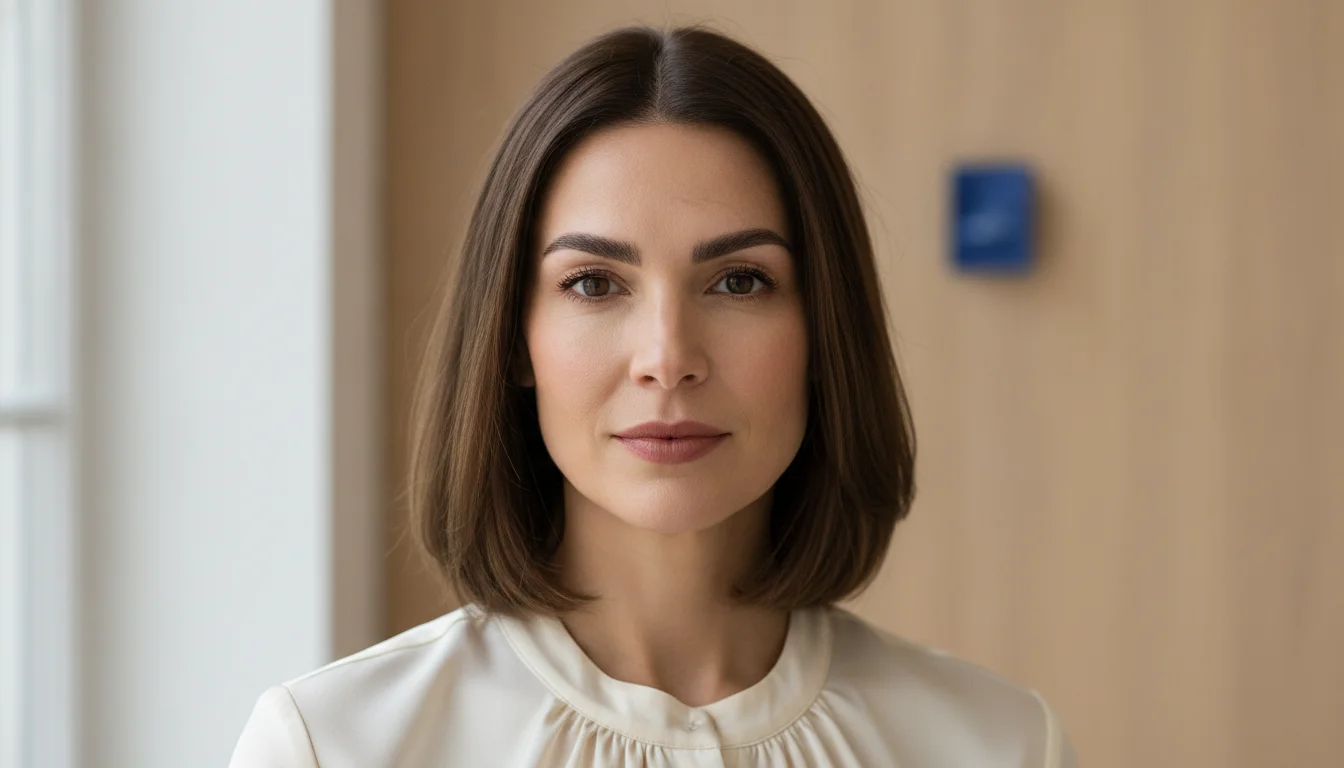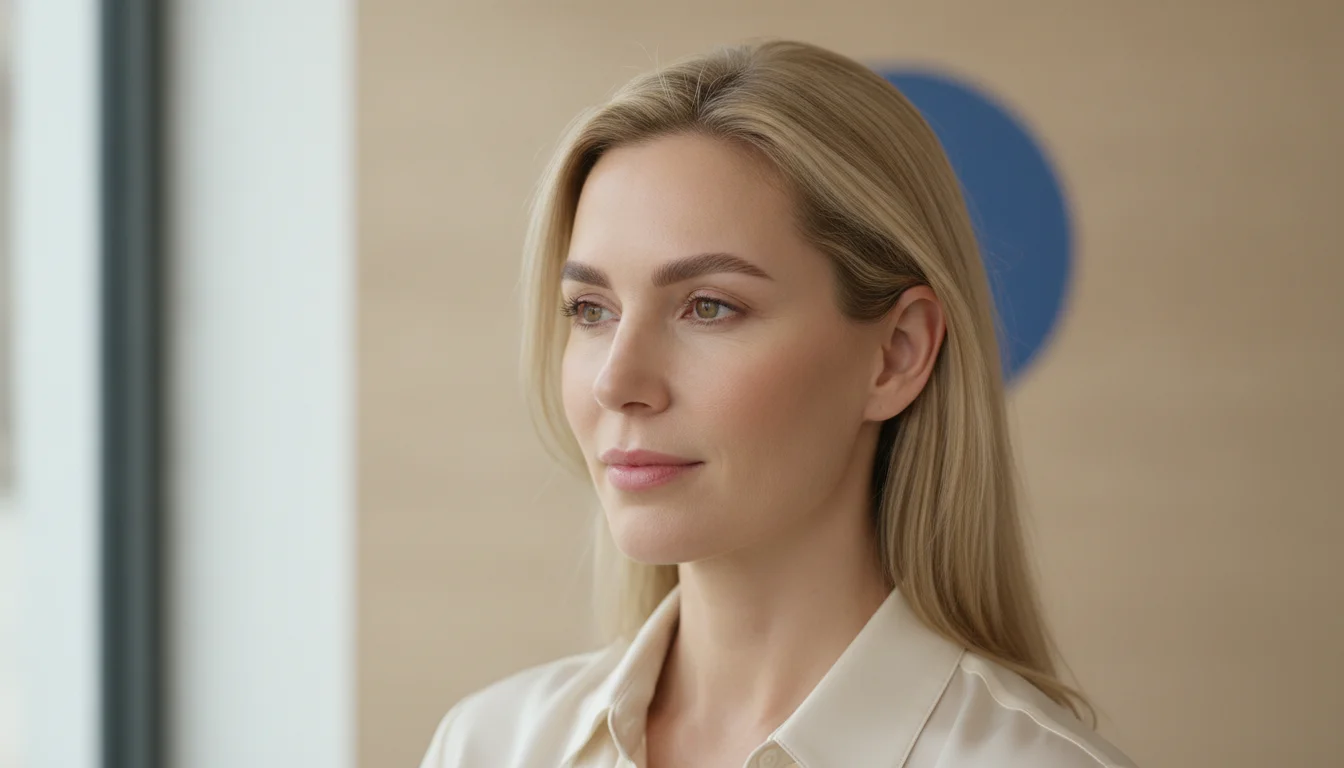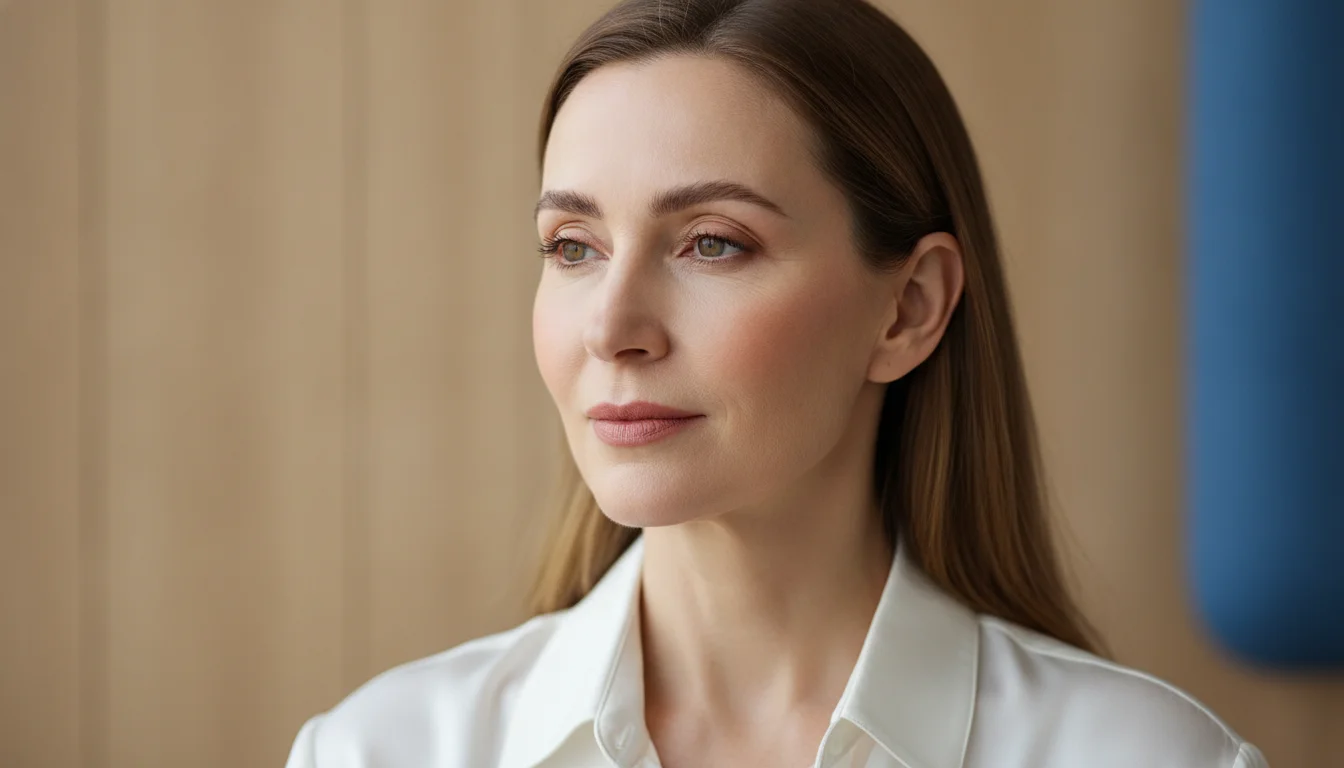
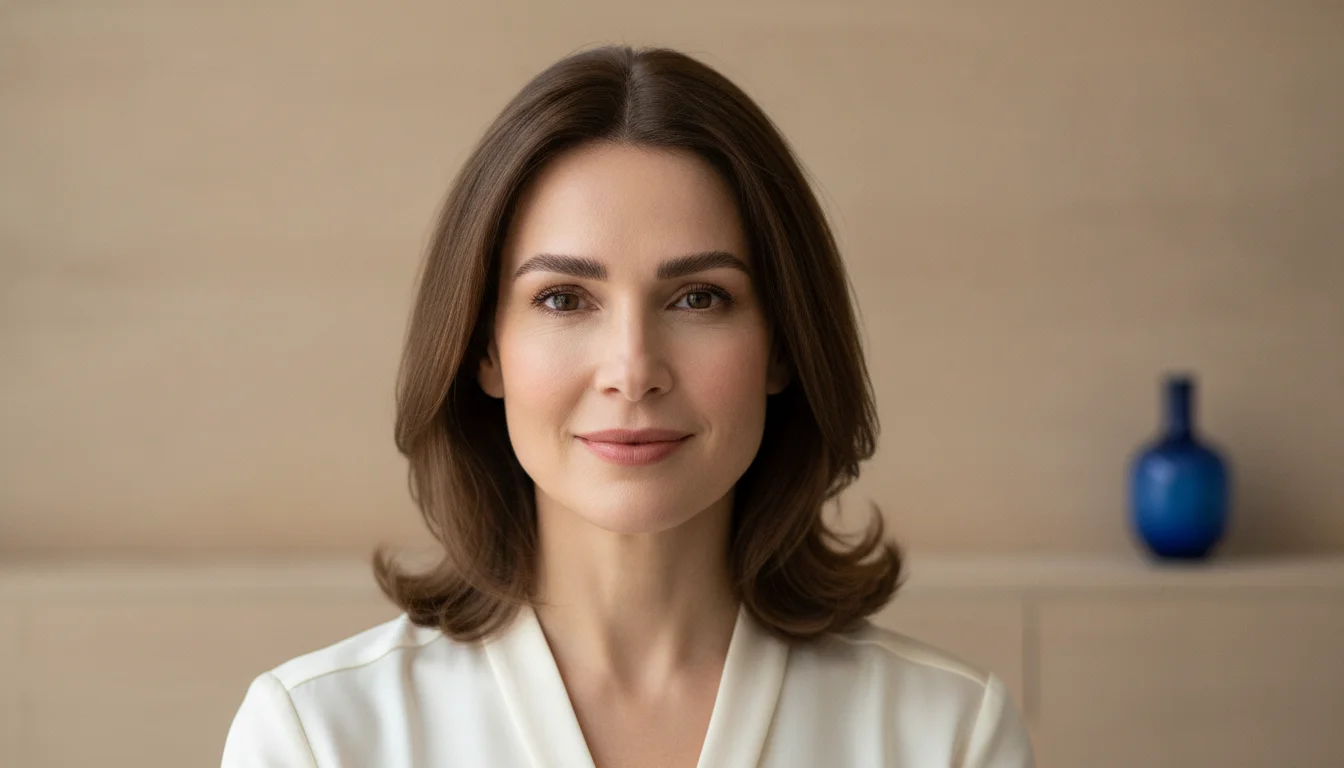
My eyebrows begin differently: how is a harmonious shape created?
One brow begins closer to the nose, while the other sits slightly further out. On one side the first hairs stand lightly upwards; on the other they form a compact dark patch. In everyday life, the difference is barely noticeable. Yet the moment you try to make both beginnings “equal” with a pencil, those two small areas seem to become the centre of the face.
The inner brow leaves little room for error because it sits so close to the facial centre. The solution, however, is not to draw two identical edges. Natural harmony comes from giving both sides similar visual weight and allowing each to blend into the existing hair. Carefully planned eyebrow permanent makeup can support that balance without erasing the living asymmetry that belongs to a real face.
An inner brow is not a corner
Natural brows rarely start on one exact vertical line. A few fine hairs may stand slightly further in, while others angle towards the arch. Skin remains visible between them. The eye does not read a single starting point; it reads a gradual transition from almost nothing to an identifiable brow.
When pencil, powder or pigment turns that transition into a closed front edge, the expression changes immediately. The brows seem closer together, the gaze becomes stricter, and the nose may appear narrower or longer. A geometrically symmetrical drawing can therefore look distinctly unbalanced on the face.
The helpful question is not, “Where should the line begin?” It is, “Where may the first visible hairs appear, and where does the brow need enough density to frame the eye?” Those positions are not necessarily at the same height, nor must the right and left sides match to the millimetre.
Each side has its own history
Growth direction, density and hair colour often differ naturally. Years of tweezing may also have altered one side more than the other. Many women always shape their brows with the same dominant hand and unconsciously remove different hairs on the harder-to-reach side. A small shift develops slowly over time.
Expression adds another layer. One side of the forehead may be more active, one eyelid may sit differently, and the bridge of the nose is not always perfectly centred. These are normal characteristics of a moving face, not faults. A measurement from the nostril can offer orientation, but it cannot replace attention to eye spacing, bone structure and expression.
If an area suddenly becomes bare, inflamed or changes quickly, a medical cause should be excluded first. With a stable, long-standing difference, the task is usually design: which natural hairs should remain, which gap needs an optical connection, and which small variation can simply be allowed to exist?
The distance test calms the decision
Remove your brow pencil and do not stay close to the mirror. Take two steps back, relax your forehead and look first at the eyes rather than the brows. Does the gaze feel balanced even though one beginning sits a few millimetres further in? If so, that difference probably does not require full correction.
Then take a photograph in soft daylight with the camera at eye level and no portrait filter. Do not immediately flip it or draw measuring lines across it. Instead, check three things. Does one side carry noticeably more weight? Is there a visible break between the nose and brow? Does one brow begin with a dark block while the other appears softly?
Olga Keller brings these observations into the preliminary design. The client sits upright, speaks and changes expression. Pigment is considered only when both beginnings look calm at normal viewing distance. Perfect coordinates matter less than a harmonious whole.

Microblading can open the transition with a few hairs
Microblading may be suitable when one inner brow contains light natural hairs and the other lacks only a few connecting structures. Fine pigmented strokes should not spread like a perfect fan from a single point. They need varied directions, spacing and lengths.
At the inner edge in particular, less often looks more believable. Too many closely placed strokes can merge visually after healing and create precisely the dark border that was meant to be avoided. Skin type and old pigment also determine whether extremely fine structures can heal clearly.
Sometimes the brow that begins further out should not be extended inwards at all. It may be enough to soften the visual density of the other beginning and bring the weight of both arches closer together. Thoughtful design does not automatically add pigment wherever a ruler finds a difference.
Powder Brows balance weight rather than coordinates
If both beginnings are present but differ in brightness or definition, Powder Brows may offer the quieter solution. Transparent shading builds from an almost invisible start. It does not create a square stamp, but a soft background that supports the client's own hairs.
The denser side may require less pigment and the paler side slightly more. Technically, the result is not mirrored, yet it appears more balanced within the face. This is the essential difference between symmetry on paper and harmony in real life.
A combination of methods is possible, but it is not automatically superior. The smallest useful amount of pigment remains the goal. The brow should make sense without pencil in the morning and still allow a different look with gel or powder when desired.
Olga Keller preserves the face's own rhythm
Olga Keller is a state-trained cosmetician with a medical foundation and has been a microblading pioneer in Berlin since 2013. Almost 13 years of experience and thousands of treatments have sharpened her judgement of when a millimetre helps and when it makes a face look rigid. Clients travel from Germany and abroad, while public figures and politicians trust her precision and discretion.
She works with certified German-made pigments free from heavy metals and iron oxides. Her philosophy is naturalness: after healing, nobody should discover two new inner brow edges, only a calmer gaze. If a requested design is not harmonious or the skin is unsuitable, Olga declines the treatment. Hundreds of five-star reviews confirm the value of this honest restraint.






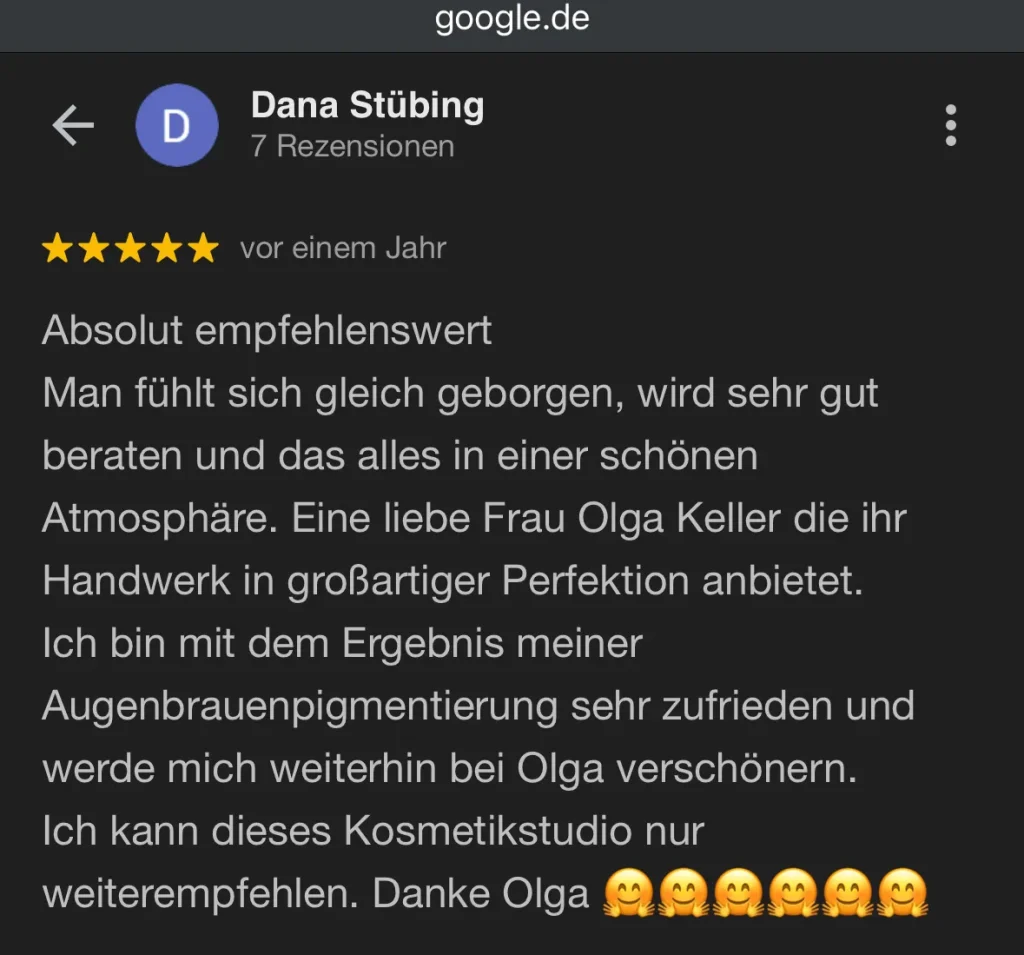



Because Olga personally cares for many returning clients and new clients often come through recommendations, a suitable Berlin appointment may require some advance planning. Enquire early. A short wait suits a shape that is not rushed into artificial equality, but developed carefully for your face.