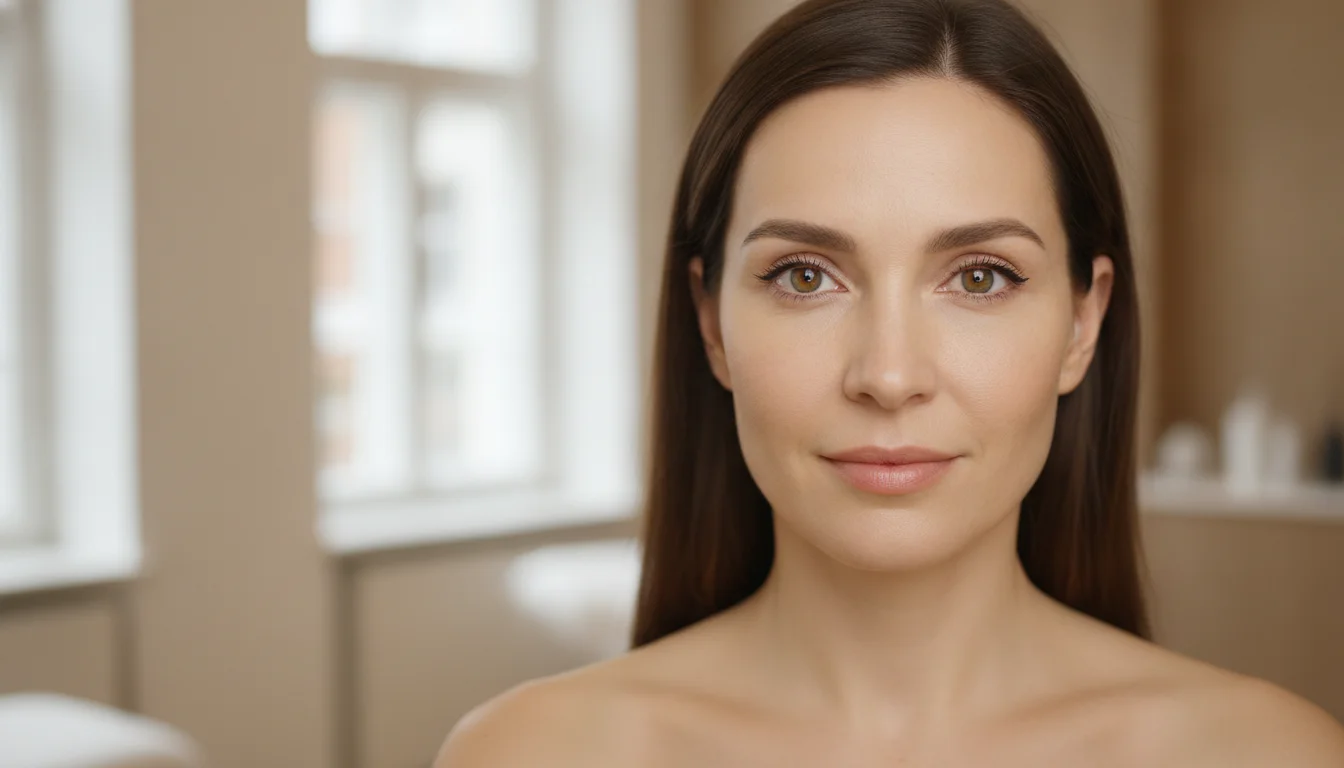

Refreshing permanent makeup eyebrows after three years
A great deal can change in three years: your favourite hair colour becomes warmer, your glasses become finer, and your morning makeup gets lighter. Only the old photograph taken just after treatment remains unchanged on your phone. That is why refreshing PMU eyebrows after three years should not mean recreating that picture as closely as possible.
The more useful question is: what still suits you so well that it deserves to stay? A beautiful refresh preserves the intelligent idea behind the former brow without holding your face inside its past. It should feel like a reunion, not a repeat performance.
Three years are not an expiry date
After three years, one client may have only a delicate shadow left while another still has a clearly visible shape. Both can be completely normal. Skin type, metabolism, sun exposure, skincare, technique and the original intensity all influence how quickly pigment becomes quieter. The number on the calendar cannot make the decision by itself.
If your brows remain soft, neutral and balanced within the face, there is no reason to darken them simply because an anniversary has arrived. If you draw the same tails every morning, can barely find the arch or feel that the two sides no longer frame the face calmly, a professional assessment becomes worthwhile.
The goal is not maximum longevity at any cost. A brow that fades evenly and attractively leaves room for future choices. Refreshing too frequently can reduce that room and make each additional layer appear more compact.
What the faded remainder says about the original work
Three years reveal how a treatment ages. A light, even and neutral pigment remainder is often a helpful base. It records the former direction without controlling the next design. Fine gaps are not automatically defects either: natural brows need visible skin between real hairs and implanted lines.
A strongly grey, red or orange remainder, widened strokes or a very dense field require a different conversation. Adding more of the same colour rarely solves that starting point. Before a microblading refresh, for example, there must be enough clear skin for new hair strokes to remain distinct rather than disappear into an old pattern.
An earlier shading treatment is not simply coloured in from edge to edge. During a Powder Brows refresh, Olga Keller studies where the soft transition still works, where selective depth is missing and where further fading would offer a better foundation. The remaining pigment is useful information, not a colouring-book outline.
Your face has lived through those three years too
Pigment is not the only thing that changes. Natural brow hairs may have become lighter, stronger or more sparse. You may now wear a fringe, a different frame of glasses or far less decorative makeup. Even subtle shifts in expression and personal style affect how present the eyebrows should feel.
Good planning therefore does not begin with, “Which colour did we use then?” It begins with today’s face without makeup. Where does natural hair grow now? Which side lifts more when you speak? Which contour feels effortless in the morning without foundation? Only then does the former design enter the discussion.
Bring a photograph of the fully healed result if you have one, rather than only the first-day image. Fresh PMU was intentionally stronger and is not a fair reference. An everyday photograph taken several weeks after the original appointment shows far more clearly what you genuinely loved.

Refresh, adapt or do nothing for now?
In a straightforward refresh, the basic idea remains right: the shape suits you, the colour is neutral and only the effect has become too quiet. Selected areas can then be restored with precision. This does not necessarily mean pigmenting every old stroke and every millimetre again.
An adaptation is a different task. Perhaps the front should become airier, the tail shorter, the arch gentler or the colour closer to your current natural hairs. Such wishes must be compatible with the pigment already in the skin. A new concept cannot be placed freely over an old shape that remains dense.
Sometimes doing nothing is the highest-quality option. Dense remaining colour, an unsuitable old shape, a marked colour shift, unsettled skin or a skin change that requires medical attention are reasons not to add pigment. A doctor should assess medical concerns first. Olga declines a treatment whenever she cannot responsibly promise a harmonious result.
The best preparation fits into one small note
Before your assessment, write down three everyday situations. How do the brows look immediately after waking? What do you add for work? What genuinely bothers you in a daylight photograph? These observations create a precise brief instead of the vague request to make everything look “fresh” again.
Arrive with bare brows where possible, or bring a clear photograph without brow makeup. A second picture with your usual pencil or powder is equally useful because it reveals the effect you instinctively seek. Information about previous treatments, pigments and techniques can complete the picture when available.
This preparation is not a test. It removes pressure from the decision. You do not need to know the correct technique or perfect shade in advance. Your role is to describe real life; Olga’s role is to translate it into a technically sound plan.
Olga Keller refreshes a face, not a date on the calendar
Olga Keller is a state-trained cosmetician with a medical foundation and a microblading pioneer in Berlin since 2013. Almost 13 years of experience and thousands of successful treatments have trained her eye for faint pigment as well as for the expression of an entire face. Clients travel from across Germany and abroad, while recognised personalities and politicians trust her precision and discretion.
For permanent makeup eyebrows, she uses certified German-made pigments free from heavy metals and iron oxides. Her philosophy remains uncompromisingly natural during a refresh: the result should not announce that it has been redone, but look as though the brows have simply regained clarity. Hundreds of five-star reviews across Google, Treatwell, Facebook and other platforms reflect that trust.










Many regular clients plan their appointments with Olga well ahead, and numerous new clients arrive through personal recommendations. The right appointment may therefore require a little notice. That brief wait is a positive sign of trust proven over many years.