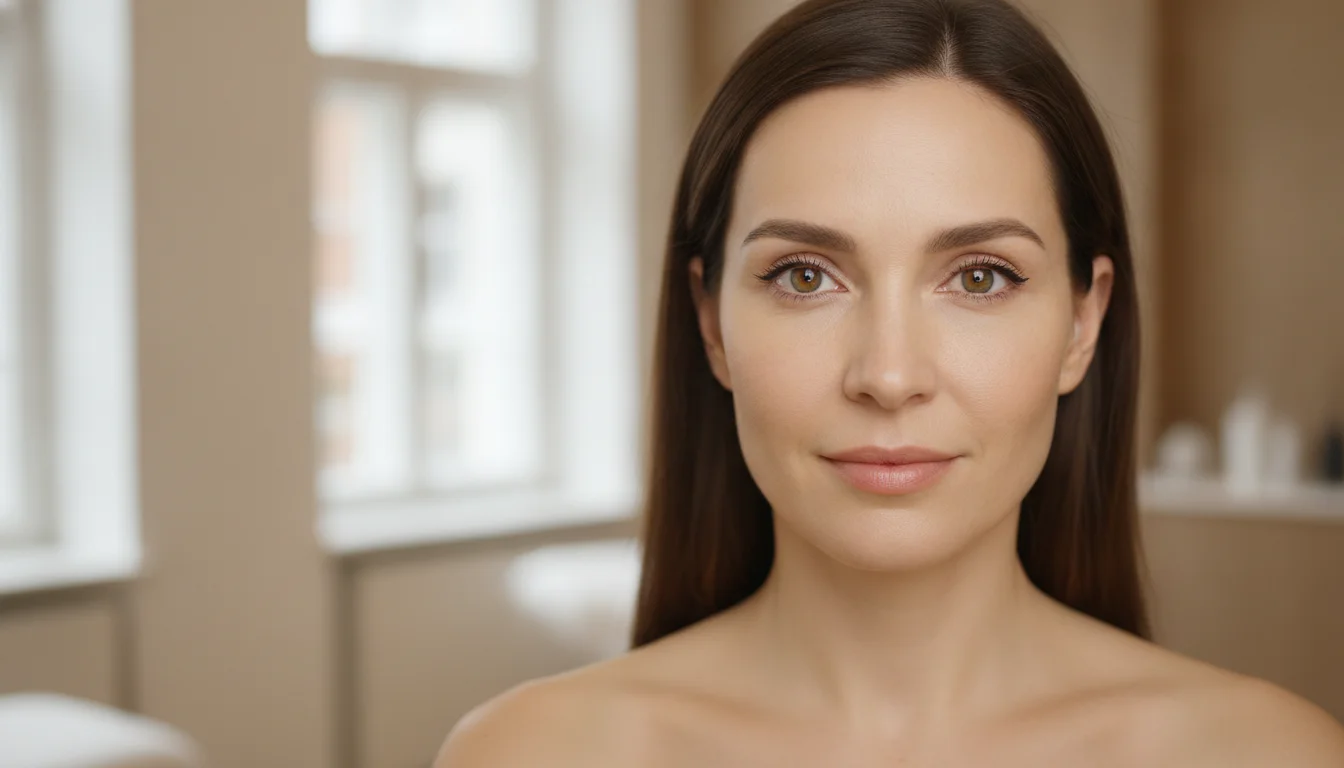

Should you refresh or redo permanent eyeliner?
Older permanent eyeliner is neither a blank page nor an heirloom that can never change. Perhaps the line has simply become quieter. Perhaps its old wing no longer feels like you. Sometimes all that remains is a grey-brown shadow that is not exactly bothersome, yet no longer performs the job it was designed to do.
“Refresh or redo?” sounds like a choice between two buttons. In practice, it is closer to careful restoration: what deserves to be preserved, what can be sensitively redesigned, and when would covering the past be the wrong shortcut? Olga Keller therefore begins with an inventory, not a bottle of colour.
The examination table: what is really still there?
In good light, Olga studies the colour, density, path and position of the old pigment. An evenly faded line in a harmonious position may be an excellent basis for a permanent eyeliner refresh. There is no reason to reinvent a sound idea; it can simply be made legible again.
Faint does not automatically mean straightforward, however. Residue may be cool, patchy or unexpectedly dense in places. New pigment does not sit on the skin like fresh ink on paper. Visually, it interacts with everything that remains below. Adding darkness can emphasise an unwanted undertone instead of resolving it.
The eyelid is part of the assessment too. Skin tension, the natural fold, facial movement and symmetry change over time. Olga evaluates the line with eyes open, eyes closed and in motion. The important question is not whether the original design once looked attractive in a photograph, but whether it still works with your gaze today.
Restore when the original idea still holds
A refresh can make sense when you still like the shape and placement, the residual pigment is light and reasonably even, and the skin is calm. The objective is not to create the blackest possible line. It is to restore definition without making the expression heavy.
You may only need the lash roots to become quietly visible again. A softened contour may benefit from a little precision. A delicate lash line enhancement creates a different effect from a visible wing: it makes the lash base appear fuller without reading as decorative makeup. What is feasible is still determined by the existing pigment.
Good restoration does not return a face to the past. It retains the intelligent part of the original design and translates it for the present. If you now wear less makeup, have different glasses or prefer gentler contrasts, the refreshed line may become subtler than it was before.
Redesign when your present-day gaze needs something else
With residual PMU, “starting again” rarely means working on completely untouched skin. The former line creates boundaries. Even so, a fundamental redesign may be appropriate when the old style no longer suits you or the shape no longer achieves its purpose.
The discussion then begins with effect. Do you want your eyes to look more awake? Would you like to skip pencil in the morning but still appear unmade-up? Is a long wing the problem, or do you simply miss density between the lashes? Statements like these are more useful for planning than a reference photo of someone else’s eyes.
Olga will not draw a current trend over an earlier fashion. She checks how much change the remaining pigment truly permits. Sometimes a softer reinterpretation is possible. Sometimes changing direction would only create a wider, heavier shape because the former edge would stay visible. In that situation, an honest no is part of excellent design.
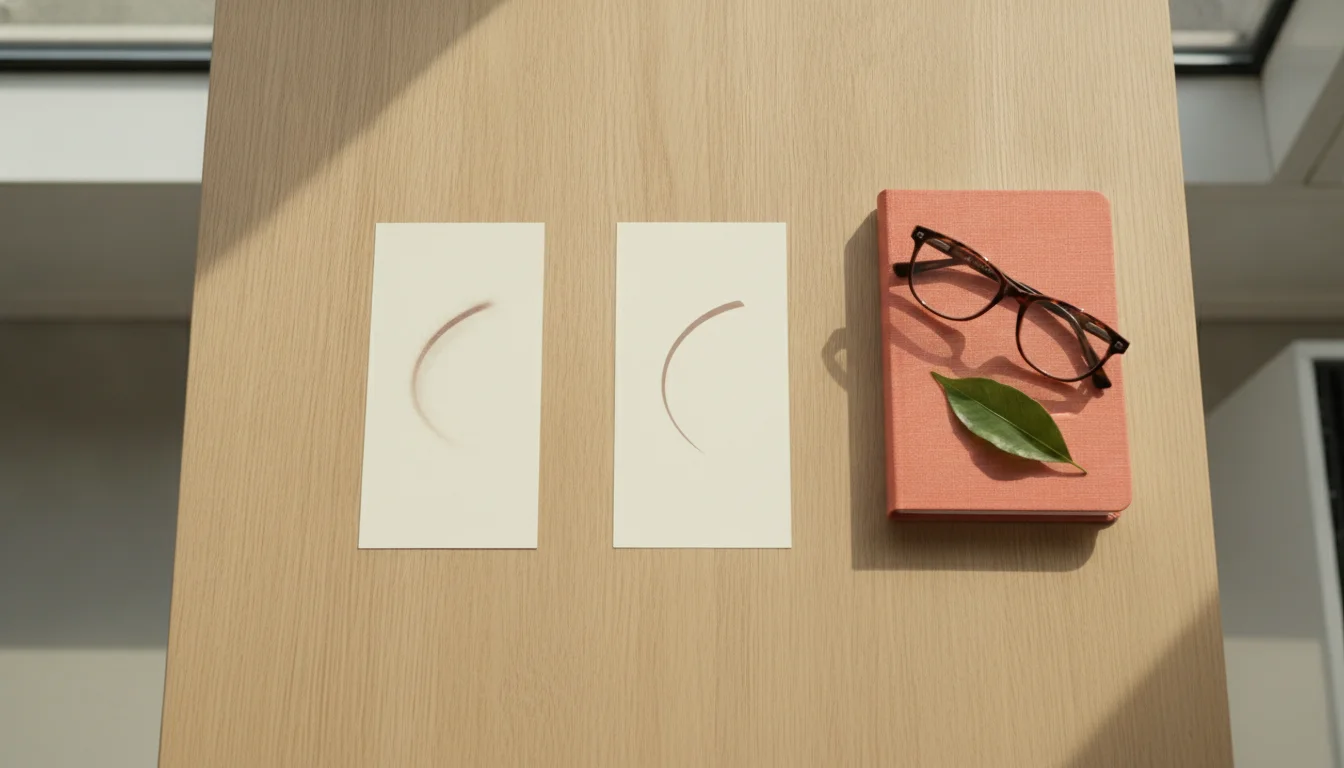
Do not paint over it when another step should come first
Very dark, dense or poorly positioned pigment cannot reliably be transformed into a finer line by adding another layer. A markedly altered colour can also limit the available options. In these cases, allowing more time, seeking a specialist assessment or discussing possible preparatory steps can be wiser than immediate repigmentation.
The same applies to irritated, inflamed or injured skin. Unexplained changes around the eye or eyelid require medical assessment first. Cosmetic pigmentation is not a way to conceal symptoms. A responsible consultation may therefore conclude that nothing should be done for now.
That does not make the visit wasted. You leave with an honest map of your starting point. Olga does not promise a result that the pigment, skin and anatomy cannot support. This restraint can prevent a cycle of corrections that gradually become broader and darker.
Four questions that make the choice surprisingly clear
First, do you still like the old shape when your face has no decorative makeup? Second, is the residue even and light enough to be supplemented in a controlled way? Third, has your style changed, or do you merely want the former effect back? Fourth, is the skin healthy and resilient?
If possible, bring photographs of the fully healed early result, rather than only pictures taken immediately after the original treatment. Details about the number and timing of sessions, known pigments, eye surgery, allergies, medication and recurring irritation are also useful. A photograph sent in advance can offer orientation, but it cannot replace an in-person assessment.
The consultation is not a sales conversation with a predetermined ending. It is where a vague wish becomes a responsible plan: refresh, rethink, wait, or deliberately choose not to add pigment.
Olga Keller does not restore at any cost
Olga Keller is a state-trained cosmetician with a medical foundation and has been a microblading pioneer in Berlin since 2013. Almost 13 years of experience and thousands of successful treatments have refined her ability to see when existing work has potential and when more colour would not be an improvement. Clients travel from across Germany and abroad, and well-known personalities and politicians value her precision and discretion.
For her permanent makeup, she uses certified German-made pigments free from heavy metals and iron oxides. Her signature is naturalness: the result should look as though your face chose its best line by itself. When that outcome is not achievable, Olga declines the treatment. Hundreds of five-star reviews recognise precisely this clarity.










Many regular clients return to Olga, while new clients often arrive through personal recommendations, so the most suitable appointment may require a little notice. That brief wait is a positive sign: trust here has been earned over years and passed from one client to the next.