Overplucked in the 90s: will full eyebrows ever grow back?
The tweezers were not in the bathroom by accident. Thin, high arches were the look in magazines, music videos and on red carpets. Women removed every hair that did not belong to the narrow line. Decades later the trend has gone, but its handwriting remains on many faces.
When only a fine arch grows now, the first question is often: have I ruined my brows permanently? The honest answer is less dramatic. Some follicles recover, others produce finer hair, and some remain inactive after years of repeated stress. Permanent eyebrow makeup can replace missing visual structure, but it should follow a calm inventory of what is still present.
The 90s brow was a decision of its time
It helps not to treat the past as a personal failure. Beauty changes its rules. What looks narrow now once appeared polished and modern. Many women plucked above the brow, shortened the tail and raised the arch because those were the instructions.
The lasting issue did not result from a single hair removal but from repetition. A hair was pulled, returned and was pulled again. Over many years, growth cycles may weaken. Yet today's appearance cannot reliably reveal which individual follicle remains active.
A period without shaping is therefore useful. Twelve to sixteen weeks feels long, but gives fine hairs time to become visible. Photograph the brows every four weeks under the same light. Progress is easier to recognise this way than through daily inspection in a magnifying mirror.
Growing back does not necessarily mean becoming dense
New hair often appears unevenly. Some strands are strong, others nearly colourless, while certain zones remain empty. A growth serum cannot force skin to rebuild a destroyed follicle. Promises that every overplucked brow can be fully restored should be treated cautiously.
Age, hormones and health also influence density. If loss continues beyond the old plucking zones, begins suddenly, itches or accompanies skin changes, medical assessment is sensible. Thyroid conditions, skin disease, medication or deficiencies should not simply be covered with pigment.
Whatever remains after the growth period is the most valuable foundation. Even a few natural hairs supply direction and texture. Good pigmentation works between and with them. It does not attempt to place an entirely foreign eyebrow over the face.
The new shape should copy neither 1996 nor Instagram
After years of thin brows, the desire for maximum width is understandable. Yet today's trend brow can age just as quickly as the old one. A lasting shape should not prove that there is finally enough brow. It should suit bone structure, eyes, forehead and personal style.
Olga therefore begins with a restrained foundation. She checks it in daylight, from conversation distance and in movement. A dramatic expansion is rarely necessary. A softer front, believable lower edge and calm tail often change more.
Existing hair sets useful boundaries. Pigmentation far beyond it may look flat without natural strands. The aim is a shape that remains plausible without makeup and can still be styled more strongly with gel or powder.

Microblading builds a new logic of hair
Microblading may suit brows where individual natural hairs remain but the connecting structure is missing. Fine strokes continue their growth direction and bridge gaps without creating a closed field of colour.
Spacing is crucial. Too many supposed hairs placed together merge visually. The result becomes another hard line, only this time a lasting one. Skin type also determines whether the finest strokes can heal cleanly. Very oily or porous skin may call for another technique.
Microblading does not produce real hair and is not medical restoration. It creates a visual illusion. For that reason, the drawing must look natural from ordinary distance, not only in a magnified photograph taken immediately after treatment.
Powder Brows provide a soft background, not a block
Powder Brows can help when remaining hair is fine, pale and scattered across the whole brow. Transparent shading gives the skin a quiet background and connects those hairs into a readable shape.
Powder does not automatically mean heavily made up. An airy front, soft edges and controlled density prevent a block effect. After decades with an extremely thin line, the new brow should not become the next extreme trend.
A combination may fit, or one method may deliberately be enough. The best solution uses as little pigment as possible and as much as necessary. It leaves room for natural hairs, including those that may still return later.
Olga Keller designs for the next decade
Olga Keller is a state-trained cosmetician with a medical foundation and a Berlin microblading pioneer since 2013. Nearly 13 years and thousands of treatments have shown her how brow fashions arrive, leave and how healed pigment ages. Clients travel from Germany and abroad, while public figures and politicians value her precision and discretion.
She uses certified German-made pigments free from heavy metals and iron oxides. Her philosophy is naturalness: the new brow need not deny the 90s, but should belong naturally to today's face. If the desired width is disharmonious or the skin unsuitable, Olga refuses treatment. Hundreds of five-star reviews confirm this honest restraint.



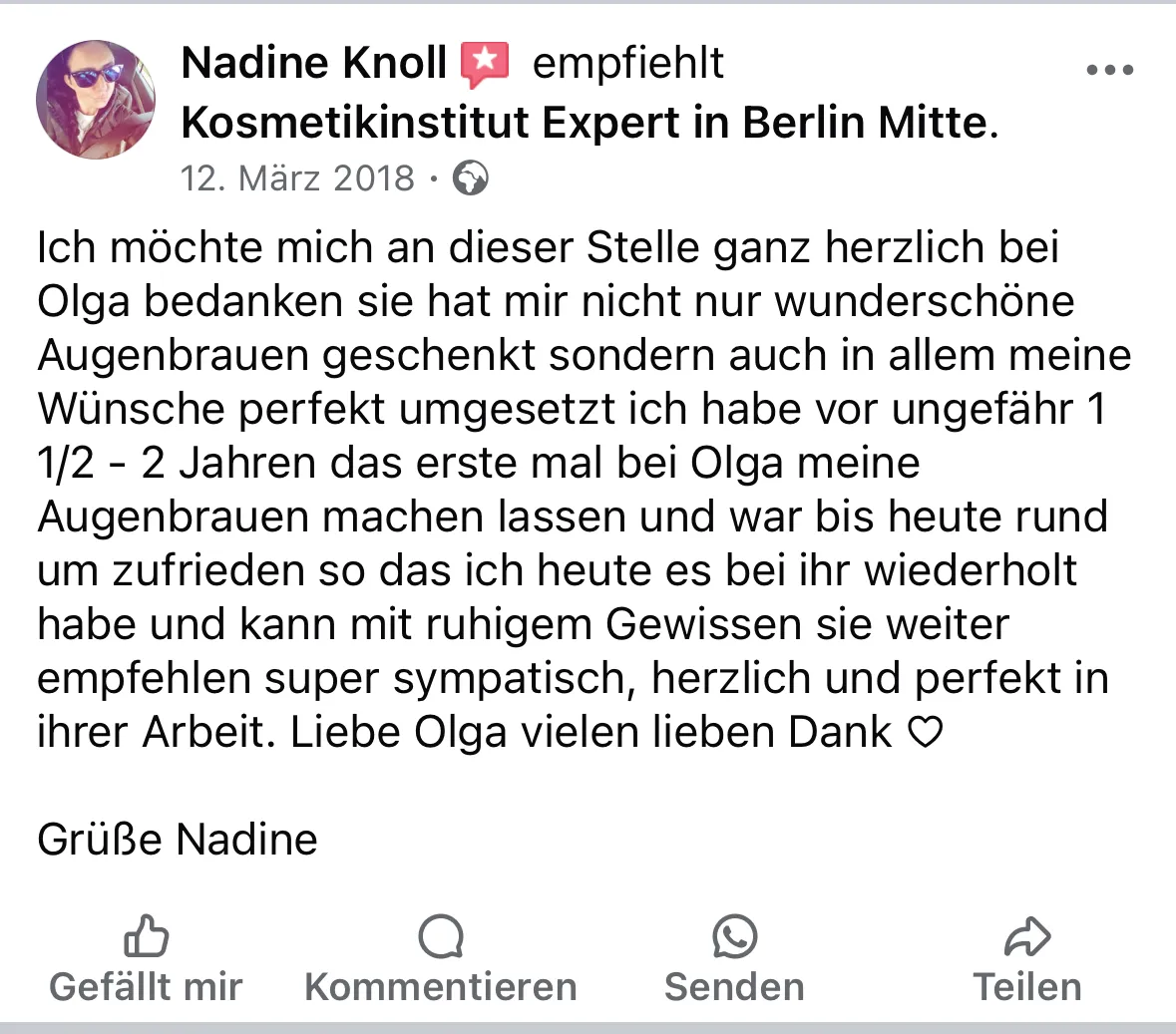


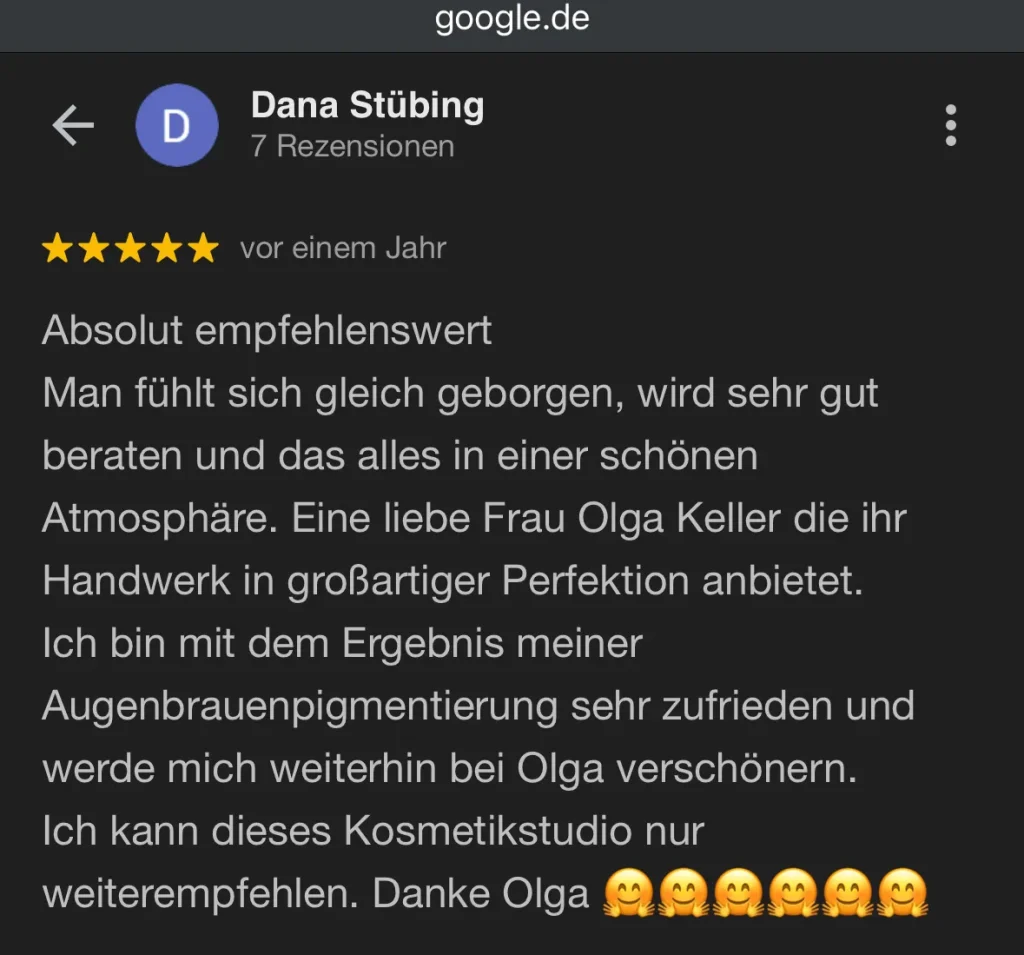



Because Olga personally cares for many returning clients and numerous new clients arrive through recommendations, a suitable Berlin appointment may need some advance planning. Enquire early; a short wait is a healthy counterweight to a decision intended to remain on the face for years.