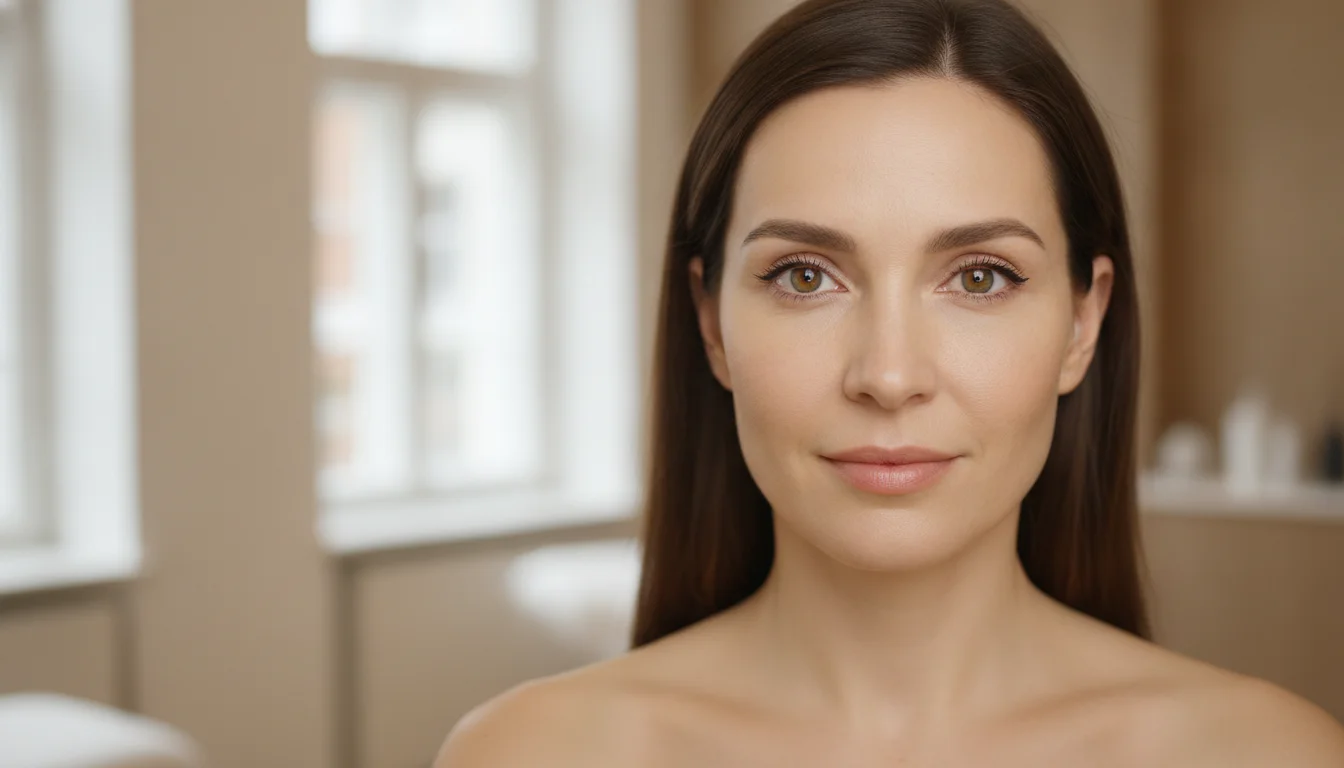
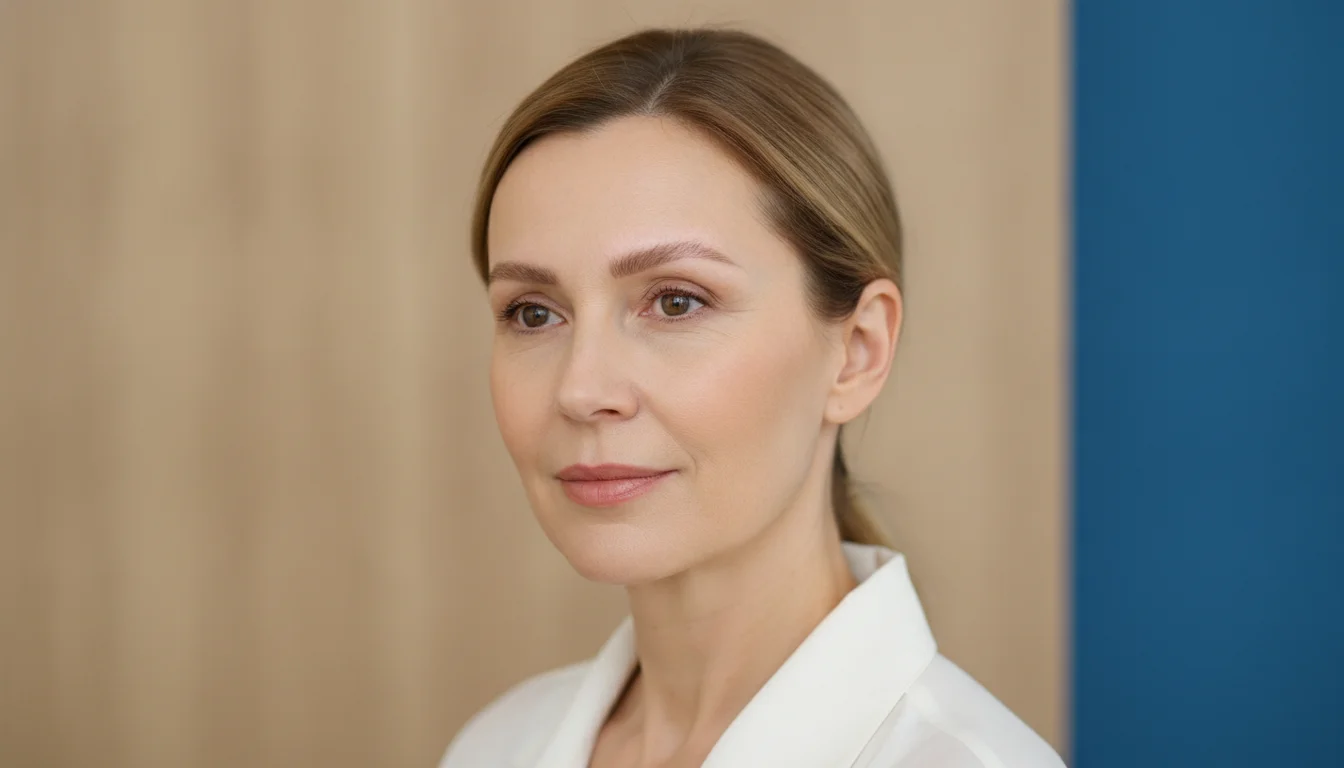
Why is the outer third of my eyebrow missing?
The front still grows and the arch is visible, but then the eyebrow abruptly ends. Without pencil, the eye looks unframed, sometimes rounder or more tired. The outer third may be small, yet it works like punctuation: it completes the line and tells the gaze which direction to follow.
A missing brow tail is therefore more than one bare patch. Every morning you must rediscover its length, angle and height, and the two sides easily become different. Permanent eyebrow makeup can provide a dependable foundation, but only after understanding why the hairs are absent and where the new line genuinely belongs.
Sometimes the tail is present but almost invisible
Hair naturally becomes finer, lighter and shorter at the outer end. Blonde, grey or sun-lightened hairs may merge visually with the skin even though growth remains. Backlighting and foundation strengthen the effect by reducing contrast.
Growth direction can also mislead the eye. Hairs lying downwards or sideways fail to form a clear upper edge and make the tail appear empty. A spoolie and natural daylight help reveal whether hair is truly missing or simply provides little visible structure.
This distinction matters. Existing hair should remain part of the result. Pigmentation needs to support it rather than cover it with a dark line. A very light addition is often enough for the eye to read the natural brow as complete again.
Plucking, friction and time leave different clues
Many women plucked the outer brow narrowly for years. Some follicles recover, while others produce only fine hairs. Repeated rubbing, forceful makeup removal and skin irritation can also burden the delicate area. Its history often appears as irregular little islands rather than a neat missing edge.
The hair cycle changes with age as well. The outer brow may become sparse first while the front remains full. This does not automatically indicate illness. A slow change on both sides, however, differs from sudden or one-sided loss.
If the outer third has recently disappeared, continues to shed rapidly, or accompanies itching, redness or other symptoms, the cause should be medically assessed first. Thyroid conditions, skin disorders, medication or deficiencies may be relevant. PMU is not a diagnosis and should not be placed on inflamed skin.
The right endpoint is not where the pencil happens to land
When drawing a tail daily, people often extend it further over time. A long, descending tail can visually pull the eye down. A tail placed too high looks surprised and disconnected from natural hair. Its position must emerge from the face, eye, arch and expression together.
Olga assesses the endpoint from normal conversation distance. The brow should accompany the eye without resembling an arrow. A mathematical diagonal from the nostril is only a guide. Nose shape, eye spacing and bone structure are individual and cannot be fully compressed into a template.
The preliminary drawing is judged while seated with a relaxed face, then during speech and a smile. This reveals whether the new tail remains harmonious in movement. A lasting line is appropriate only when both sides feel calm across the whole face.

Microblading can restore missing direction
Microblading is particularly interesting when individual hairs are absent and an airy new tail should connect to the existing arch. Fine strokes can follow several growth directions so that no hard starting point is visible.
Clear skin between the lines is essential. Too many strokes placed densely together become a solid area rather than believable hair. Skin type matters too: very oily or porous skin may heal the finest lines differently. A good decision considers the healed result, not merely the fresh drawing.
Microblading cannot grow new hair. It creates visual structure that must look convincing without makeup. Natural hairs can still be brushed and cared for; they connect the pigmented addition with the original brow.
Powder Brows help when more than individual hairs are missing
Powder Brows may suit a brow that is pale or diffuse overall, rather than missing only individual lines. Transparent shading connects the front, arch and new tail into a calm shape.
The tail should not become the darkest, sharpest feature on the face. Controlled density provides orientation while the borders remain soft. Restraint is particularly important on mature skin: a heavy, low endpoint can unnecessarily weigh down the gaze.
A combination may be appropriate, or one technique may deliberately be enough. The best method is not the one that covers the most, but the one that creates a credible continuation with the least pigment.
Olga Keller adds a full stop, not an exclamation mark
Olga Keller is a state-trained cosmetician with a medical foundation and a Berlin microblading pioneer since 2013. Nearly 13 years and thousands of treatments have sharpened her understanding of brows in movement and years after healing. Clients travel from Germany and abroad, while public figures and politicians trust her precision and discretion.
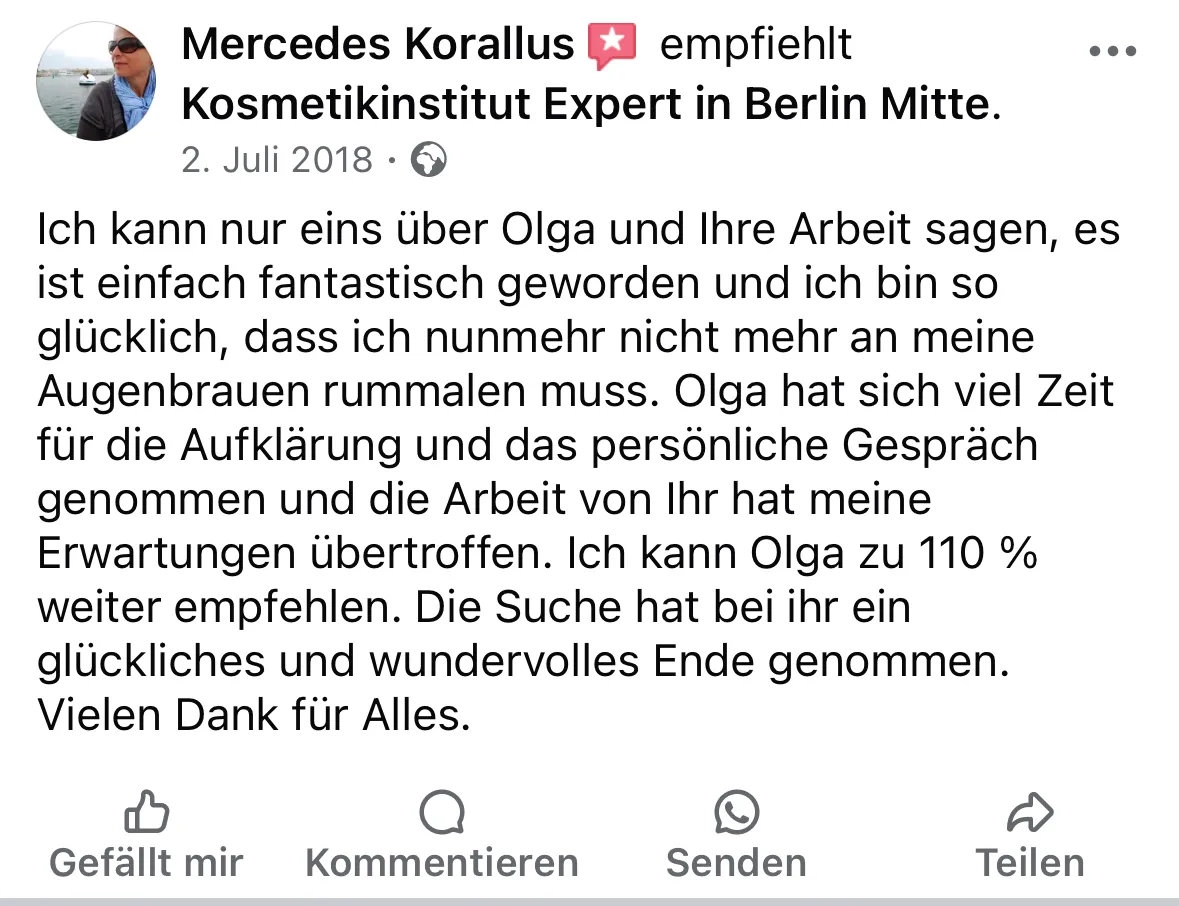
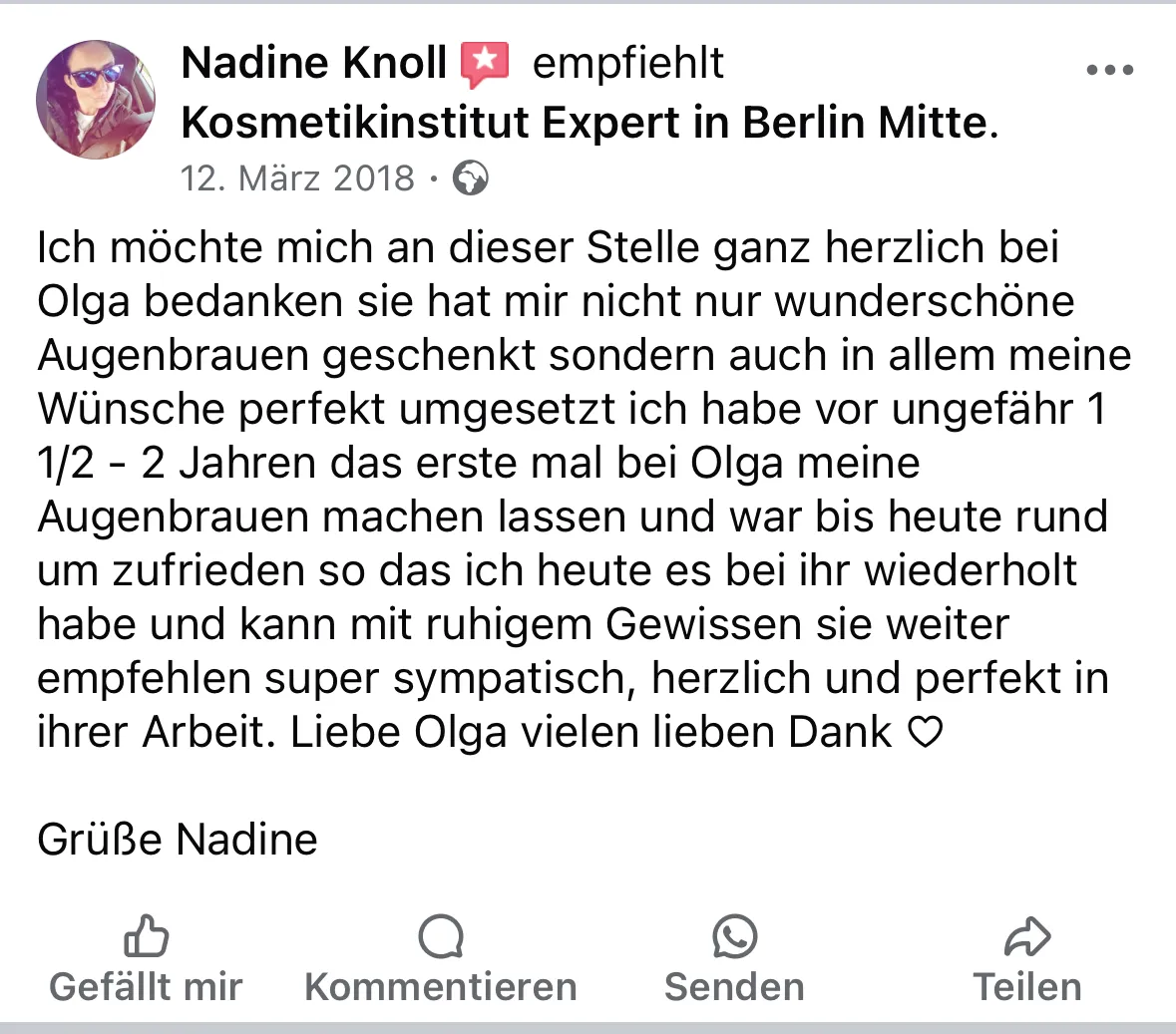
She uses certified German-made pigments free from heavy metals and iron oxides. Her philosophy is naturalness: the new tail should quietly complete the brow, not look like an attached drawing. If the skin is unsuitable or the requested line would be disharmonious, Olga refuses treatment. Hundreds of five-star reviews confirm this careful honesty.




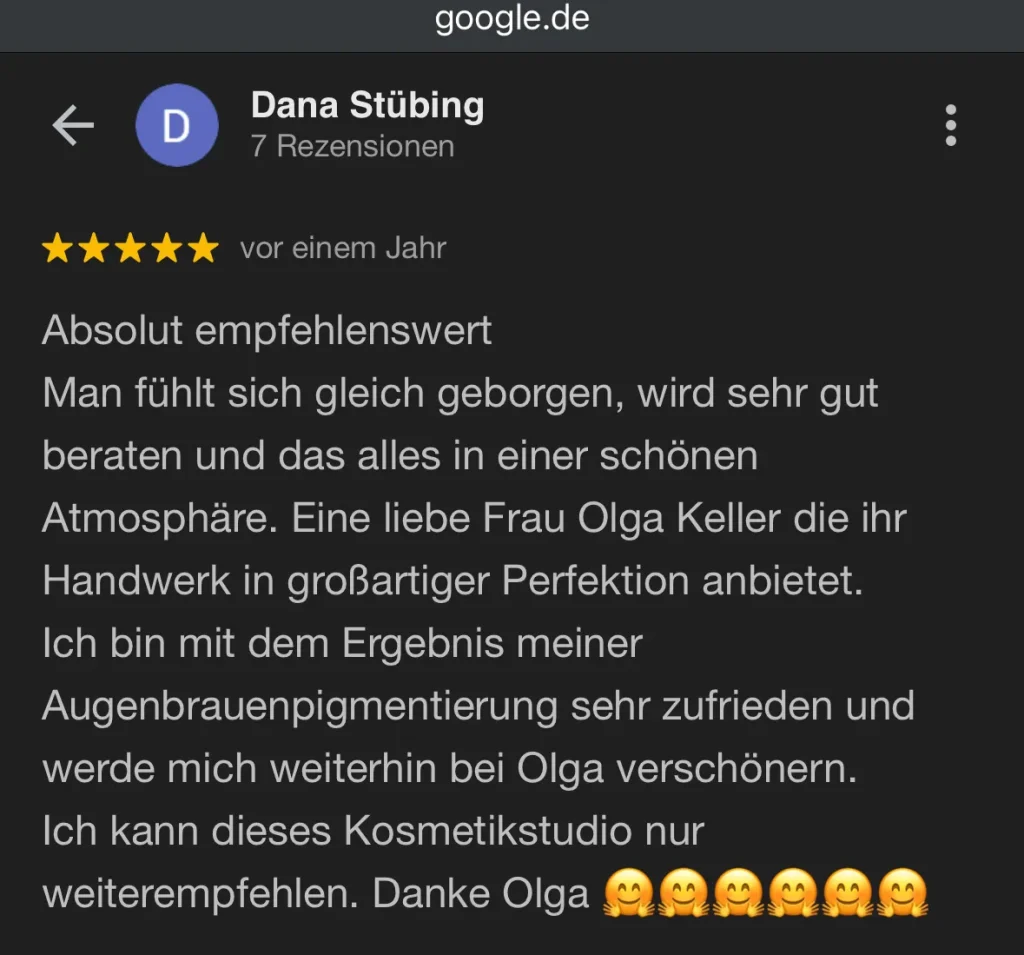



Because Olga personally cares for many returning clients and new clients frequently arrive through recommendations, a suitable Berlin appointment may require a little advance planning. Enquire early; a short wait reflects established trust and a brow tail that is never invented in a rush.