Outer eyebrows are thinning: is menopause really to blame?
In a photograph from five years ago, the brow still ends clearly beyond the outer corner of the eye. Today that same line seems to dissolve shortly after the arch. The tweezers are innocent, yet the pencil comes out every morning. One explanation arrives quickly: it must be menopause.
It may contribute. That does not make it a diagnosis. Hormonal changes can affect hair generally, but a sparse outer brow has several possible stories. Before permanent eyebrow make-up fills the visible gap, the invisible reason behind it deserves attention.
Menopause changes hair, but not according to a template
During perimenopause and after menopause, women may notice hair thinning or loss. Hair growth also slows with age, some follicles become less active, and formerly dark eyebrow hairs may turn grey or almost transparent. The outer third can appear to change first because its hairs are naturally finer and less dense.
That does not mean every shortening brow is explained by lower oestrogen. Menopause is a phase of life, not a remote diagnosis for two small areas of skin. Loss at the outer edges can also occur with thyroid disease. Different forms of alopecia may involve eyebrows as well.
Not every visual gap is true hair loss, either. Existing hairs may simply be pale, short or directed downwards. This situation calls for a different response from an area where follicles have genuinely stopped producing hair.
A spoolie reveals more than a magnifying mirror
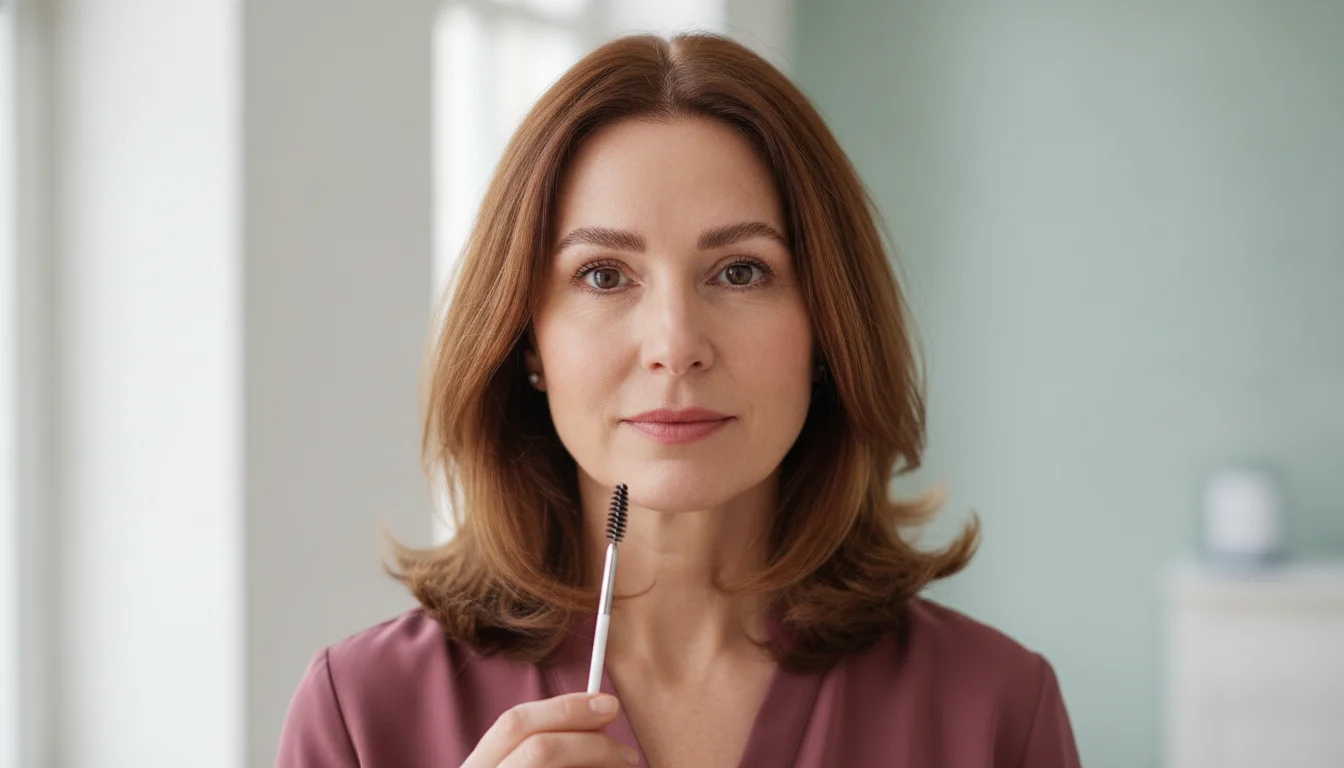
In daylight, gently brush the brows upwards and outwards. If many fine pale hairs appear, professional tinting may reveal how much natural structure remains. Look at older unfiltered photographs too. Did both sides change gradually, or did one side alter quickly?
The skin adds information. Is it calm and normal, or are there redness, scale, itching, small scars or unusually smooth patches? Have the hairline, scalp density or eyelashes changed at the same time? These details are more useful than the broad statement “since menopause”.
Put the pencil down briefly for this inspection. A drawing that varies every day can gradually shift the memory of the original shape. Photographing the bare brow makes it easier to distinguish what is absent from what is merely difficult to see.
When medicine should come before pigment
New, rapid or one-sided loss should be medically assessed. The same applies to inflamed, itchy, scaly or scar-like skin, clearly defined bald patches, or loss that also affects scalp hair and eyelashes. Fatigue, unusual sensitivity to cold, weight changes or other new symptoms also belong in a conversation with a doctor.
A dermatologist can consider alopecia, skin disease or mechanical damage. Depending on the overall picture, a clinician may decide that further investigation, perhaps involving thyroid function or nutritional deficiency, is appropriate. Supplements and hormones should not be started merely on suspicion.
PMU does not treat the cause and cannot make hair grow. Inflamed skin must not be pigmented. If loss is still progressing, a shape drawn today may soon sit apart from the changing natural brow. A stable starting point is therefore not an inconvenient delay; it is part of responsible design.
A new brow tail is not found with a ruler
Once the cause has been clarified and the skin is healthy, aesthetic planning begins with the whole face. A long tail that drops too low can make the eyes look tired. An ending placed too high appears surprised. A dark point beside fine grey hairs can look like a symbol pasted onto the face.
Olga Keller studies eye spacing, bone structure, natural hair direction and expression. She pre-draws while the client is sitting, checks the design from conversational distance and watches it during speech and a smile. The two sides should belong together, but need not be mathematically identical. A living face is not identical either.
Often the outer third does not need to be reinvented completely. A few millimetres of direction, a softer transition and a clearer endpoint may be enough for the eye to read the brow as whole again.
Skin chooses between Microblading and Powder Brows
Microblading can visually replace individual hairs when the skin type and remaining growth are suitable. The lines need air between them and must weave into real hair. Too many strokes in a small space may heal into a compact tail rather than delicate structure.
Powder Brows may be the calmer solution for diffuse lightness and mature or textured skin. A translucent shadow supports the arch and outer third without drawing every missing hair separately. The ending should never become black or sharply cut.
A delicate combination sometimes works; sometimes one technique is deliberately better. Olga does not decide by the popularity of a name, but by how pigment is likely to heal in the individual skin. The fresh photograph is secondary. The brow in daylight several weeks later is what counts.
Olga Keller restores the brow without erasing age
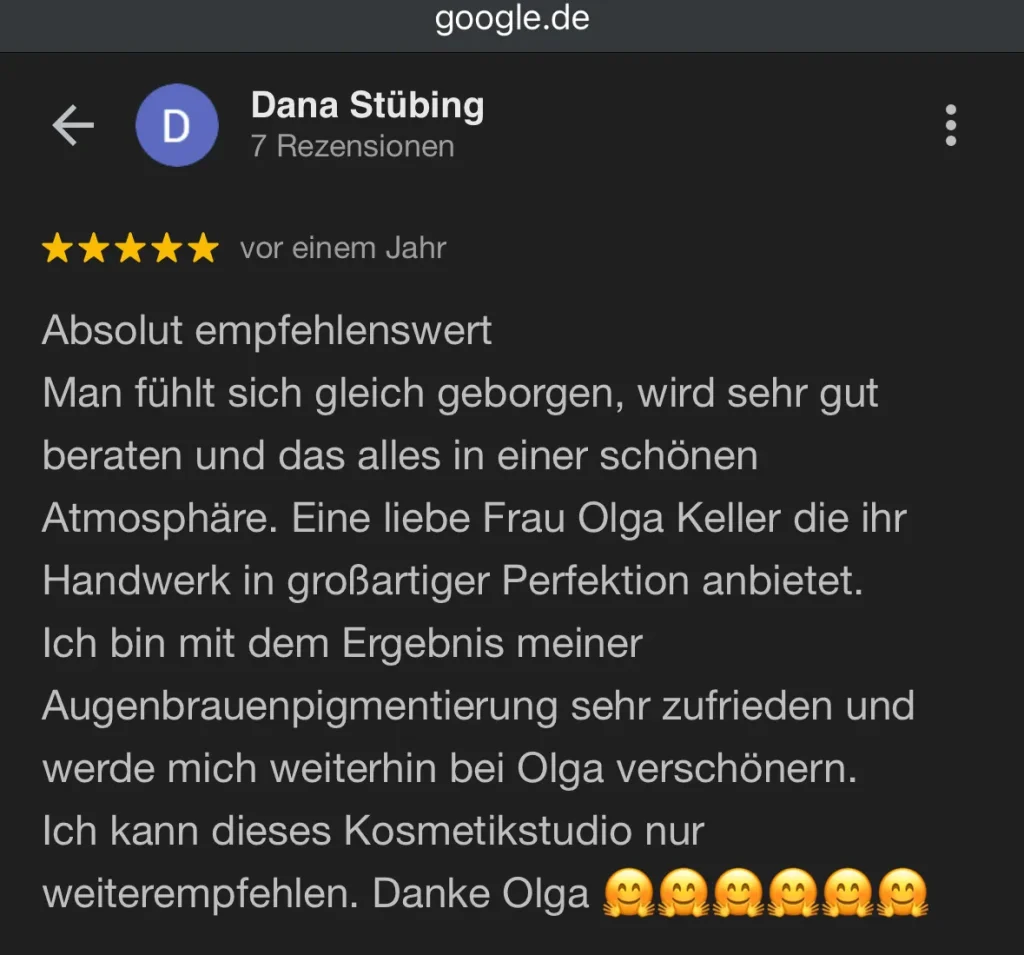
Olga Keller is a state-trained cosmetician with a medical foundation and has been a pioneer in microblading and permanent make-up in Berlin since 2013. Almost 13 years of experience and thousands of successful treatments have trained her eye to recognise when a few strokes are enough and when a medical question must be answered first.
She uses certified German-made pigments free from heavy metals and iron oxides. Clients travel from across Germany and abroad; well-known personalities and politicians also trust her precision and discretion. Hundreds of five-star reviews on Google, Treatwell, Facebook and other platforms praise results that do not claim youth, but restore harmony.
Olga refuses treatment when the skin is unsuitable, the loss unexplained or the desired shape unbalanced. Her philosophy remains quiet: it should look as though nothing has been done. An outer brow can become visible again without becoming the hardest feature in the face.









Olga Keller cares for many regular clients in Berlin, and numerous new clients arrive through personal recommendations. A suitable appointment may therefore require a little advance planning. Use that time for any necessary assessment and to gather old photographs; a brow that is understood carefully can be restored more beautifully than one explained in haste.