Why does my lipstick make my teeth look yellow?
It was perfect in the shop. An elegant coral red: warm, expensive-looking, exactly right. Then you stand by the window at home and suddenly it is not the lipstick that seems different, but your entire tooth colour. More yellow. Of course, nothing happened to your teeth during the journey.
What changed was the neighbourhood. The eye never judges colour entirely on its own. Lips sit directly beside teeth, so their tone can shift how tooth colour is perceived. That quiet visual conversation matters when planning Lip Blush too.
Your lipstick is not telling the truth about your teeth
A tooth contains many nuances: brighter edges, warmer dentine, slight translucency and shadows between teeth. Beside an orange-, rust- or yellow-based red, those warm elements become more noticeable. The lipstick has not made the teeth yellow; it has simply given the eye a new comparison.
A berry, rose or subtly blue-based colour can reverse the effect. The teeth appear cooler and therefore often brighter. This is contrast, not whitening. Remove the lip colour and the optical shift disappears with it.
That is why an isolated photograph of a mouth is not enough. Tooth shade, complexion, lips and even the whites of the eyes belong to one picture. A swatch that looks cool on a white card may become neutral on warm skin.
“Cool makes teeth white” is only half a rule
The quick online instruction is to choose a blue-based red. It can work, but an excessively cool pink may fight with olive or golden skin. The teeth might look brighter while the mouth appears pasted onto the face. A successful colour has more than one job.
Brown is not automatically unflattering either. Balanced rosewood with a cool red component can look beautifully polished; caramel beige may make both lips and teeth seem dull. What matters is not the shade name printed on the packaging but the pigments actually present.
Olga Keller therefore looks beyond “warm” and “cool”. She reads how much grey, orange, blue or brown a colour contains and how those components interact with natural lip pigment. The face makes the decision, not the trend label.
Lighting is the silent accomplice
Department stores often mix warm overhead lamps with bright displays. A yellow bathroom bulb intensifies every ivory note. Cool office lighting removes warmth from skin and makes lip colours look more violet. One lipstick can apparently produce three different tooth shades.
Phones do not always help. Automatic white balance brightens a face while HDR changes shadows around lips and teeth. Filters smooth texture and shift reds. Choosing colour from one selfie may mean responding to the camera rather than your own complexion.
Test a lip shade beside a window, deeper inside the room and in evening light. Speak and smile. The right colour should work not only in a silent close-up but from conversation distance with your teeth visible.
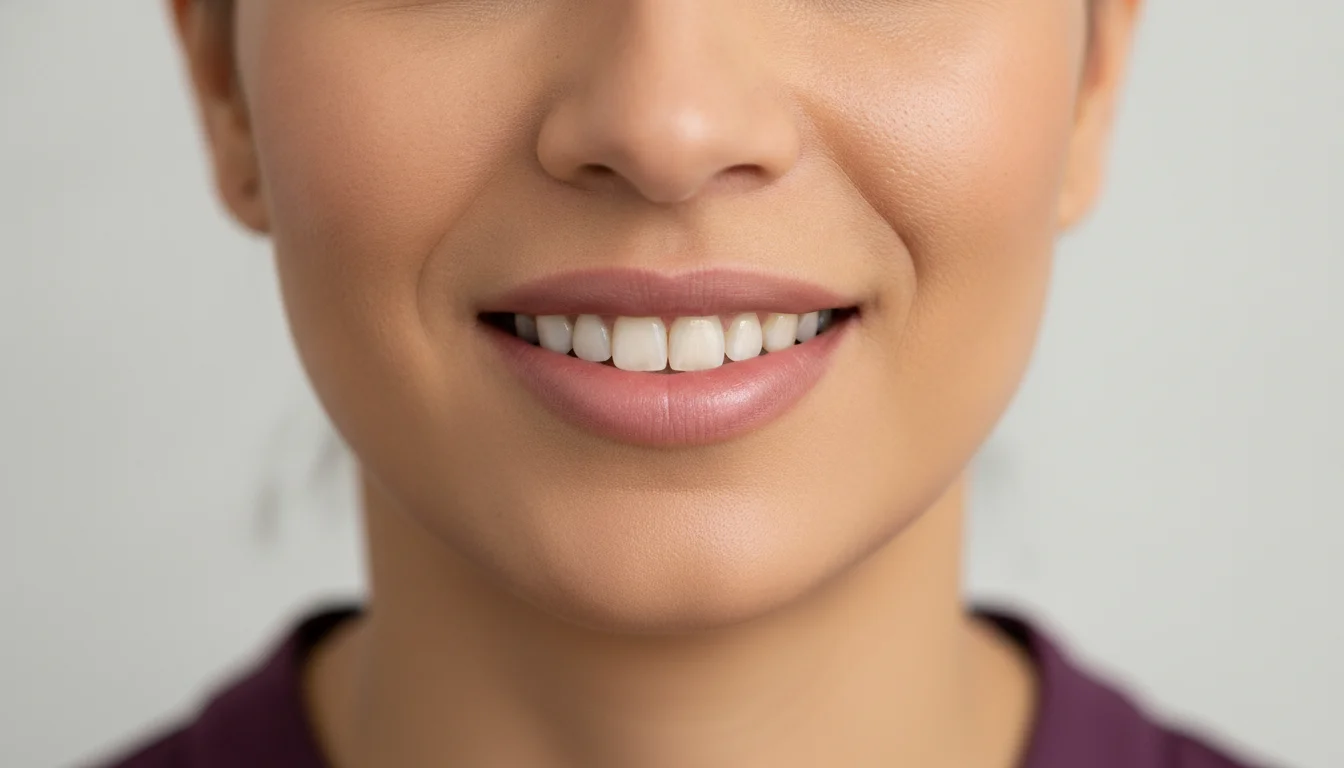
Your natural lip colour always joins the mixture
Lipstick is not applied to white paper. Pink, blue, brown or very pale lips change every product. The same nude may turn peach on one person and grey on another. This interaction matters even more with pigment placed transparently in the skin, where the healed shade blends with the natural base.
For that reason, Lip Blush is not copied directly from a favourite lipstick. Olga first assesses the natural lip tone, circulation, skin undertone and visible irregularities. Darker or cooler lips may require staged neutralisation; applying cool rose immediately does not guarantee that cool rose will be the healed result.
Daily habits matter too. Someone who rarely wears make-up needs a different foundation from someone who enjoys vivid red every day. The permanent part should be the colour that feels harmonious in the morning. Fashion contrasts can still come from a lipstick tube and disappear at night.
Lip Blush is not a permanent whitening filter
A well-chosen base can make the mouth look fresher and avoid unhelpful orange or grey effects. It cannot change tooth structure, and it does not replace professional cleaning or dental advice. Anyone who wants to change the actual shade of their teeth should speak to a dental professional.
Olga therefore does not promise “five shades whiter”. She designs a colour connecting complexion, teeth, lip anatomy and personality. It may be muted rosewood, translucent berry rose or an individual blend that looks modest in the cup but convincing on the face.
If PMU is already present, its healed residue must be considered before a Lip Blush refresh. Cool old pigment plus a new warm layer does not automatically equal neutral. Sometimes patience is the better colour mixer.
Olga Keller never chooses colour without your smile
Olga Keller is a state-trained cosmetician with a medical foundation and has been a Berlin pioneer in microblading and permanent make-up since 2013. Nearly 13 years and thousands of treatments have shown her how one small colour shift can change an entire face.
She uses certified German-made pigments free from heavy metals and iron oxides. Clients travel from Germany and abroad, while public figures and politicians value her discretion. Hundreds of five-star reviews celebrate natural results rather than a standardised colour formula.
A consultation therefore involves more than looking at a pigment chart. Olga observes you in neutral light, with a relaxed mouth and while smiling. If a desired colour makes the teeth brighter but the complexion tired, she keeps looking. The best lip colour does not win in the pot. It wins on the face.


Olga Keller has many regular clients in Berlin, and numerous new clients arrive through personal recommendations. A suitable appointment may require some notice. Contact the studio early: a colour that still feels right when you smile deserves careful selection.