Lip Scar: Can Colour and Contour Be Visually Blended?
Your lipstick points it out every morning. The line breaks at one small place, colour grips differently, or the upper lip suddenly looks narrower when you smile. The scar itself may have belonged to your face for years. What bothers you is not its existence but the visual “skip” that make-up keeps highlighting. Could Lip Blush make this transition calmer?
With a mature, stable scar, delicate optical blending is often possible. Pigmentation is not scar treatment, however. It cannot flatten tissue, release tightness or change the way the lip moves. Its strength lies in colour, light perception and an exceptionally cautious interpretation of the natural border.
A scar can alter more than colour
After an accident, surgery, piercing, bite or previous inflammation, lip tissue may heal differently from its surroundings. Some scars are pale, others pink. Some are flat and soft; others pull slightly, feel firm or interrupt the red lip border. There is therefore no universal “scar technique”.
Olga Keller first identifies what actually creates the visual disruption. Is colour missing in one area? Does the border appear to dip? Is a tiny raised section casting a shadow? Or does the lip move asymmetrically during speech? Pigment may influence the first two. Shadow and movement require a different discussion.
This distinction prevents misleading promises. A perfectly coloured line cannot remove a depression that can be felt. Conversely, connecting one tiny colour gap may make an existing scar surprisingly unobtrusive from normal conversational distance.
The scar must be mature and calm before colour is considered
Scars keep changing for a long time. They may begin red, firm or raised and gradually become softer and paler over many months. General medical guidance often describes maturation over twelve to eighteen months or longer. That is not a fixed waiting period for every lip, but it explains why a recent scar is not a finished canvas.
An open, sore, painful, strongly red, itchy, growing or otherwise changing area is never cosmetically pigmented. The same applies when its diagnosis is unclear or another surgical correction is planned. The treating doctor, dermatologist or plastic surgery team must assess it first.
Even with an old scar, Olga asks about its cause, age, previous treatments and healing behaviour. A tendency towards raised scars or keloids must be disclosed. A beautiful colour result begins not with a needle, but with deciding whether the tissue is a suitable candidate.
The border is mapped while the mouth moves
A lip is not a still canvas. It talks, smiles, presses together and changes shape. Olga therefore does not draw from one tense photograph. She observes the mouth relaxed, with a gentle smile and through small speaking movements. This reveals whether a perceived gap truly lacks colour or is created by tissue tension.
The natural lip boundary remains the central guide. A scar can tempt someone to draw generously outside the vermilion. Yet pigment in facial skin heals differently and may resemble a permanent lipstick rim. A believable connection is usually smaller and more conservative than clients first imagine.
Sometimes Olga does not “build” a missing corner at all. Instead, she shifts the overall colour balance gently. A more consistent rosewood tone and softer border can guide the eye without pretending the mouth is mathematically symmetrical. Naturalness comes from visual coherence, not ruler precision.
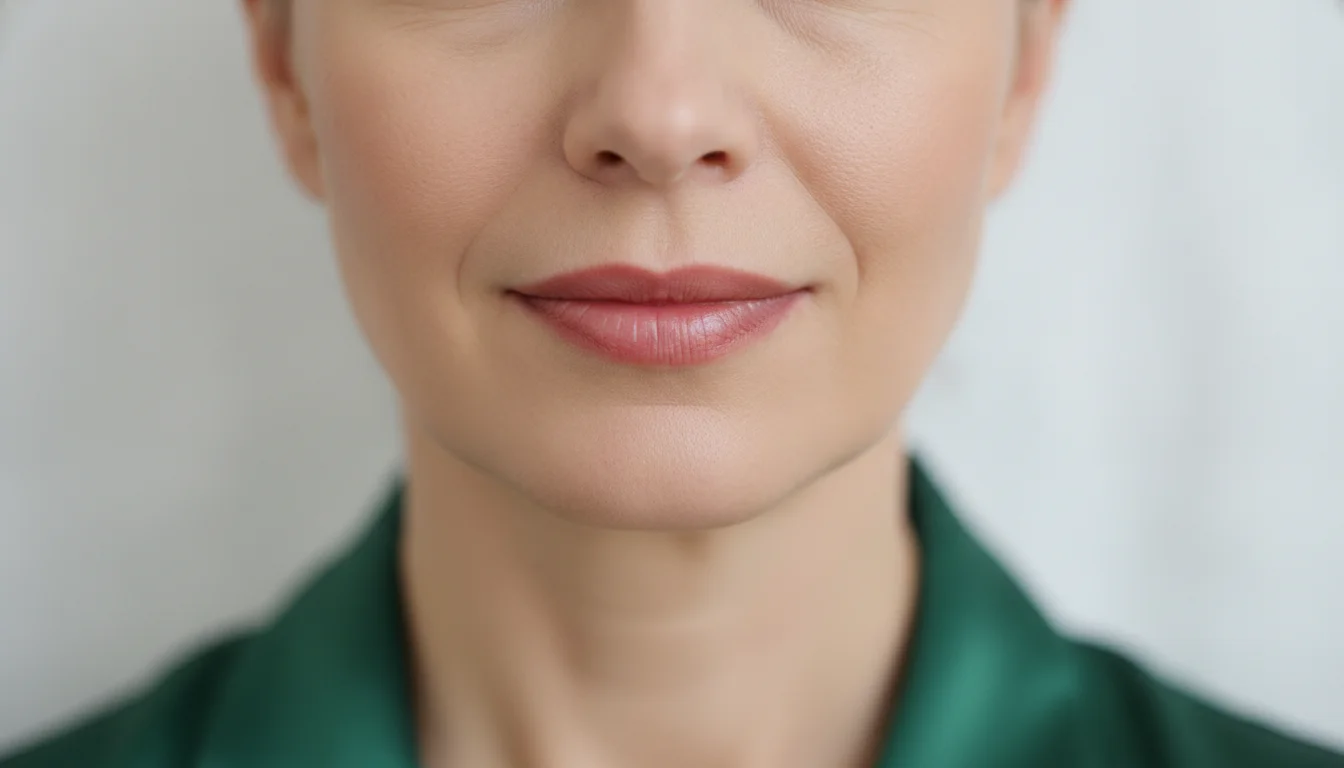
Scar tissue follows its own pigment rules
Fibrous tissue may retain pigment less, more or less evenly than unchanged lip. Even with expert work, its response is less predictable. Olga therefore works conservatively and in understandable stages instead of forcing maximum coverage into one appointment.
The colour immediately afterwards reveals little about the final result. Swelling, surface dryness and stronger initial pigment can temporarily make the scar more obvious. Only complete healing shows how colour has settled across the two types of tissue.
A follow-up is not necessarily the correction of a mistake. With scars, it can be part of the careful strategy. The next decision is based on real healing: Does the scar need a whisper more pigment, should the surrounding tone become calmer, or is the remaining natural difference already exactly right?
What Lip Blush can do, and what may remain visible
Well-planned PMU can reduce a pale interruption, reconnect a visually lost edge and make the lips feel more balanced. It cannot fill a depression, soften firm scar tissue or correct mechanical pull. Fillers and surgical scar revision are separate procedures with their own medical indications.
The goal does not have to be erasing every sign of life. Some clients are comfortable with their scar but no longer want to negotiate with lip liner each morning. Pigment then becomes quiet everyday support: the mouth looks connected without airbrushing away a personal history.
If previous PMU is present, Olga distinguishes the scar from an area where old pigment has simply faded before a Lip Blush refresh. Blindly making the whole lip darker could increase rather than reduce the contrast.
Olga Keller plans for a face, not a macro photograph
Olga Keller is a state-trained cosmetician with a medical foundation and has pioneered microblading and permanent make-up in Berlin since 2013. Thousands of treatments have shown her that scars do not call for a bolder hand; they call for a more restrained decision.
She uses certified German-made pigments free from heavy metals and iron oxides. Clients travel from Germany and abroad, and well-known personalities and politicians trust her discretion. Her principle is that natural permanent make-up should never announce itself.
If a scar is immature, the outcome too unpredictable or the requested border possible only through overlining, Olga refuses. Hundreds of five-star reviews appreciate this honesty. Where a responsible margin exists, however, one very small colour decision can create remarkable visual calm.
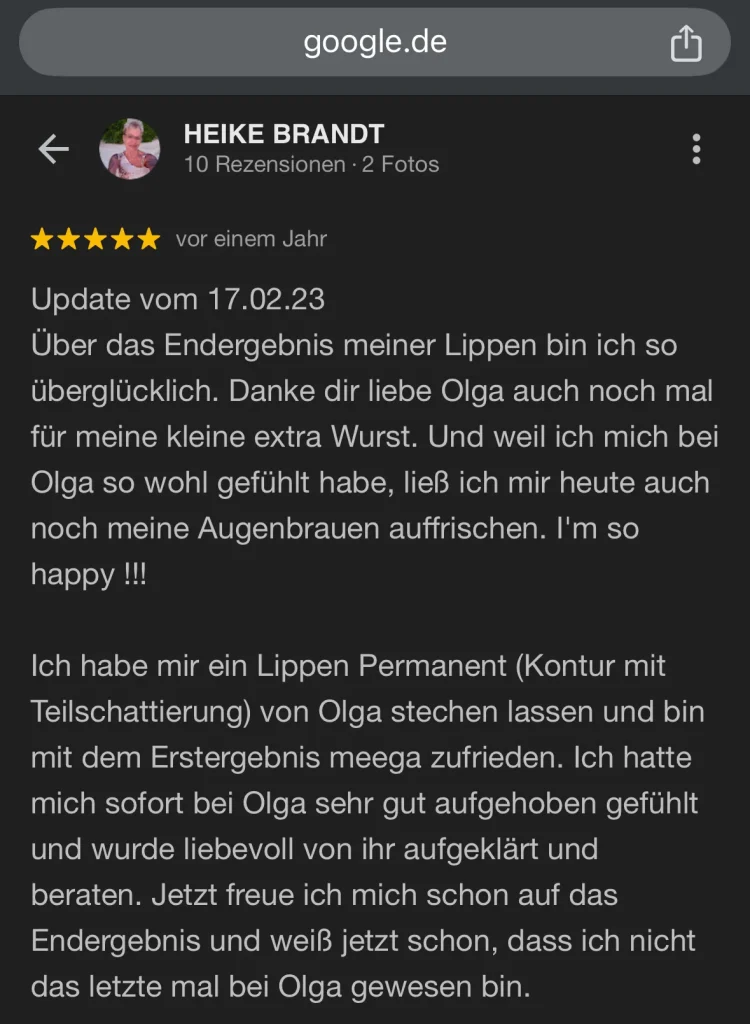
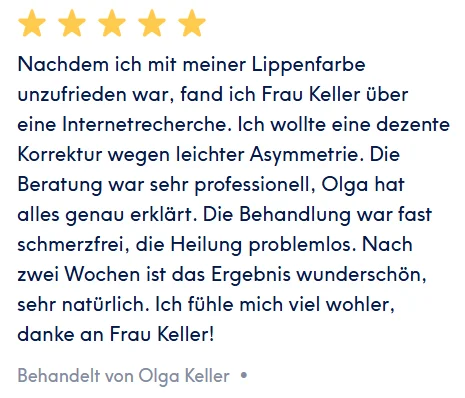
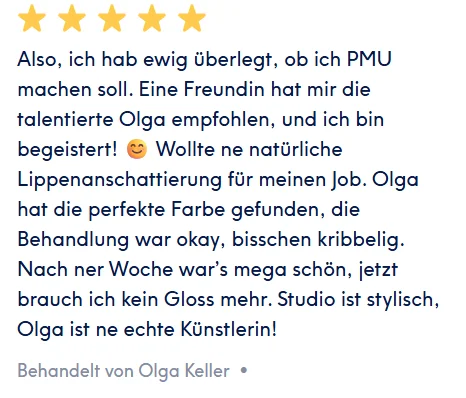
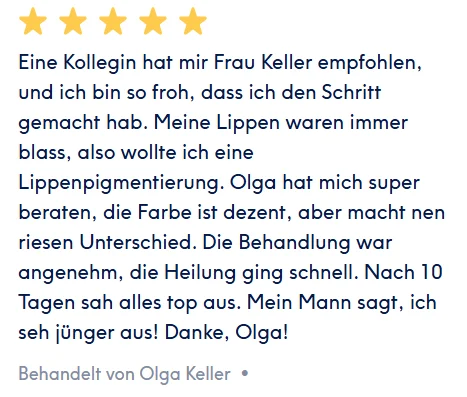
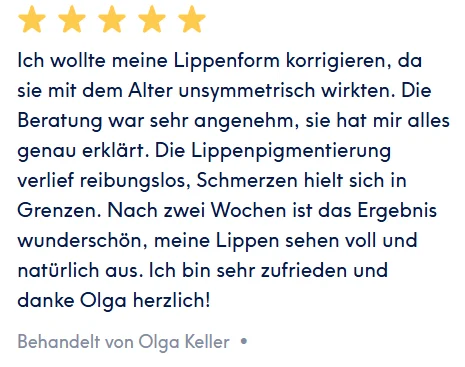
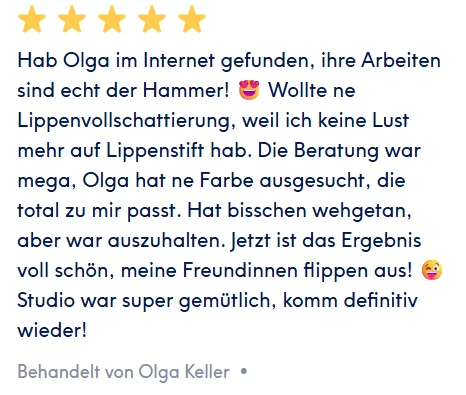
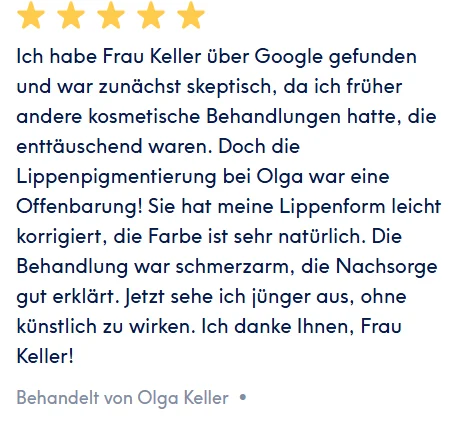
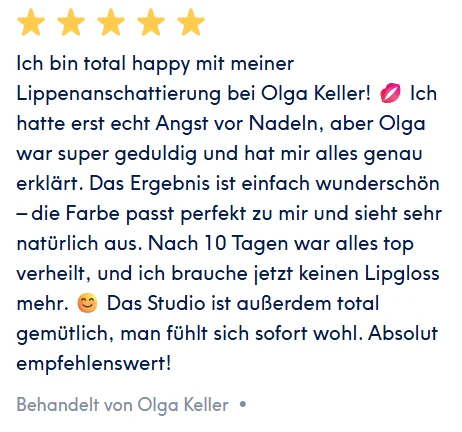
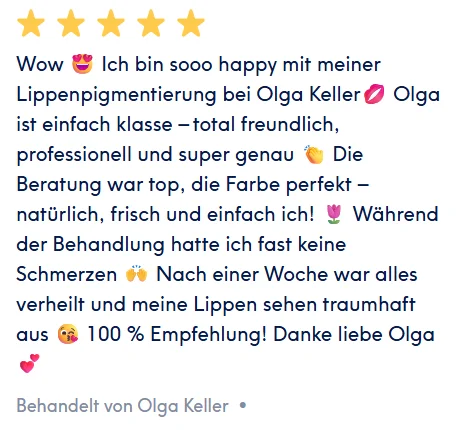
Olga Keller has many regular clients in Berlin, and numerous new clients come through personal recommendations. The right appointment may therefore need a little lead time. Enquire early: with scar work, thoughtful planning matters more than the quickest open slot.