How long does permanent makeup really last?
“One to five years” is a common answer. It is not entirely wrong, yet it is about as useful as saying a train journey takes between twenty minutes and half a day. Anyone considering permanent makeup and its longevity wants more than a number. She wants to know how long it will still look attractive, when it becomes quieter and when a refresh makes sense.
The honest answer is that permanent makeup has no single expiry date. It does not disappear on one particular morning. It changes gradually: colour becomes more transparent, contours soften and separate areas fade at different rates. Good longevity therefore does not mean that pigmentation remains as dark as possible for as long as possible. It means that the work ages in a controlled, harmonious way.
Three clocks are running at the same time
Think of longevity as three clocks. The first belongs to the skin. Cell turnover, skin type, age, hormones and individual regeneration help determine how quickly pigment looks lighter. On oilier, more active skin, very fine lines may lose definition sooner. On dry or mature skin, texture and the way light reflects can alter the impression in different ways.
The second clock belongs to the treatment itself: technique, depth, pigment choice, amount of colour and the starting point. Delicate Microblading made from separate hair strokes is meant to age differently from a more compact powder effect. The third clock runs in daily life. Sun exposure, tanning beds, intensive peels, certain cosmetic treatments, skincare habits and general lifestyle all affect how visible the result remains.
These clocks do not run at the same speed. Two clients can be treated on the same day with the same shade and still look different two years later. A responsible expert does not promise an exact anniversary. She explains the likely development and plans the original work so that future choices remain open.
Brows, lips and eyeliner each have their own rhythm
As a broad guide, very natural brows often remain clearly defined for roughly one to three years before a refresh is considered. Fine Microblading strokes may become noticeably quieter after twelve to twenty-four months. A powder effect often remains recognisable as an area for longer, although its intensity and tone will change as well.
For lip permanent makeup, people often quote approximately two to four years. Lips are mobile, well supplied with blood and highly individual in their natural colour. One client first notices the loss of the fresh tint; another sees the contour slowly soften. Lip products, sun exposure, metabolism and the original pigmentation all interact.
A fine permanent eyeliner may remain visible for three to five years or longer because the area and technique age differently. Visible, however, does not automatically mean unchanged or flattering. A very dark line can remain for a long time while the eyelid, face and personal taste evolve. These time frames are signposts, not guarantees.

Faded is not the same as gone
This distinction is frequently underestimated. After several years, an eyebrow may barely attract attention in everyday life while pigment is still present in the skin. In good light, a warm shadow, a grey remainder or an old outline may be visible. On the lips, colour can appear extremely sheer and still influence the next shade.
That is why an eyebrow PMU refresh does not begin with “How many years has it been?” It begins with an assessment of the existing work. Density, tone, shape and skin condition determine whether a subtle addition is possible. Re-pigmenting solely according to the calendar risks creating unnecessary layers.
The word “permanent” can also be misleading. It means that pigment remains in the skin and cannot be washed off at night like decorative makeup. It does not mean that the result retains exactly the same colour and sharpness forever. Permanent makeup designed to look natural should be allowed to become softer with time.
The mirror is more useful than an anniversary
A sensible time for a review is when you draw over the area more often, can no longer read the desired shape clearly or feel that the colour is no longer balanced in your face. With lips, it may be when the natural colour dominates again. With eyeliner, a gap or markedly uneven transparency may become distracting.
You do not necessarily need to wait until nothing is visible. Equally, do not return automatically every year because an old appointment is written in your calendar. A refresh should refine what remains, not add pigment out of habit. Sometimes the best recommendation is to observe the result for another six or twelve months.
Photographs in neutral daylight can help you follow changes realistically. Use the same angle where possible and avoid filters. This makes it easier to distinguish genuine pigment loss from a change caused by lighting, hair colour, glasses or a different everyday makeup style.
“Longer lasting” must not mean “too dark”
Wanting maximum longevity is understandable. It should never lead to work that is too dark, too deep or too wide at the first treatment. A result that remains obvious for ten years is not automatically better than one that can be gently adapted after two or three. Faces, skin and personal preferences change.
Olga Keller therefore does not pursue the longest possible visibility at any cost. She uses certified German-made pigments free from heavy metals and iron oxides, matching technique and colour density to the individual skin. Her benchmark is naturalness: the face should look cared for without the pigmentation being the first thing anyone notices.
Aftercare also contributes to longevity. Consistent sun protection benefits the skin and helps prevent unnecessarily rapid colour changes. Strong active ingredients and device-based treatments around a pigmented area should be discussed with the treating professional. Even perfect care, however, cannot produce a guarantee measured in years.
The honest answer begins with looking at your skin
Olga is a state-trained cosmetician with a medical foundation and has been a pioneer of Microblading and permanent makeup in Berlin since 2013. Almost thirteen years of experience and thousands of treatments give her an unusual advantage: she knows not only fresh results, but has followed many pieces of work as they aged over years. Clients travel from all over Germany and abroad, while well-known figures and politicians trust her precision and discretion.
She will say openly whether pigmentation is still wearing beautifully, can accept a refresh or should be allowed to fade further. When a harmonious result cannot be expected, she declines treatment. That is the genuinely honest answer to the longevity question: not an attractive marketing number, but a decision that fits the skin today and protects tomorrow's options.

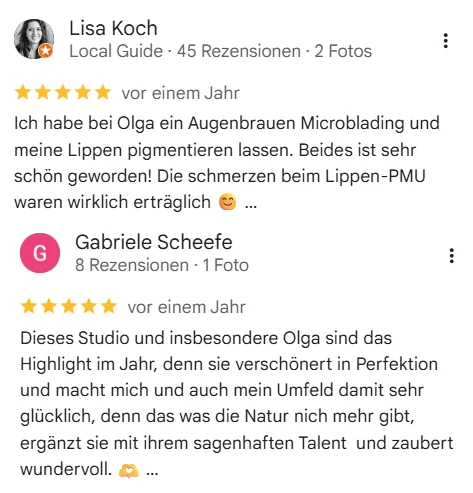
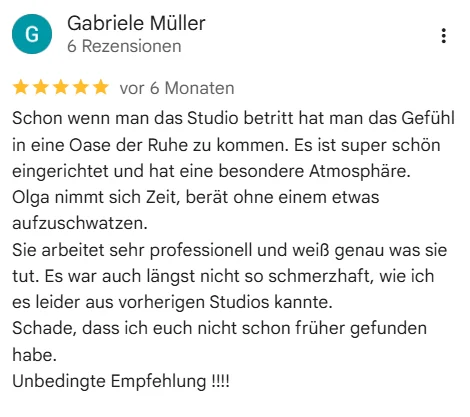




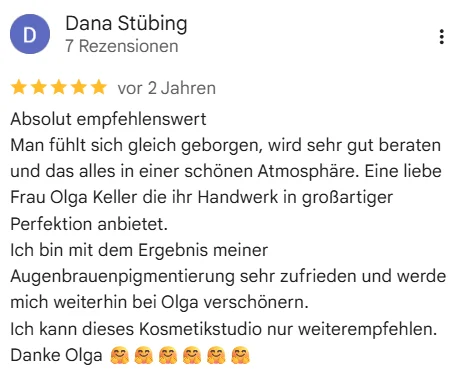



Olga personally looks after many returning clients, and numerous new clients find her through recommendations, so a suitable Berlin appointment may require some advance planning. Enquire early; a short wait reflects established trust and carefully scheduled treatments.