
Permanent eyeliner refresh before and after, read honestly
Two photographs side by side seem persuasive: faded permanent eyeliner on the left, a crisp new line on the right. Yet the most important page is often missing from this album. A picture taken immediately after refreshing is not the final result. It is a frame from the working process.
An honest before-and-after comparison therefore contains three images: the true starting point, the fresh interim stage and the fully healed result. Together they reveal what the refresh actually changed. The story is allowed to be subtle. Around the eyes, naturalness is often more impressive than a dramatic transformation.
Page one: a real “before” needs no makeup
The first image should show existing pigment, not decorative pencil, mascara shadow or a filter. Neutral daylight reveals colour, density, small gaps and placement. A light, even residue presents a different starting point from a dark, patchy or poorly positioned line.
Olga Keller looks beyond how much colour appears to be missing. She checks whether the shape still supports the eyes when open, whether both sides work harmoniously and how the natural fold and facial movement behave. A permanent eyeliner refresh should make a sound foundation legible again, not strengthen every old decision without examination.
The before photograph may therefore already look attractive. It does not need deliberately unflattering lighting to make the after image win. A responsible comparison respects the starting point and presents refinement, not a staged rescue.
Page two: immediately afterwards is an interim image
Directly after treatment, the line usually appears darker, sharper and more prominent than it will later. The skin may be sensitive and the area can temporarily look a little fuller. This image documents precision, but it cannot reliably show the final tone or softness.
If this is the only photograph labelled “after”, viewers may expect contrast that was never the objective. Colour settles during healing. The eyeliner finds its place within the face instead of sitting on top like freshly applied decorative makeup.
Small visual differences at this stage should not be judged prematurely either. Skin does not heal on both sides to the same second. Unusual or severe symptoms require professional or medical assessment; an online photograph cannot replace personal care.
The invisible page: what happens during healing
Between fresh and healed lies a phase rarely shown in glamorous galleries. Colour may temporarily look stronger, lighter or uneven in places. Dry skin and delicate flakes should not be removed. Individual aftercare guidance is followed without adding experiments around the eye area.
Daily photography during this time is more diary than verdict. Light, sleep, tear film and camera angle all change the impression. It is more useful to observe calmly and allow the tissue time.
This stage explains why comparing “before” with “day one” is interesting but incomplete. The real after only begins once skin and colour have settled.

Page three: the healed after must answer four questions
First, is the line even without becoming a heavy bar? Second, does its shape support both open eyes? Third, does the tone suit the skin, lashes and personal style? Fourth, do you still feel like yourself without decorative makeup?
A good after image does not have to shout from across the room. A delicate lash line enhancement may reveal its quality only through a fuller-looking lash base and a more awake gaze. Classic eyeliner can be more visible, but should never take over the face.
With refreshing, the change is often deliberately smaller than with a new treatment. The existing form is not erased; it is supplemented with control. The best image does not necessarily reveal a new person, but the same woman with a calmer, better-defined gaze.
Why two comparison photographs can be unfair
A different angle can make a wing appear longer. Bright light makes pigment look fainter, while warm light shifts its tone. Mascara, curled lashes, eyeshadow, lifted brows and a more widely opened eye also alter the comparison. Even different camera lenses change facial proportions.
Fair images use a similar distance, comparable light, the same expression and no decorative enhancement. They show both eyes, because a perfect detail of one side says little about the harmony of the whole gaze.
Bring your own older photographs to the consultation if available. Images of the earlier fully healed result are especially useful. They complement the assessment but do not replace it: pigment, skin and movement can be read more accurately in person than on a screen.
Olga Keller works for the third picture
Olga Keller is a state-trained cosmetician with a medical foundation and has been a microblading pioneer in Berlin since 2013. Almost 13 years of experience and thousands of successful treatments have refined her eye for work that looks harmonious not only immediately afterwards, but once healed. Clients travel from Germany and abroad, while well-known personalities and politicians trust her precision and discretion.
For her permanent makeup, Olga uses certified German-made pigments free from heavy metals and iron oxides. Her philosophy is naturalness: pigment should not be the first thing anyone sees. If the existing foundation cannot produce a beautiful third picture, she declines the treatment. Hundreds of five-star reviews confirm this honesty.


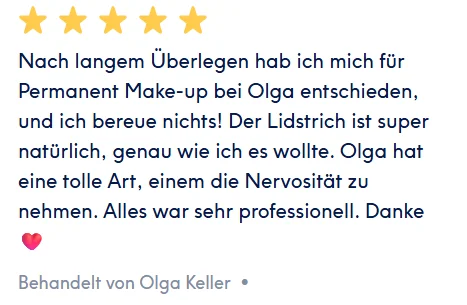


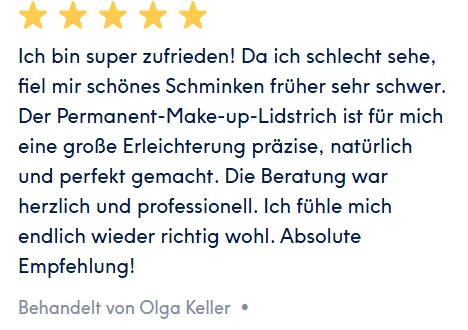
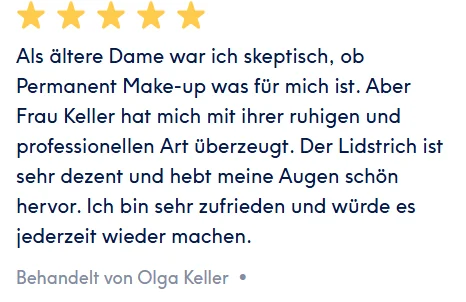
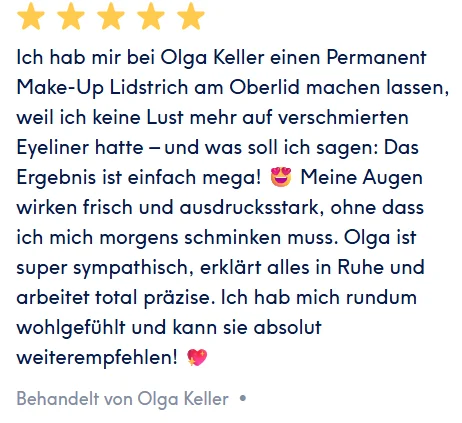


Many regular clients return to Olga, and new clients frequently arrive through personal recommendations, so the right appointment may require a little notice. That brief wait is a positive sign of trust built over many years.