My eyebrow pencil looks orange in daylight: what works better?
The colour looked like soft brown in the bathroom. At the window it suddenly appears copper, and in a photograph it may even look orange. This does not mean you are incapable of choosing colour. Artificial lighting, skin undertone and the pencil formula have simply produced something different from the shade promised on the packaging.
Anyone correcting the problem every morning often moves from Warm Brown to Dark Brown and ends up with a darker but still warm brow. The natural answer is rarely more darkness. During professional eyebrow permanent makeup, depth is therefore planned together with the much more important undertone.
Daylight reveals the undertone
Many bathroom bulbs produce warm yellow light. A reddish brown can appear to merge with skin and hair beneath it. Neutral daylight reveals more clearly how much red, yellow or orange is actually present. A camera may emphasise warm elements too when automatic white balance makes the rest of the face cooler.
The name on a pencil offers limited help. “Brown”, “Blonde” or “Chocolate” do not describe standardised colours. Two products carrying the same name may have completely different undertones. What matters is whether a brown behaves as warm, neutral, olive or ashy.
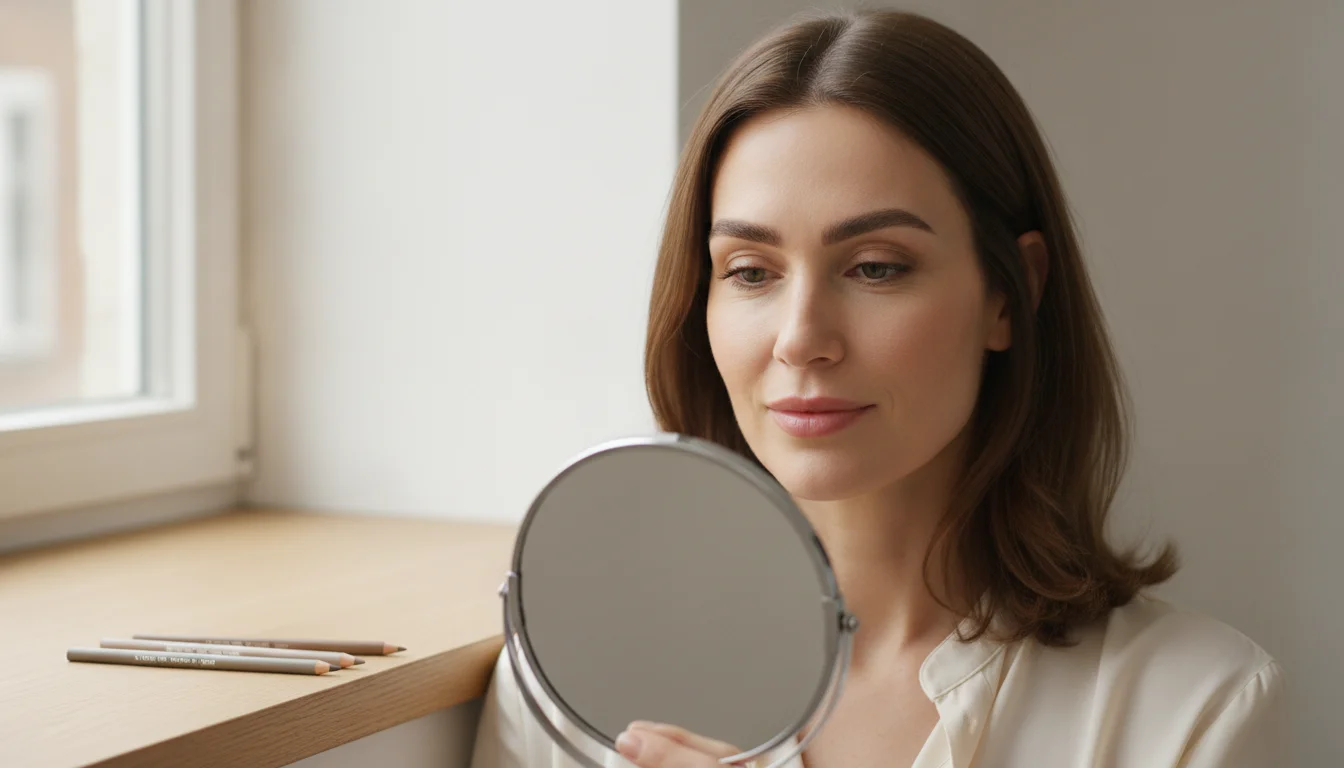
Do not judge the pencil tip alone. Apply the product between genuine brow hairs and check it beside a window, in shade and on an unfiltered photograph. The right colour connects the hairs instead of sitting on the skin as a separate film.
Sometimes the pencil turns orange after ten minutes
Skin oil, sunscreen, foundation and skincare can change visible colour. A neutral-looking brown may become warmer when its pigments mix with an oily or tinted base. Pressing and rubbing heavily during application also concentrates colour and makes red components more obvious.
Test the pencil once on clean, dry brow skin. Wait fifteen minutes, then compare it with the same colour over your usual skincare. If only the second sample turns orange, the issue may lie not solely in the pencil but in the combination of products.
This does not mean your skin is at fault. It simply means that colour must work in real daily life, not only as a line on the back of your hand.
The three-stroke test finds the right colour family
Choose three shades at a similar depth: warm brown, neutral taupe and a slightly ashy option. Draw three very small strokes beneath the outer third of the brow, each between existing hairs. Wait ten to fifteen minutes and move to the window.
The best stroke is not the one that looks most attractive on its own. It is the one you stop seeing first because it joins skin and hair. If taupe turns purple or grey, it is too cool. If brown glows copper, it is too warm. If ash looks dull, a neutral mixture may work better.
Compare both brows as well. One side often carries more foundation or skincare, and natural hair density differs. A colour needs to remain calm on both sides under genuine conditions.

Microblading needs a shade between skin and hair
With Microblading, fine lines remain visible among genuine hairs. The pigment should therefore neither copy the darkest hair tip nor simply be made grey to avoid warmth. Once healed, it needs to resemble a natural shadow of the existing hair.
Skin undertone, hair density and expected softening are considered together. A neutralised shade may look unremarkable in its container yet become exactly right in the face. Excessive coolness would be just as unnatural as orange.
The finest stroke is ineffective when its colour remains separate from the brow. Technique is never selected independently from later colour behaviour.
Powder Brows distribute colour transparently
If a daily pencil mainly fills a wider area and turns orange there, Powder Brows may offer a calmer alternative. Transparent shading builds depth through many fine points instead of placing an opaque wax layer on the skin.
The beginning stays airy, the middle gains gentle definition and the tail fades softly. Colour does not need to be equally dark everywhere. The result should work with the skin in daylight without suddenly appearing grey beneath warm indoor lighting.
Pigment is stronger immediately after treatment. The planned healed shade is what matters. Natural colour is not the colour of day one, but the one that looks self-evident weeks later.
Olga Keller plans colour for window light and real life
Olga Keller is a state-trained cosmetician with a medical foundation and has been a microblading pioneer in Berlin since 2013. Almost 13 years of experience and thousands of treatments have refined her judgement of skin undertones, product reactions and healed colour. Clients travel from Germany and abroad, while public figures and politicians trust her precision and discretion.
She works with certified German-made pigments free from heavy metals and iron oxides. Her philosophy is naturalness: brows should look as effortless in daylight as they do in the evening. If a requested shade would be too warm, too dark or unstable over time, Olga declines it. Hundreds of five-star reviews confirm the value of this honest care.



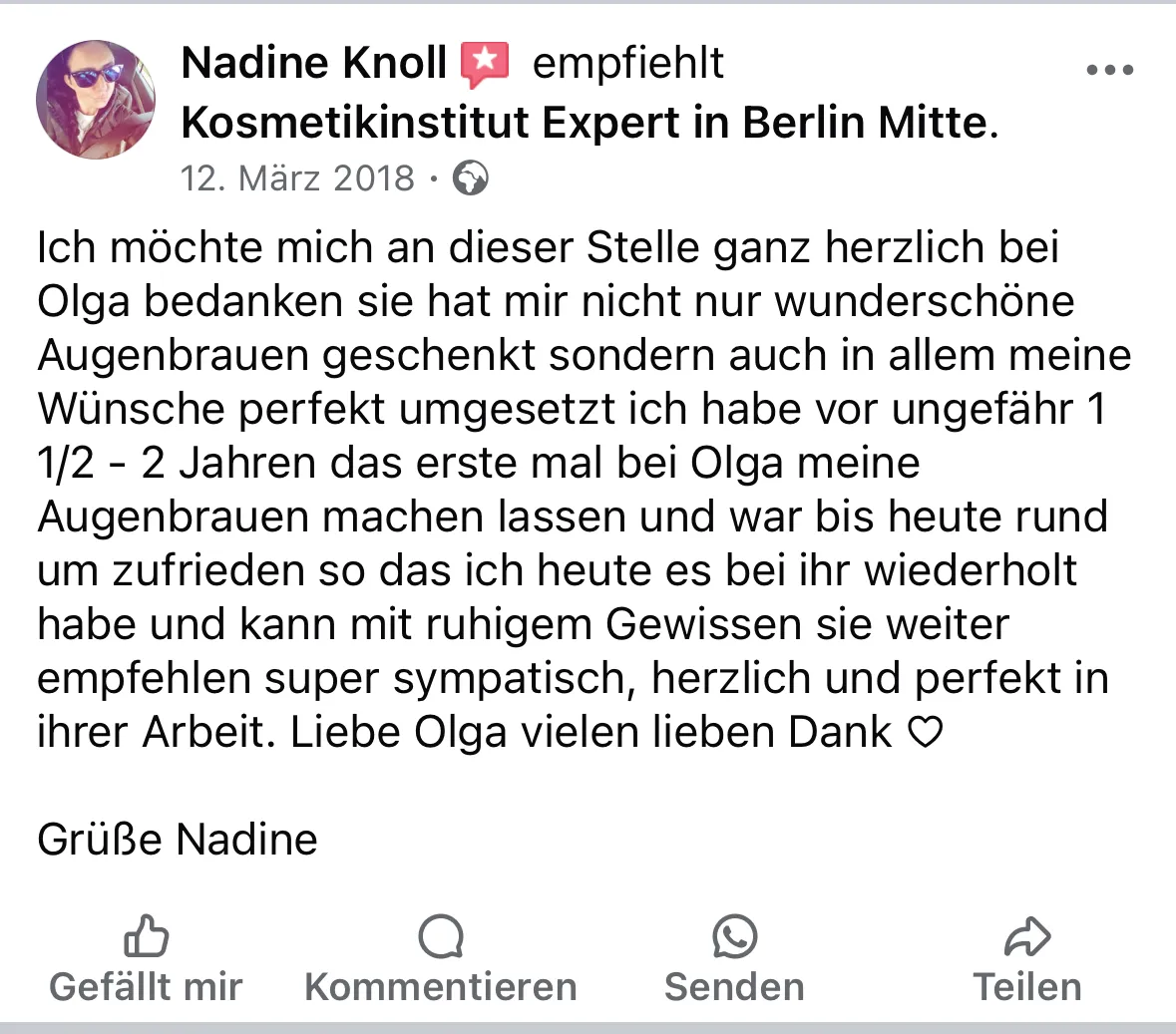


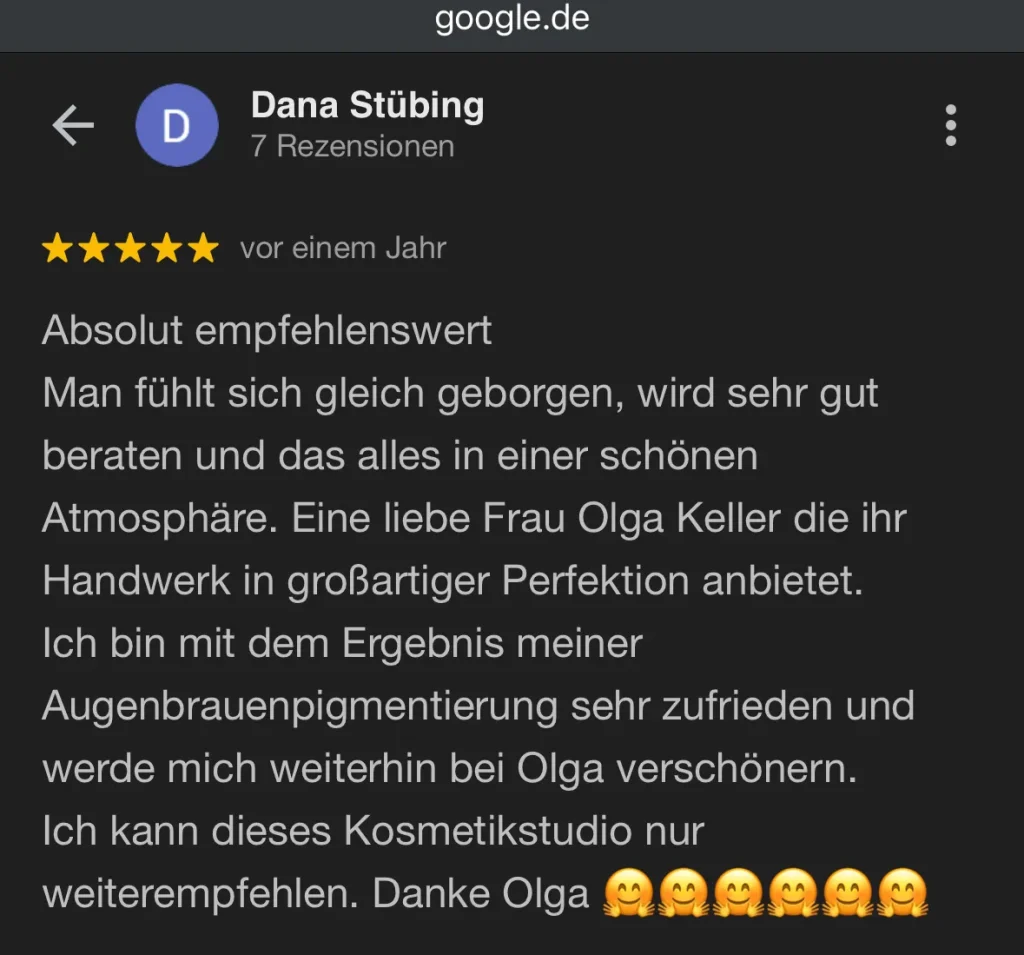



Olga personally cares for many returning clients, and new clients often find her through recommendations. A suitable Berlin appointment can therefore require a little advance planning. Enquire early; a short wait is worthwhile for colour that does not become a surprise beside the window.