Dense eyebrows but bald patches: what can be done?
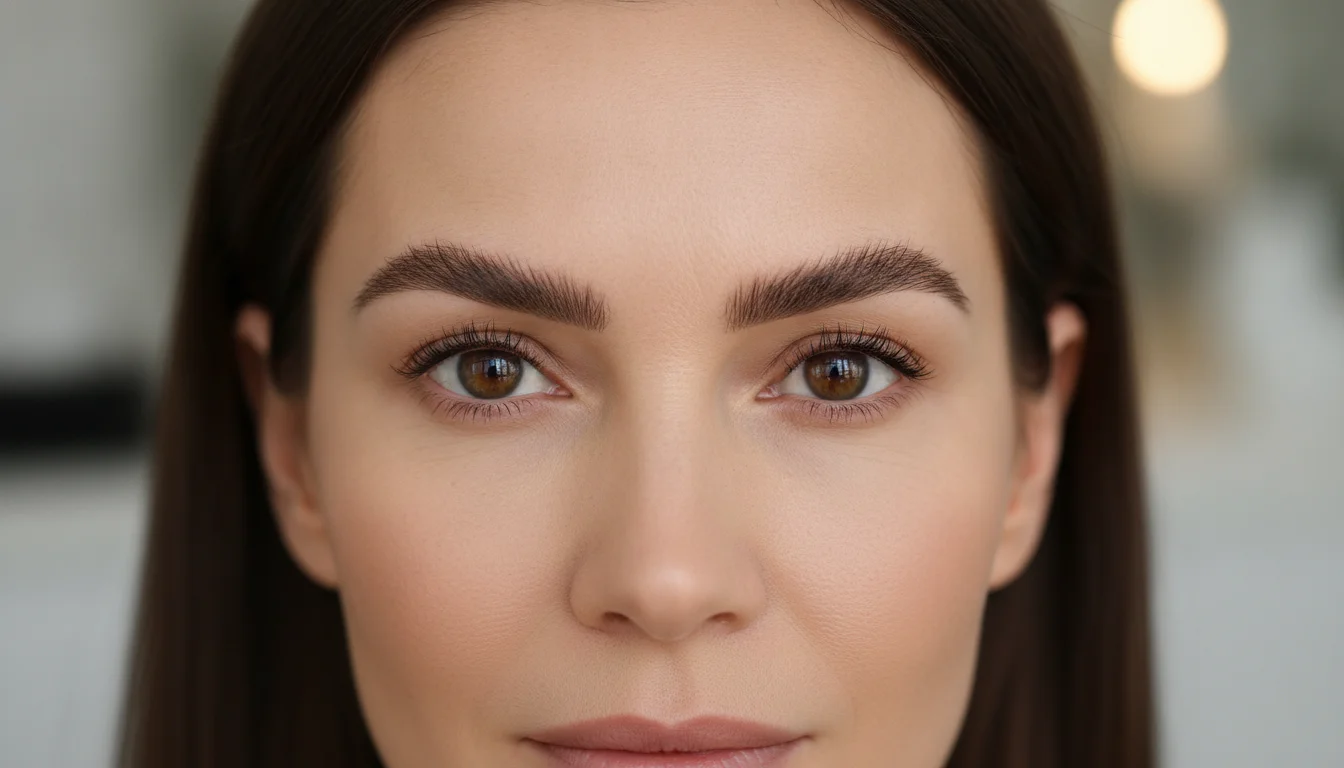
The brow is strong, dark and actually fuller than those of many other women. Even so, your eye keeps returning to the same small place where skin shows through. Powder hides it briefly, then brushing makes it appear again. In a dense brow, a gap measuring only a few millimetres can be surprisingly noticeable.
Not every pale patch is truly bald. Sometimes the hairs separate, lie flat or cover the area only in one direction. In other cases, follicles are genuinely absent. Carefully planned eyebrow permanent makeup can connect the shape optically, but design should begin only after it is clear whether the concern is stable structure or current hair loss.
The gap may move with the brush
Clean the brow and brush it upwards, then outwards, and finally into its natural position. If the exposed skin moves with the hair, there is often more growth than first appears. Crossing hairs or strands that fall apart sideways create changing windows onto the skin.
Light and skin shine also contribute. A pale reflection looks especially strong between dark hairs. Foundation, sunscreen or powder can make individual strands stick together and enlarge the visible space. The brow should therefore be assessed dry, without makeup and in soft daylight.
If the area remains clearly visible regardless of brushing direction and light, it is more likely to be a real gap. Its shape still does not reveal the cause automatically. An old tweezed patch, a small scar, repeated friction and medical hair loss each require a different response.
New smooth patches belong with a dermatologist first
If a clearly defined smooth patch appears suddenly, grows larger or is joined by other areas on the brows, lashes or scalp, it should be examined by a dermatologist. Alopecia areata can cause localised hair loss and may affect the eyebrows. Redness, scaling, itching, pain or changed skin also deserve attention.
PMU cannot diagnose a condition or stop active loss. Placing pigment in an unexplained or inflamed area would cover a visible sign without clarifying the cause. A dermatologist can inspect the skin under magnification and decide whether treatment or observation is appropriate.
Once the situation has been medically assessed and is stable, an optical addition may offer real relief. Stable means more than looking unchanged for a few weeks; the skin should be calm and the starting point dependable enough to design around.
Six quiet weeks provide better information
For a small gap that has existed for a long time, a simple record can help. Leave the tweezers away from that area for six weeks, avoid changing serums repeatedly and photograph the brow once a week in the same light. Daily inspection in a magnifying mirror makes change harder to see, not easier.
Note whether fine new hairs appear, whether the patch changes shape with brushing and which products emphasise it. Bring these photographs to the consultation. They show more than one carefully filled selfie.
If the gap is old and unchanged, it does not need to become an artificially closed surface. Naturally dense brows contain small spaces. The aim is to soften the one distracting break until it belongs again among those normal irregularities.

Microblading uses the existing hair as its reference
Microblading may suit a small stable gap when surrounding hairs provide a clear direction and the skin can heal fine lines well. Pigmented hairs do not mechanically copy the other side; they continue the local pattern.
Restraint matters especially within a dense brow. Too many strokes make the gap darker than its surroundings and turn a small interruption into a visible patch. The most convincing connection often comes from a few lines at the edges with exposed skin between them.
The technique cannot create follicles. If real hair later returns, it should still be able to blend into the addition. For that reason, pigment is not packed more densely than the natural brow can support.
Powder Brows help when several small windows appear
If visible skin is distributed across several small places, or a dense brow looks restless despite having plenty of hair, Powder Brows can create a transparent background. Shading connects the area without outlining every window separately.
It remains lighter than the hair colour and follows the full shape. A dark point placed precisely below the gap would mark it rather than camouflage it. Good shading reduces contrast between skin and hair while preserving texture and natural spacing.
Sometimes one technique is enough; sometimes an extremely restrained combination makes sense. The treated area should never look more perfect and compact than the rest of the brow.
Olga Keller adds only what is genuinely missing
Olga Keller is a state-trained cosmetician with a medical foundation and has been a microblading pioneer in Berlin since 2013. Almost 13 years of experience and thousands of treatments have sharpened her judgement of skin, hair growth and healed results. Clients travel from Germany and abroad, while public figures and politicians trust her precision and discretion.
She uses certified German-made pigments free from heavy metals and iron oxides. Her philosophy is naturalness: a dense brow should remain a brow, not become a filled field of colour. Olga declines treatment when hair loss is active, the skin is unexplained or a technique is unsuitable. Hundreds of five-star reviews confirm the value of this honest care.










Because Olga personally cares for many returning clients and new clients often arrive through recommendations, a suitable Berlin appointment may require some advance planning. Enquire early. A short wait is well invested when the first question is whether the small patch needs pigment, patience or medical attention.