Why does permanent makeup fade over time?
The word “permanent” can create the impression that eyebrows, lips or eyeliner should look identical forever. In reality, modern permanent makeup is designed to last while still softening with the face. Pigment is placed in living skin, not printed onto an inert surface. A gradual loss of intensity is therefore not automatically a defect. Often, it is exactly what keeps the result elegant rather than rigid.
There is no single fading switch. Imagine five clocks starting together on treatment day: skin renewal, the immune system, light exposure, daily care and the original technical choices. Their combined pace explains why one client still has a clear result after several years while another considers a permanent makeup refresh sooner.
The first clock is the skin itself
Skin is active tissue. It renews, regulates moisture and changes with hormones, inflammation, age and the seasons. Surface cells are constantly replaced. Although PMU pigment sits beneath that visible layer, long-term remodelling in the tissue affects how clearly the colour can be seen through it. The same pigment can therefore appear different as the skin changes.
Skin type also matters. Oilier skin may soften fine hairstrokes faster, while dry or mature skin presents different challenges and is not automatically easier. Scarring, frequent peels and repeated treatments can alter the canvas as well. This is why a universal promise such as “it lasts exactly three years” sounds reassuring but says little about an individual face.
The second clock belongs to the immune system
The body recognises pigment particles as foreign material. Specialised cells hold and gradually transport part of that material away. This is a slow, individual and normal biological response. It does not mean the body is rejecting a well-performed treatment. It simply means that living skin continues to protect and renew itself after the healed result becomes visible.
For that reason, PMU rarely disappears overnight. It usually becomes more transparent, edges soften and underlying tones become easier to notice. With microblading, some delicate strokes may fade before others. With Powder Brows, the overall veil of colour tends to become lighter. Lips and lash enhancement have their own rhythm.
The third clock follows daylight
Ultraviolet radiation accelerates changes in colour. Exposure does not happen only on a beach holiday; facial skin receives light on the commute, beside a window and during an afternoon outdoors. Consistent, skin-appropriate sun protection supports both healthy ageing and a harmonious PMU result. Sunbeds and deliberate unprotected tanning are particularly unhelpful.
This does not require hiding from normal daylight. Sensible habits are enough: suitable SPF, shade during strong midday sun and careful adherence to personal aftercare during healing. Once healed, sun protection should feel like an ordinary part of skincare, not a complicated ritual performed solely for the pigment.

The fourth clock sits on the bathroom shelf
Retinoids, fruit acids, strong exfoliation and certain professional skin treatments can increase cell turnover. Used correctly, they may be valuable, but they need planning around pigmented areas. More active product does not automatically mean better care. Constantly changing routines or layering powerful ingredients can irritate skin and make its response less predictable.
Always tell your beauty professional, dermatologist or doctor about existing PMU before an intensive treatment is planned. Never stop prescribed medication without medical guidance. The aim is not to preserve colour at the expense of skin health. A thoughtful routine protects the skin first and avoids unnecessary stress around the treated area.
The fifth clock is set by the original artist
Technique, depth, colour selection and pigment quality influence how a result fades. Work placed too superficially may disappear quickly; work placed too deeply can blur, cool or become difficult to correct. Choosing a much darker colour does not guarantee graceful longevity. It may simply look heavy as the face changes. Expertise means considering the future at the first appointment.
Olga Keller uses certified pigments made in Germany without heavy metals or iron oxides. She chooses a method for natural healing and graceful ageing, not for the loudest immediate transformation. Whether she is creating permanent eyebrows, lip colour or a subtle lash line, the face remains more important than the pigment.
Fading is information, not a reason to panic
An evenly softened result may provide an excellent base for a careful refresh. Dense, discoloured or misplaced remnants require a different plan. The decisive question is not how many months have passed, but what the skin, tone and shape show today. The right answer may be refreshing, waiting, colour correction or seeking specialist advice about lightening first.
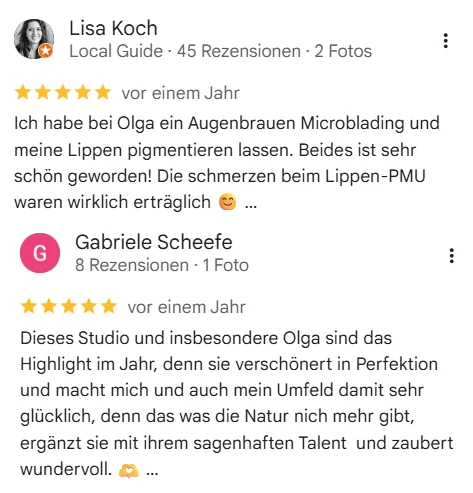
Olga is a state-trained cosmetician with a medical foundation and a Berlin microblading pioneer since 2013. Nearly 13 years, thousands of successful treatments, clients travelling from Germany and abroad, and the trust of known personalities and politicians inform her judgement. She declines unsuitable work when harmony cannot be achieved. Hundreds of five-star reviews support her philosophy: natural PMU should look as though nothing was done.










Have your faded PMU assessed personally by Olga Keller at Kosmetikinstitut Expert in Berlin. Many regular clients return and new clients often arrive through recommendations, so the right appointment may require a little advance planning. That brief wait reflects established trust and the time reserved for careful, individual work.