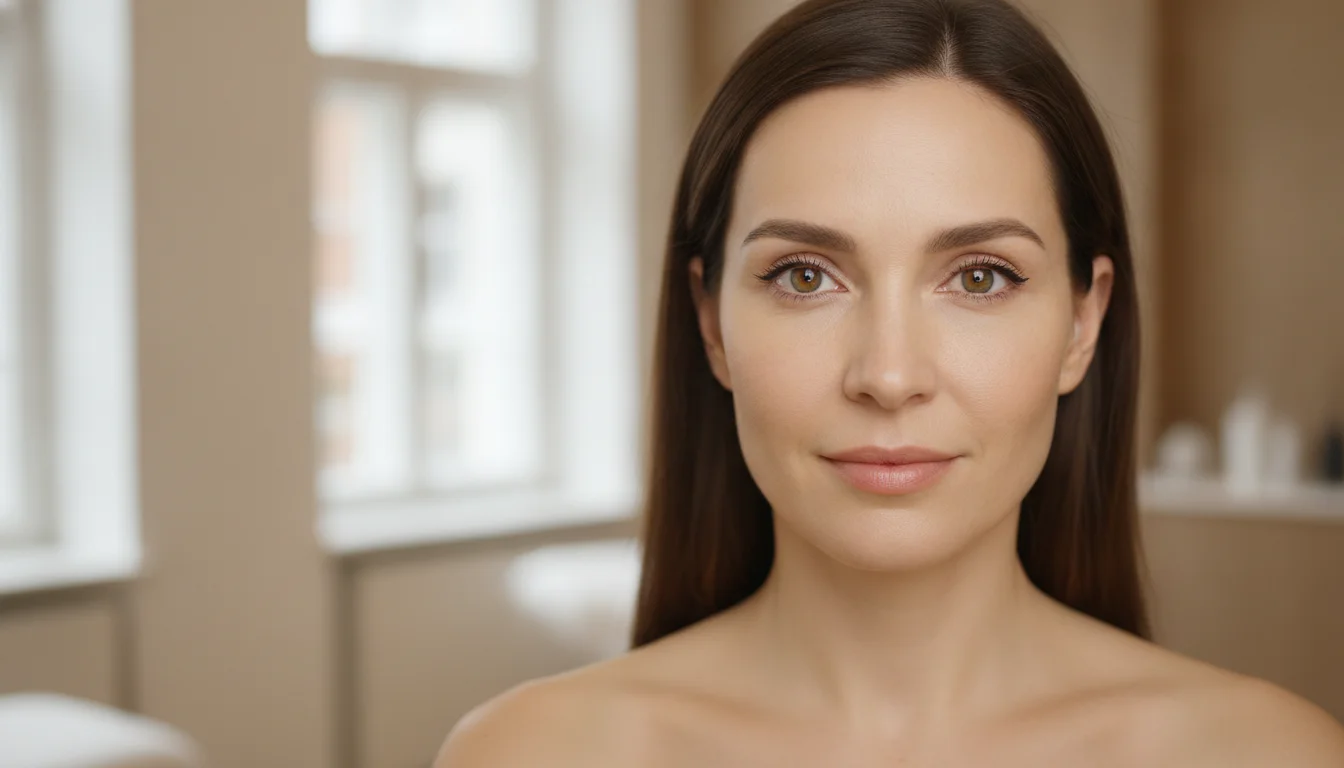
Lip permanent makeup refresh before and after
The most important part is usually missing between a before photograph and a polished after image. Lips do not jump from faded to perfectly healed. Fresh colour, temporary intensity, dry days, apparent gaps and patience sit between them. To understand a lip PMU refresh honestly, we therefore need five pictures rather than two.
This invisible sequence protects against false expectations. The photograph immediately after treatment is not the finished result, and one pale moment during healing does not prove the colour has vanished. The real before and after can only be compared when the lips have fully settled.
Picture one: Before reveals more than faded colour
A useful before photograph shows clean lips in neutral daylight with a relaxed expression. It does not merely record how much colour is missing. Olga also observes the natural border, residual tone, density, symmetry, skin condition and transitions between centre, outline and corners.
Some lips have become evenly transparent and offer a harmonious foundation. On others, the centre is much lighter while enough pigment remains outside. A dense, cool or misplaced remainder may require another plan. “Faded before” is not enough information to treat every pair of lips identically.
The new wish belongs in the first picture too. Should a familiar tone simply become clearer, or has personal taste changed? A refresh normally preserves a good base. If shape and goal need complete rethinking, new pigmentation planning is more honest than tracing old lines.
Picture two: Immediately after is fresh, not finished
Directly after treatment, colour looks stronger and clearer than the eventual result. The lips may temporarily appear fuller, the border may be more visible and the selected tone may look warmer or more intense. This image documents fresh work, but not the colour you will permanently wake up with.
A responsible studio explains that difference instead of selling the fresh image as a final miracle. Later transparency is already part of colour planning. Olga chooses a blend not only for its appearance on the treatment bed, but for how it will join the natural lip undertone after healing.
Mild expected changes immediately after pigmentation belong to the skin response. Strong or unusual symptoms should not be assessed through social media. Contact the studio and, where appropriate, a medical professional.
Picture three: Healing is allowed to look imperfect
During the following days, the surface may become drier. Colour first looks bold, then lighter or uneven in places. Small areas may seem to lose pigment before others. This middle passage is absent from many before-and-after galleries even though it is often the most emotional stage for clients.
Do not pull dry skin or try to correct apparent gaps yourself. Follow your personal care instructions, keep hands away and give the surface time. More care is not automatically better; the calm routine recommended for your individual situation matters.
Hourly photograph comparisons are unhelpful during this phase. Light, circulation and dryness change perception. One pale spot says little about fully healed lip permanent makeup.
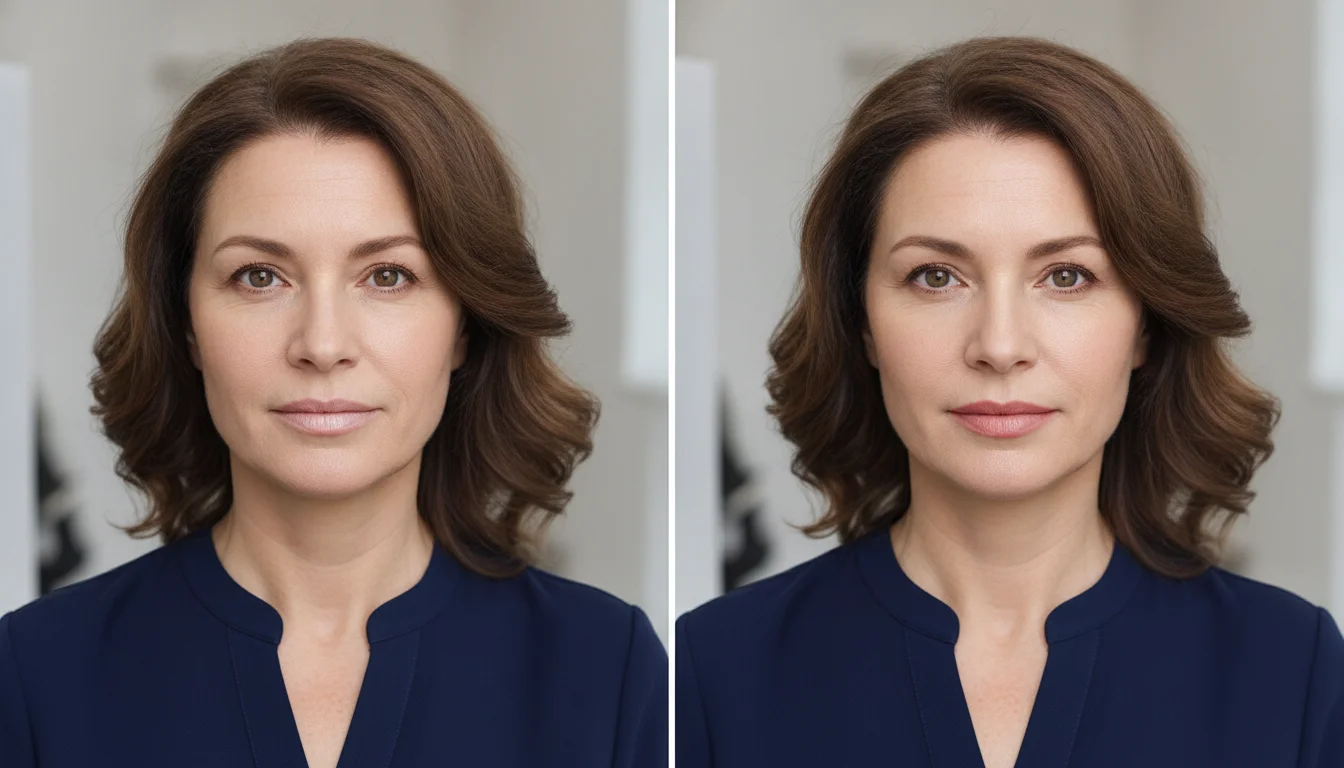
Picture four: The quiet interim result needs time
Once the surface appears calm again, the skin continues its internal work. Colour can look surprisingly delicate during this period and become clearer later. An early verdict is therefore as unreliable as the image taken immediately after treatment.
The precise sequence is individual. Previous treatments, residual pigment, natural lip colour and healing response work together. Olga gives the appropriate review time during the personal appointment. Until then, the aim is not to reproduce an online diary exactly, but to let your own lips heal well.
Contact the studio if something moves clearly outside the development discussed with you. Unusual irritation, pain or skin changes may require medical assessment. Cosmetic patience never replaces attention to health.
Picture five: The real after is completely healed
An honest after photograph shows relaxed, clean lips after complete healing. The tone is softer than immediately after the session, connects with the natural lip colour and should move into the person’s own shape without a hard line. A good result does not shout “pigment”; it makes the face look polished and fresh.
At the review, every millimetre is not forced into artificial uniformity. Lips are living, moving tissue and are not naturally printed. Olga checks whether shape, centre, border and colour effect feel harmonious within the whole face. She adds detail only where it is professionally sensible.
For a fair comparison, before and after should use similar light, distance, facial expression and no gloss. Different cameras, filters or smiling in only one image create a more spectacular contrast but less useful information. Honest photographs support decisions; show photographs mainly collect attention.
Olga plans the missing middle from the beginning
Olga Keller is a state-trained cosmetician with a medical foundation and a Berlin microblading pioneer since 2013. Nearly 13 years and thousands of successful treatments give her a trained eye for the complete healing journey. Clients travel from Germany and abroad, while known personalities and politicians trust her discretion.
She uses certified German-made pigments free from heavy metals and iron oxides. Her permanent makeup philosophy is naturalness: the final result should look as if nothing was done. If the present foundation cannot support a harmonious refresh, she declines treatment or recommends a more responsible path.
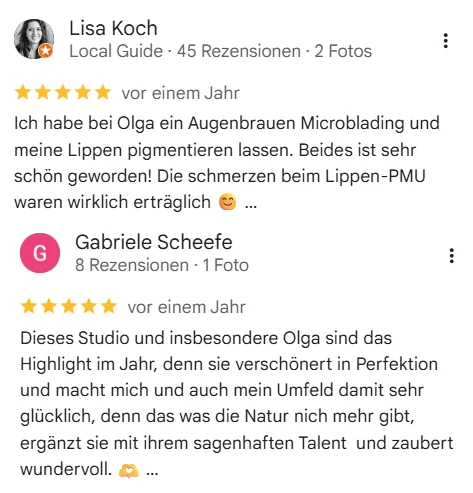
Hundreds of five-star reviews confirm this calm and honest guidance. Have your own before personally assessed and learn what after is realistic for you. The time between photographs then stops being an alarming gap and becomes an understandable part of the result.






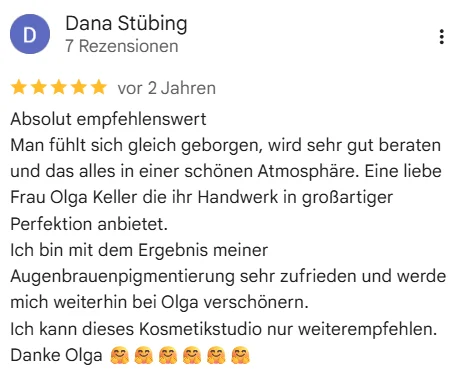



Many regular clients return to Olga for their refresh, while new clients often find her through personal recommendations, so the right appointment may need a little advance planning. That brief wait is a positive sign of established trust and carefully reserved treatment time.