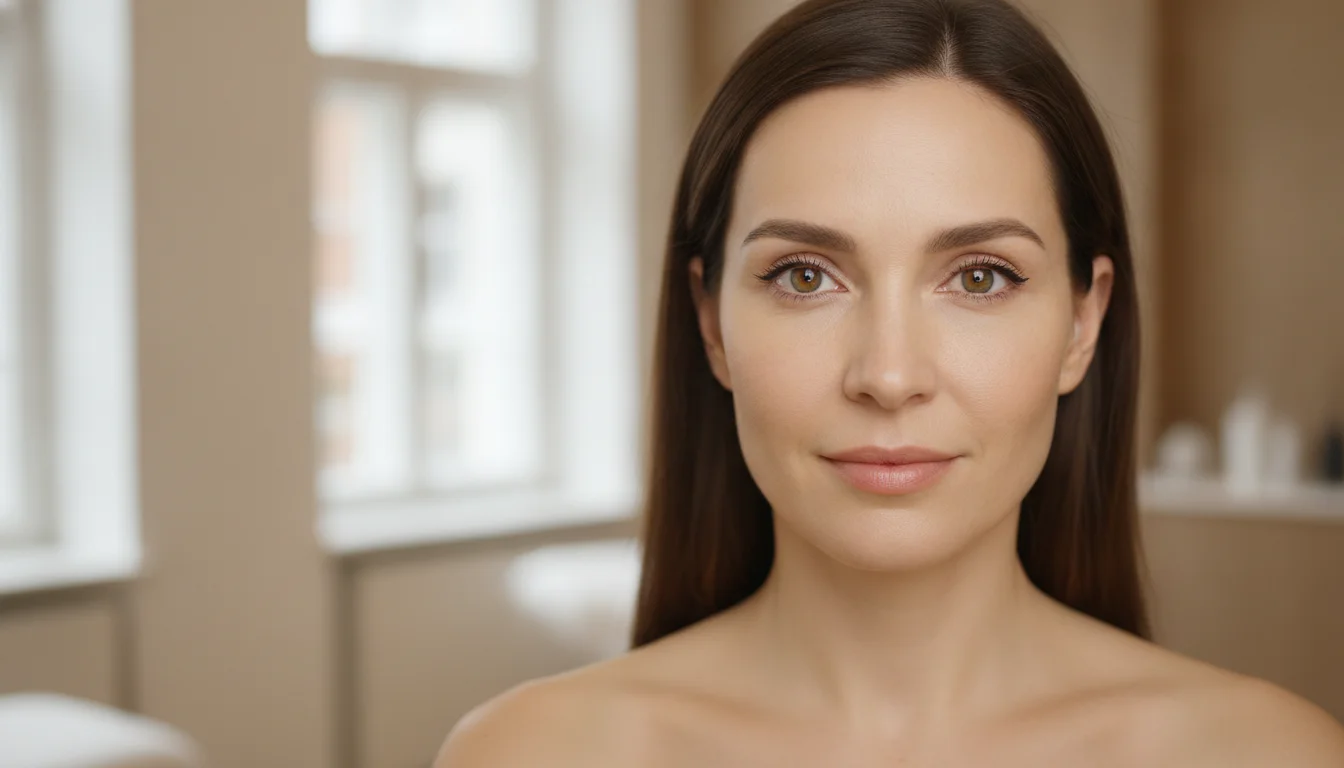

Refresh or remove microblading: what makes sense?
In front of the mirror, the choice can look simple: the brows no longer feel quite right, so either add fresh colour or take everything away. In reality, there is an important third option between a microblading refresh and removal: do nothing yet. Pigment, skin and shape sometimes need time before the best route becomes visible. Working too soon can make a manageable situation unnecessarily dense.
A useful guide is therefore not a rigid yes-or-no list but a traffic-light system. Green means the existing base can probably be refreshed cleanly. Amber means observe, document and obtain a professional assessment first. Red means more pigment would enlarge the problem, and specialist advice about lightening or removal should come before a new brow design.
The first question is not “What do I want?” but “What is here?”
A photograph taken immediately after the original treatment tells very little. Today’s condition matters: how visible is the remaining colour? Can individual hair strokes still be distinguished, or have they merged into a block? Does the old outline follow the natural brow? Is the undertone neutral, grey, red or unusually cool? Does the skin show irritation or scarring? Only this inventory makes your wishes realistic to plan.
Olga Keller studies both brows from several angles in neutral light. She considers colour, density and available space. Fine new strokes need visually quiet skin between old marks. When that space has disappeared, adding more drawing cannot restore natural openness.
Green: refresh when the foundation is quiet and harmonious
A refresh is promising when the residual pigment is pale and neutral, contained within a shape that still frames the face well. Old strokes have not blurred; they have simply become incomplete. The arches or tails may have lost definition while the fronts remain soft. Olga can then replace selected details and balance the colour gently.
Even in the green zone, every old stroke is not traced again automatically. Good refresh work preserves a useful foundation and deliberately leaves space. If your goal is a natural result, this restraint is valuable. The aim is not a darker version of the past but fresher brows that belong to your face today.
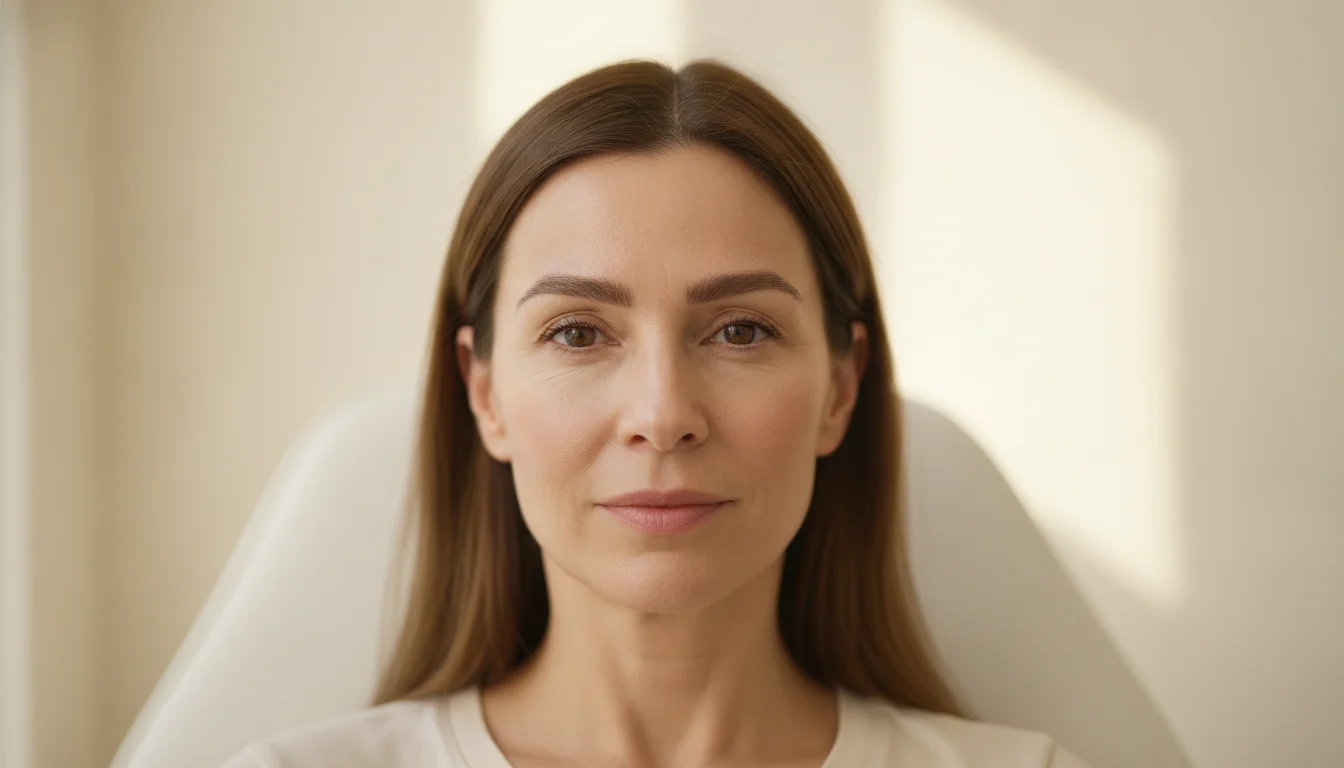
Amber: waiting is an active decision
Amber applies when the remaining tone is still quite strong although the shape is broadly suitable, or when it is unclear how the pigment will continue to fade. New microblading performed too soon may create excessive density. Time is not a wasted month in this situation; it creates the conditions for finer future work.
No final judgement should be made during incomplete healing, soon after another correction or on irritated skin. Photographs taken in consistent daylight can document change. Do not alter prescribed medication or attempt to treat unusual skin changes yourself; medical questions belong with a qualified clinician. Olga plans PMU only when the skin is calm and can be assessed reliably.
Red: when adding pigment would make the problem larger
Specialist assessment for lightening or removal makes sense when the old outline sits clearly outside the desired natural brow, when pigment is very dark or solid, or when the colour has shifted undesirably. Strokes that have merged cannot be separated by placing finer strokes on top. Coverage and correction are not the same thing.
The appropriate approach depends on pigment, depth, skin and treatment area and must be determined by suitably qualified providers. Removal is usually a process, not a single eraser moment. Olga therefore does not promise a fixed plan from a photograph. She can assess whether calmer, clearer skin is needed before considering new permanent brow make-up.
Why covering is tempting and so often unhelpful
A fresh warm colour can make a cool residual tone look quieter immediately after treatment. At first the issue may appear solved. As healing and later fading take place, however, old and new pigment can become visible together. Two layers of colour do not automatically create one clear, natural shade.
The same applies to shape. Simply widening an unsuitable outline can create a larger brow rather than a better one. Powder Brows are not a universal covering tool either. They can be beautiful on a suitable base, but they also require an honest assessment of skin, colour and existing density.
An honest decision may be “not yet”
Olga Keller is a state-trained cosmetician with a medical foundation and has been a microblading pioneer in Berlin since 2013. Across almost 13 years and thousands of successful treatments, she has seen both fresh work and how it develops over time. Clients travel from throughout Germany and abroad, while well-known personalities and politicians value her discreet judgement. She declines treatment if a harmonious result cannot be expected.
Olga uses certified German-made pigments free from heavy metals and iron oxides. Naturalness is her benchmark: brows should belong to the face, not tell the story of a correction. Hundreds of five-star reviews on Google, Treatwell, Facebook and other platforms reflect that trust.


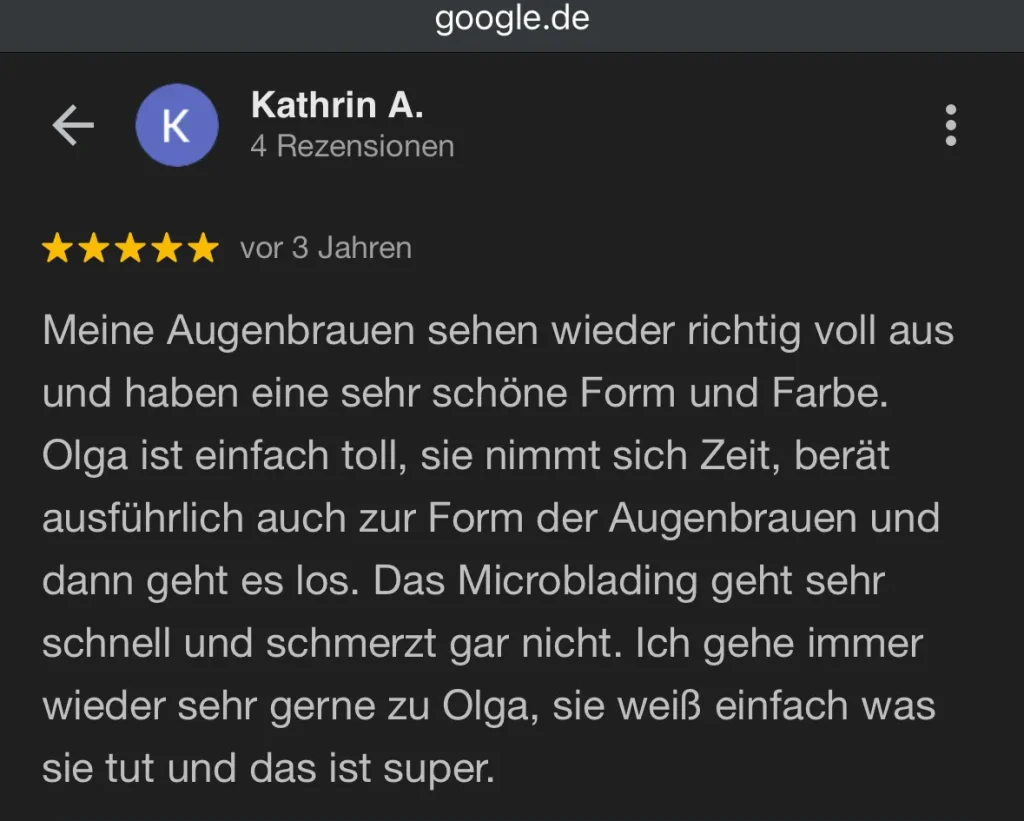







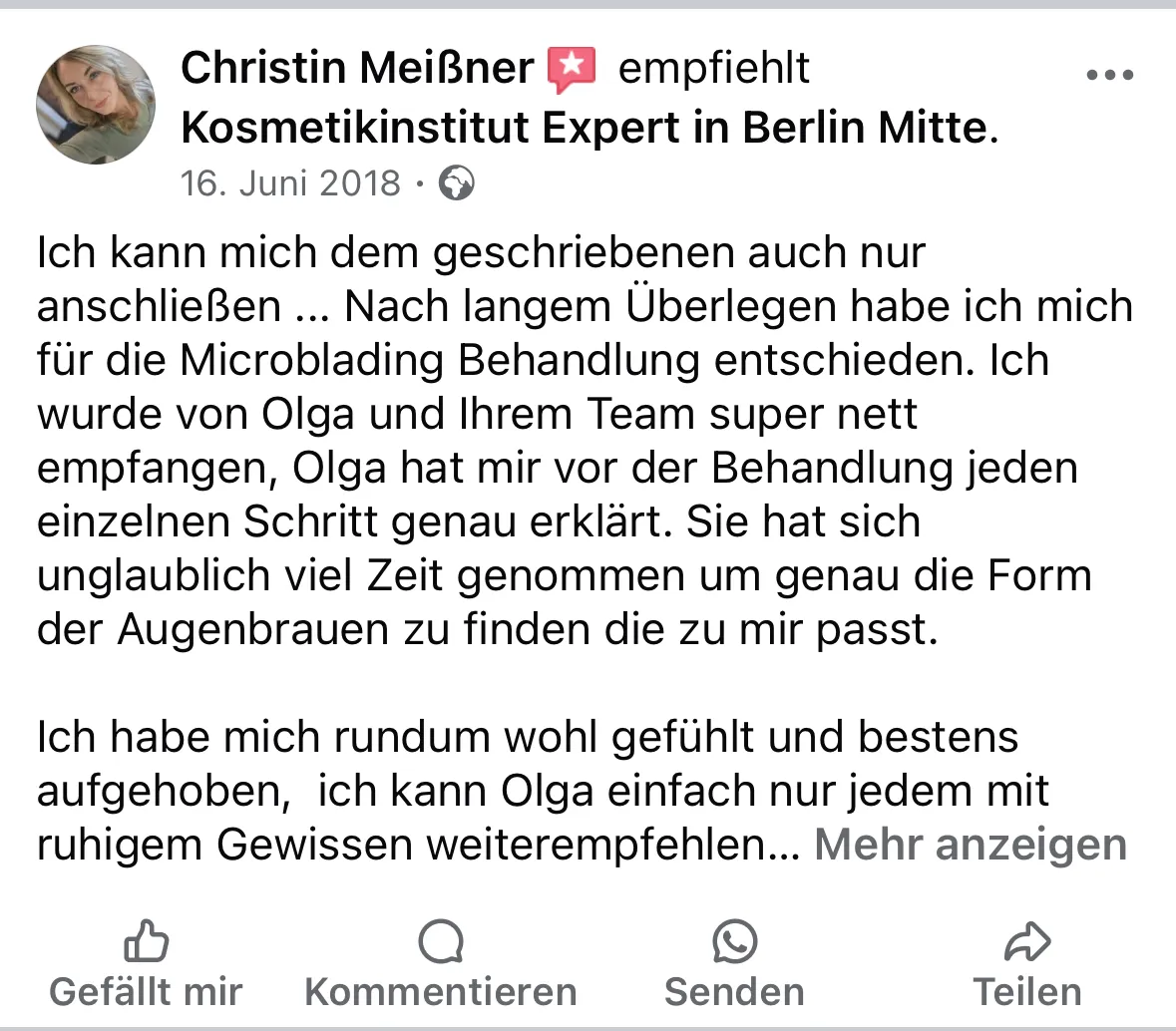


Arrange your personal consultation and treatment with Olga Keller at Kosmetikinstitut Expert in Berlin. Bring any information about previous pigmentation and clear photographs without brow make-up if available. Many regular clients return and new clients often enquire after personal recommendations, so the right appointment may require a little advance planning. That demand is a positive sign of trust in an artist who is equally prepared to recommend patience when treatment is not yet the best choice.